
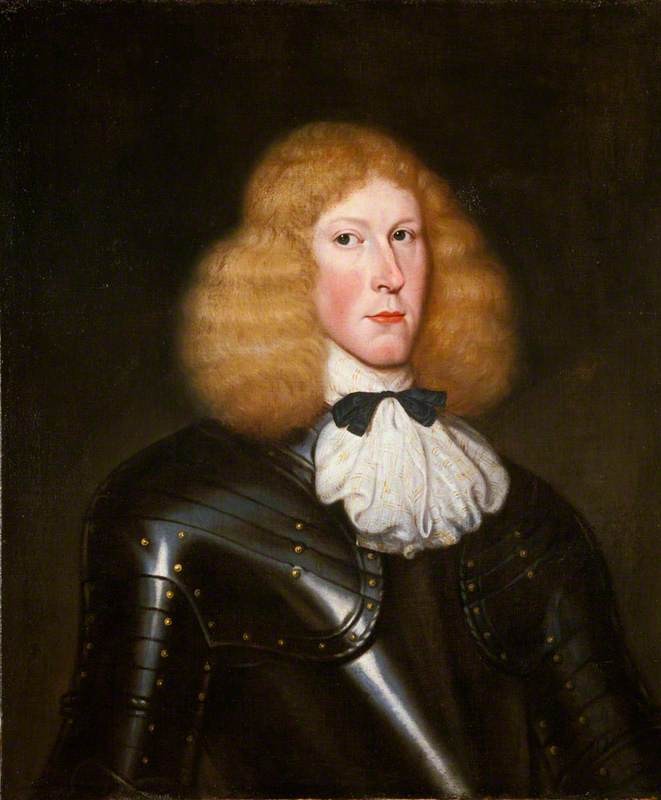
Robert Campbell of Glenlyon (1630–1696) was the 5th Laird of Glenlyon and a Captain in the Earl of Argyll’s Regiment of Foot, remembered above all as the officer who commanded the troops quartered in Glencoe on the night of 12–13 February 1692. On his orders, 38 MacDonalds were killed outright and a further 40 women and children died of exposure after their homes were burned. He died in poverty in Bruges on 2 August 1696, still in debt, four years after the event that would attach his name to one of the most examined episodes in Scottish history.
Key facts
- Born: 1630
- Died: 2 August 1696
- Place of death: Bruges
Family and Origins
The Campbells of Glenlyon were a cadet branch of the Campbells of Glenorchy, who were themselves a cadet branch of the main Campbells of Argyll. As the 5th Laird, Robert Campbell inherited Meggernie Castle, which his ancestor Colin Campbell, 3rd Laird of Glenlyon, had originally built around 1582 as a tower house. Robert was also a cousin of John Campbell, the 1st Earl of Breadalbane (1635–1717), one of the most powerful political figures in late seventeenth-century Scotland.
On 22 October 1663, Robert Campbell married Helen Lindsay at Kilspendie, Perthshire. Helen was the daughter of Sir Alexander Lindsay, 1st Baronet of Evelick, and the couple went on to have eight children together. The Chesthill estate between Glenlyon and Fortingall, which would become the family’s last foothold, belonged to Helen rather than to Robert.
Financial Ruin
After inheriting Meggernie Castle, Campbell undertook a substantial programme of renovation. He enlarged the building, reroofed it with slates in place of thatch, and converted it into a stately mansion, with work completed around 1673. The expenditure was only one part of a mounting financial crisis. Heavy drinking, gambling debts, and unwise investments compounded the building costs until Campbell was close to bankruptcy.
In a bid to raise cash, Campbell sold off virtually all the timber from the portions of the Caledonian Forest in Glen Lyon. The felled logs were floated down the River Lyon, and the process blocked the channel in places, causing widespread flooding. The timber sale did not rescue him. By 1684, he had sold almost all of his estate to the Earl of Tullibardine, keeping only Chesthill, the small property that was legally his wife’s.
What remained was stripped away in 1689. Following the Battle of Dunkeld, the MacIains of Glencoe and their Glengarry cousins looted Glenlyon, stole Campbell’s livestock, and burned his last remaining holdings. In his subsequent petition for compensation, Campbell singled out the Glengarry men as the more culpable party and made no mention of the MacDonalds of Glencoe, a detail that later drew notice given the events of 1692.
Military Commission
In April 1691, at the age of 59, Campbell accepted a commission in the Earl of Argyll’s Regiment of Foot. The rank of Captain came with a salary of 8 shillings a day, which by that point was his principal source of income. The regiment was based at Inverlochy, the garrison known later as Fort William, under Colonel John Hill.
Campbell’s age made him an unusual figure among first-time officers. Taking the commission was a practical calculation: the pay would support his wife and family while the alternative was continued destitution at Chesthill.
The Massacre of Glencoe
On the evening of 12 February 1692, Campbell received written orders from Major Robert Duncanson directing him to attack the MacDonalds of Glencoe and put all to the sword under the age of seventy. The massacre began at 5 a.m. on 13 February 1692. Thirty-eight people were killed outright. A further 40 women and children died of exposure after their homes were set alight.
The operation was carried out by approximately 130 soldiers, only 12 of whom were members of Clan Campbell. The identity of the soldiers matters because the event is frequently misread as a straightforward clan feud between Campbells and MacDonalds, which the composition of the detachment does not support. There are accounts that two men in the detachment at Kinlochleven broke their swords rather than march on Glencoe, and that Campbell himself assisted in the escape of two young men from the MacDonald family during the killing.
The political chain of command ran well above Campbell. The 1695 parliamentary inquiry named the Master of Stair’s letters as ‘the original cause of this unhappy business,’ and its final report, dated 15 June 1695, concluded that those letters had exceeded the King’s orders. The inquiry condemned the killings as ‘murder under trust,’ a category in Scots law treated as more serious than ordinary murder. Campbell and the other officers were in Flanders by the time the report was completed. Parliament recommended prosecution, but King William took no action, and no one was ever punished.
Aftermath and Accountability
Public anger over the massacre forced the resignation of Sir John Dalrymple, Secretary of State for Scotland. The careers of the army officers directly involved, including Campbell, were unaffected. Campbell accompanied his regiment to Flanders, where it fought as part of the War of the Grand Alliance and was defeated by the French at the Battle of Diksmuide in 1696.
Robert Campbell died in Bruges on 2 August 1696, in poverty and still heavily in debt. He left behind his wife Helen, three sons, and four daughters. After his death, the owners of Glenlyon House, where he had been staying, had a room containing his belongings boarded up and declined to mention his name again. The sealed room was discovered only years later by subsequent occupants. One of his boots, found inside it, was kept by the McGregor family and displayed in a cabinet before being donated to Glencoe Folk Museum in 2015.
Meggernie Castle, the ancestral seat Campbell had renovated and then been forced to sell, passed eventually to the Menzies of Culdares. Colonel James Menzies did not take formal possession until 1726, the year of Helen Lindsay’s death. She had lived at Chesthill for the three decades following her husband’s death, and the estate remained hers until she died.
Did you know
- Although the Massacre of Glencoe is often remembered as a Campbell-versus-MacDonald clan feud, only 12 of the approximately 130 soldiers who carried out the atrocity were actually members of Clan Campbell. (glencoemuseum.com)
- Campbell joined the army at the extraordinarily late age of 59, making him one of the oldest men ever to take a first military commission in the Earl of Argyll’s Regiment. His salary of 8 shillings a day was his primary income at the time of the massacre. (undiscoveredscotland.co.uk)
- To raise money before his army commission, Campbell felled virtually all of the ancient Caledonian Forest in Glen Lyon, floating the timber down the River Lyon in a process that blocked the river and caused widespread flooding. (undiscoveredscotland.co.uk)
- Two men in the detachment at Kinlochleven reportedly broke their swords rather than march on Glencoe, and Robert Campbell himself is said to have assisted in the escape of two young men from the MacDonald family during the massacre. (glencoemuseum.com)
- Campbell’s ancestral estate of Glenlyon, sold to the Earl of Tullibardine, eventually passed to the Menzies family. His widow remained at Chesthill until her death in 1726, thirty years after her husband died penniless in Bruges. (southchesthill.com)
Data sources
- Wikidata
- scottishhistory.org
- thepeerage.com
- scottish-places.info
- southchesthill.com
- undiscoveredscotland.co.uk
- glencoemuseum.com
- nls.uk
- glen-coe.com
- exceptthekylesandwesternisles.blogspot.com
- madeinperth.org
Data updated: 2026-10-31