
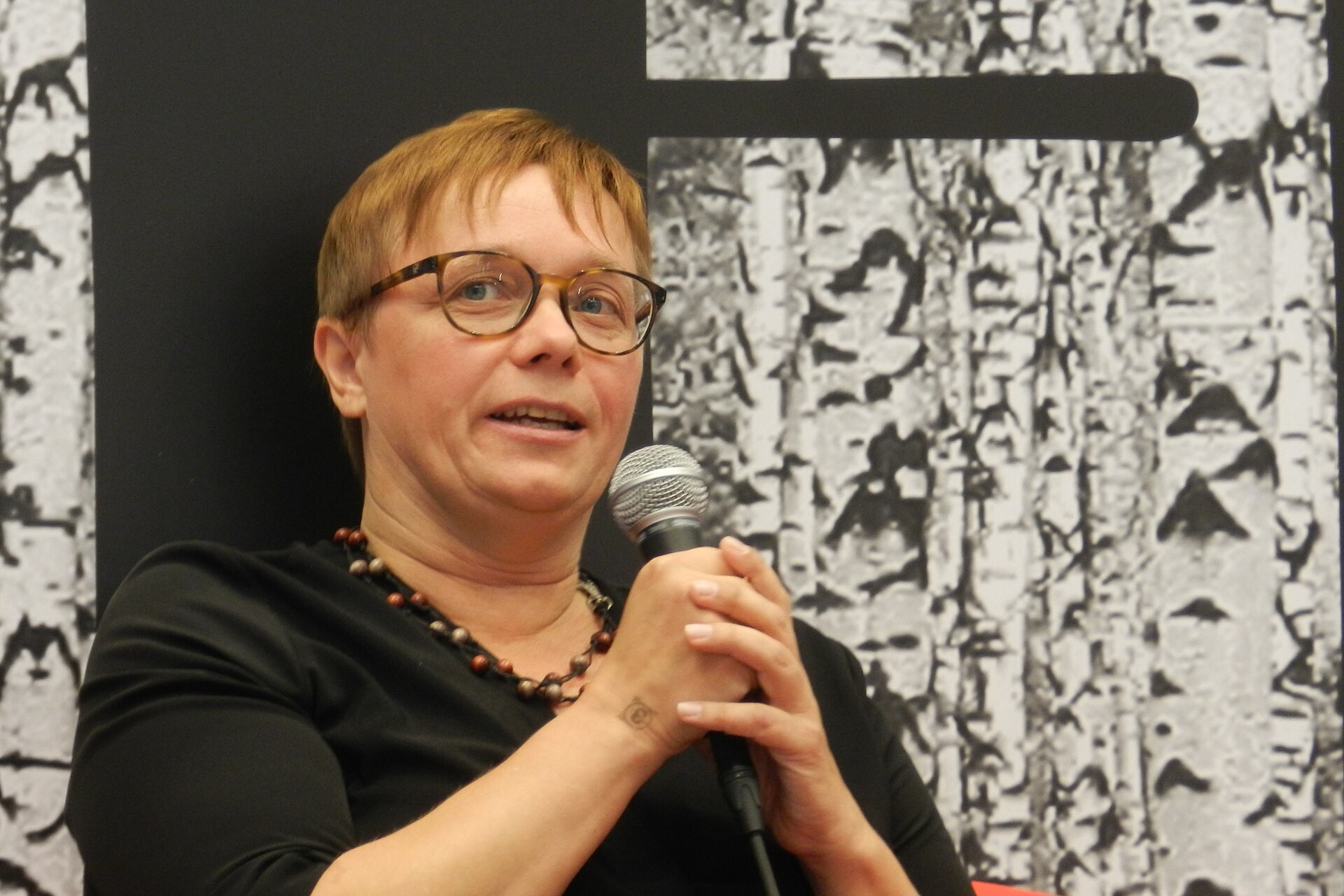
Johanna Wassholm, born in 1970, is a Finnish historian whose work centres on Finnish-Russian relations, ethnicity, mobile trade, and the uses of history in public life. She holds a PhD from Åbo Akademi University, awarded on 8 May 2008, and a Docentship in Russian and Nordic History at the same institution, where she has built her entire academic career. Her scholarship bridges archival precision and broad public engagement, a combination recognised by three separate awards between 2015 and 2025.
Key facts
- Born: 1970
- Country: Finland
- Occupation: historian
- Employer: Åbo Akademi University; Åbo Akademi University; Åbo Akademi University; Åbo Akademi University
- Education: Åbo Akademi University
Academic position and editorial role
As of 2026, Wassholm holds the position of Senior Researcher in the Faculty of Human and Social Sciences, Culture, History and Philosophy at Åbo Akademi University in Turku, Finland. Her education and her entire professional career have been rooted in that institution, which granted her both her undergraduate training and her doctorate.
From 2022 to 2026 she served as chief editor of Historisk Tidskrift för Finland, Finland’s only Swedish-language scholarly history journal. The journal is peer-reviewed and appears quarterly; it has been published since 1916 by the Swedish Historical Society in Finland (Historiska föreningen) and has approximately 550 subscribers, drawn mainly from Finland and the other Nordic countries.
Research interests and major projects
Wassholm’s documented research interests cover Finnish-Russian relations, national and linguistic identification, history culture and the uses of history, ethnicity and mobile trade, and deportations and forgery. Within that range, the intersection of ethnicity and commerce has produced two sustained projects.
In the Academy of Finland and Kone Foundation-funded project “Dealing with Difference: Peddlers, Consumers and Trading Encounters in Finland, 1840–1940,” she examined traders from the multi-ethnic Russian Empire who operated in Finland, including Russians, Karelians, Jews, and Tatars. Her article “Tatar Pedlars in the Grand Duchy of Finland in the Late Nineteenth Century,” published in Studia Orientalia Electronica, volume 8, no. 2 (2020), pages 8–24, became one of her most-cited works.
She co-led a second project alongside colleague Anna Sundelin: “KoKo: Kommunicerande konsumtion: kringvandrande försäljare och kulturmöten i Finland 1800–1940” (Communicating Consumption: Itinerant Vendors and Cultural Encounters in Finland 1800–1940), financed by Svenska litteratursällskapet and Svenska kulturfonden. The project reconstructed the commercial and cultural world of itinerant sellers across more than a century of Finnish history.
Awards and recognition
In 2015, Wassholm received the award Årets lärare vid Öppna universitetet (Teacher of the Year at the Open University), jointly with Anna Sundelin, acknowledging her work in university-level adult education.
On 17 November 2023, Chancellor Carl G. Gahmberg presented her with the Chancellor’s Prize of Åbo Akademi University, awarded for her extensive research into the joint history of Finland and Russia and for her contribution as a contemporary social debater. The university press release described her academic work as characterised by “sharpness, clarity and rigour” and noted that her studies combine “theoretical clarity and empirical precision.”
In 2025 she received the Folkbildningsmedaljen (Adult Education Medal), in recognition of her ability to adapt her knowledge for diverse audiences and her active role in public adult education.
Public scholarship
Alongside her archival and analytical output, Wassholm has maintained a role as a public intellectual engaging with questions of Finnish-Russian history in wider social debate. The Chancellor’s Prize citation pointed to this dual presence: rigorous academic publication combined with intervention in contemporary public discussion. Her editorial leadership at Historisk Tidskrift för Finland from 2022 to 2026 extended that engagement to the institutional stewardship of Swedish-language historical scholarship in Finland.
Did you know
- The KoKo project, which Wassholm led with Anna Sundelin, uncovered a largely forgotten trade commodity: human hair collected from Finnish rural households by itinerant vendors in the period 1870–1900, revealing an unexpected aspect of 19th-century consumerism. (menejatieda.fi)
- Although Wassholm researches 19th-century Finnish-Russian relations, her 2022 Vienna archive visit focused on files about banished persons in the Grand Duchy era, including expelled French revolutionaries, Prussian coachmen, and Austrian craftsmen recorded in official Turku gubernatorial correspondence from the 1820s and 1830s. (blogs.abo.fi)
- Wassholm’s 2023 Chancellor’s Prize was shared with Professor Lea Sistonen (cell biology) and Professor Chunlin Xu (chemistry), illustrating how Åbo Akademi awards a single prize across all faculties, placing a humanist historian alongside leading natural scientists. (abo.fi)
- Wassholm’s KoKo project, co-led with Anna Sundelin and financed by Svenska litteratursällskapet and Svenska kulturfonden, examined itinerant trade and cultural encounters in Finland across the period 1800–1940. (menejatieda.fi)
Data sources
Data updated: 2026-10-31