
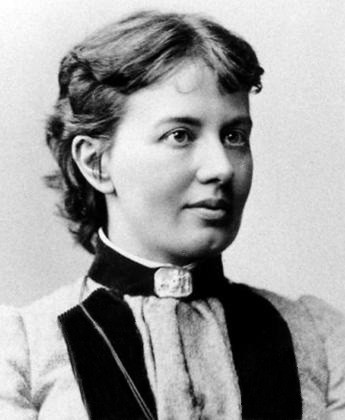
Sofia Kovalevskaya was a Russian mathematician, physicist, novelist and university teacher, born in Moscow on 3 January 1850 and active in both the Russian Empire and Sweden. She worked across mathematics, mechanics, differential calculus and mathematical analysis, and in 1889 she became the first woman appointed to a full professorship in Northern Europe, at Stockholm University. She died in Stockholm on 10 February 1891. Her career combined formal study at Heidelberg, Berlin and Göttingen universities with a persistent effort to find institutions willing to admit a woman at all.
Key facts
- Born: 3 January 1850
- Birthplace: Moscow
- Died: 10 February 1891
- Place of death: Hedvig Eleonora parish
- Country: Russian Empire; Sweden
- Occupation: mathematician; physicist; novelist; university teacher
- Field: mathematics; mechanics; differential calculus; mathematical analysis
- Employer: Stockholm University
- Education: University of Göttingen; Heidelberg University; Frederick William University Berlin
- Awards: Knight of the French Order of Academic Palms; Bordin Prize
Family and early life
Born Sofia Korvin-Krukovskaya, she was the second of three children of artillery Lieutenant-General Vasily Vasilyevich Korvin-Krukovsky and Yelizaveta Fedorovna Schubert. Her mother’s grandfather had been a German mathematician and astronomer, which gave the family a direct, if distant, link to the sciences.
As a child, the walls of her nursery were papered with pages from a lithographed lecture course on differential and integral calculus. She studied these pages long before she could understand the mathematics on them. A neighbor, professor Nikolai Tyrtov, noticed her aptitude and urged her father to let her study further, after which she took private lessons with Aleksandr Strannoliubskii. When she turned thirteen, her father stopped her mathematics instruction, believing educated women were unnecessary, and she continued her studies in secret.
Marriage and study abroad
Vladimir Kovalevsky, whom she married, was a follower of Russian nihilist thinkers who supported the emancipation and education of women. In 1869 she became the first female student accepted by Heidelberg University, where she audited classes with the permission of individual professors.
By the spring of 1874 she had completed three papers, which she submitted together to the University of Göttingen as her doctoral dissertation.
Family life and return to mathematics
In October 1878 she gave birth to a daughter, Sofia Vladimirovna, known as Fufa, and did not return seriously to mathematical work until 1880. In the early 1880s she and Vladimir ran into financial trouble, and Vladimir started a house-building business with Sofia working as his assistant, before his death. Afterward, Kovalevskaya immersed herself in mathematical work partly to deal with feelings of guilt.
She also intervened in family matters beyond mathematics: she helped save Victor Jaclard, husband of her sister Anna (Anyuta) Jaclard, who had been involved in the Paris Commune uprising.
Academic career and honors
Kovalevskaya was employed at Stockholm University and joined the editorial board of the mathematical journal Acta Mathematica, founded by her Stockholm colleague Mittag-Leffler. In 1888 she became the first woman elected a corresponding member of the Russian Academy of Sciences, an honor arranged through the efforts of mathematician Pafnuty Chebyshev. In 1889 she was promoted to a full professorship at Stockholm University, the first such appointment for a woman anywhere in Northern Europe.
She was made a Knight of the French Order of Academic Palms and received the Bordin Prize.
Death
Kovalevskaya died in Stockholm’s Hedvig Eleonora parish of influenza complicated by pneumonia, shortly after returning from a vacation in Nice. Doctors had initially misdiagnosed her illness.
Did you know
- As a child, she learned the appearance of calculus formulas by studying lecture-note wallpaper in her nursery years before she could understand the mathematics. (mathshistory.st-andrews.ac.uk)
- She used the pen name Sophie Kowalevski (sometimes Kowalevsky) for her academic publications rather than Kovalevskaya. (scientificwomen.net)
- She married at age 18 purely as a marriage of convenience so she could legally travel and study in Western Europe without her father’s permission. (mpg.de)
- Her doctoral dissertation consisted of three separate papers presented together to the University of Göttingen in 1874. (comsol.com)
- Despite her fame as a mathematician, her only completed literary work, Nihilist Girl, was first published abroad in Switzerland in 1892 and only reached Russian readers fourteen years later. (mathshistory.st-andrews.ac.uk)
Data sources
Data updated: 2026-11-18