
We Are Numbers Workers
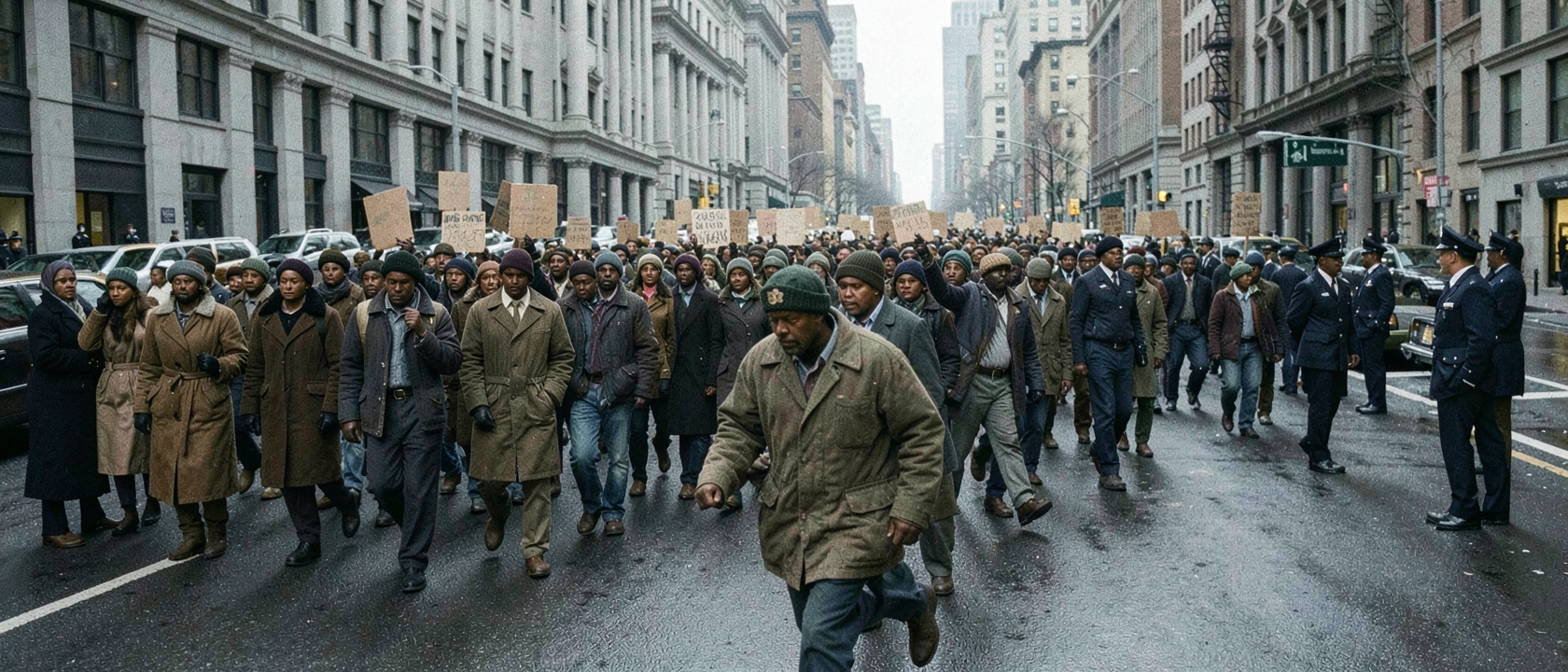
On April 29, 1980, charter buses from Brooklyn, the Bronx, and Harlem brought about 1,500 people to the downtown Manhattan offices of Governor Hugh Carey. They marched to announce that they worked for an illegal business: Harlem’s numbers game, a street lottery that had run in New York for sixty years.
Their signs asked for jobs, not mercy: “Give me money to eat, give me a better home. Or give me my numbers job and leave us alone.” Another read, “Our job is no game. It is a hard, honest day’s work.” These were runners, bankers’ assistants, and clerks, naming themselves to the officers paid to arrest them.
The organizer, Harlem activist James R. Lawson, was protesting unemployment, not arrest. To see why, the story starts decades earlier, when the numbers game was one of Harlem’s biggest businesses, not something the state wanted gone.
Harlem’s Bank
Harlem’s numbers game appeared in the early 1920s. Players picked a three-digit number, and the daily winner came from a figure nobody could rig: first totals published by the New York Clearing House, later betting intake reported by local racetracks. A $142,549.75 day at Aqueduct Racetrack made 549 the winning number, and a correct one-dollar bet paid $600.
By the 1920s, numbers banking, named for the “bankers” who held the slips and paid winners, was Harlem’s largest Black-owned business and largest employer. Shut out of white-owned banks, its bankers reinvested profits in the neighborhood, funding Black newspapers, music venues, political organizations, and small businesses with no other source of capital. In practice, it functioned as a neighborhood bank that Harlem had built for itself.
The Takeover
Over the following decades, white organized-crime operations moved into the trade, helped, historians note, by police willing to look away. Exactly how that happened, banker by banker, isn’t spelled out in the record; the sources describe the outcome, not the method.
The game still employed Black New Yorkers in large numbers, mostly at street level, where a good runner in the 1970s might handle $1,000 in bets a day and clear about $200 after paying winners and the bank, an estimate, not a count. How many worked the trade overall through the 1960s and 1970s is harder to pin down: one widely cited figure puts it around 20,000, a 1972 city study came in lower at 15,000, and numbers advocates at the time claimed well over 100,000. The range itself says something, nobody was counting this economy the way they counted a legal one.
A State Trying to Compete
New York politicians began discussing a state lottery in the 1960s, mainly to raise revenue without raising taxes, and some pitched it as a way to undercut illegal gambling too. Voters approved a constitutional amendment for a state-run lottery on November 8, 1966, and the New York Lottery began operating in 1967.
Against the numbers game, it struggled. Gamblers who had used the street game for decades stuck with it: payouts were better, and players chose their own number instead of buying a printed ticket. The state had built a competitor, not yet a replacement.
The Bid for Community Control
In 1971, Lawson told the state legislature what Harlem wanted instead of a state monopoly: if a legal numbers game was coming, Black communities intended to run it themselves, “come hell or high water.” The claim rested on a plain fact: Harlem had built this institution once already, with its own money, and then watched it taken over.
That testimony opened a political fight that ran for most of the decade, a real campaign for legalization on community terms rather than as a state monopoly. It is the pivot the whole episode turns on: for a while, a different outcome was genuinely possible.
Losing Ground
Through the 1970s the two sides kept arguing, Black leaders pressing for community-run legalization, the state pressing for a lottery game that could finally pay off. Momentum moved steadily toward the state. In 1980, with Governor Carey working to close a budget gap, a bill letting the lottery run its own daily numbers game passed the legislature that April, after debate described as unusually heated for a measure that looked merely technical.
Lawson’s march came eight days later, on April 29. The 1,500 people who walked to the governor’s office weren’t asking lawmakers to choose a side in an open debate. That debate was already over.
The Numbers Game, Legalized
The state lottery began selling its own numbers-style game that September. According to Vaz’s research, sales rose 300 percent over the next four years. The revenue officials had chased since 1967 finally arrived, and it arrived by running, almost exactly, the game Harlem had built and run for sixty years: pick three digits, wait for the draw, collect if you’re right.
The Bill
As the legal game grew, Mayor Ed Koch’s law-and-order administration pressed a crackdown on illegal operators who couldn’t compete with a product the state backed and the police no longer ignored. Jobs, profits, and the habit of putting both back into Harlem moved out of the hands of local bankers and street-level workers and into the state treasury.
Vaz sums up the result plainly: “After several decades of conflict and debate the question was settled. The urban poor would be taxed through their gambling practices, rather than have access to profits and jobs from taxed gambling.” A community that had financed its own newspapers, music, and politics out of this business ended up taxed by it, rather than holding a legal share in it.
What the Record Doesn’t Say
Some parts of this story resist a clean number. The worker estimates for the 1960s and 1970s swing from 15,000 to well over 100,000 depending on who was counting and why, and no source gives a total figure for how much money moved from Harlem’s numbers economy into the lottery system, or how many of those jobs were lost rather than pushed further underground.
The mechanism of the organized-crime takeover, who paid whom, which precincts looked away, is not detailed anywhere in the record, only its outcome. Nor is it clear exactly what the 1980 law contained beyond authorizing the lottery’s numbers game, or how long illegal numbers activity kept running alongside the legal one afterward. Those gaps are left here as what they are, not filled in with guesswork.