
Premiere Night in Hollywood
The Devil Dancer opened on November 3, 1927, to a theater full of people who had come out for a new picture from a director coming off a genuine hit. (Wikipedia’s own entry lists the release date as November 19; independent listings cluster around the earlier date, so that is the one used here.) Fred Niblo had directed Ben-Hur: A Tale of the Christ two years before, in 1925, on top of a filmography that already included The Mark of Zorro, The Three Musketeers, Blood and Sand, The Temptress, and, that same year, Camille. A new Niblo release was not a minor event.
The film itself was a silent romantic drama set in the mountains of Tibet, produced by Samuel Goldwyn Productions and distributed by United Artists, running 73 minutes. Gilda Gray starred as Takla, the dancer of the title, opposite Clive Brook as Stephen Athelstan, with Anne Schaefer and Anna May Wong, the latter as Sada, rounding out the cast. Reviewers responded well, and the New York Times praised its scenery and atmosphere. It did good business. By the standards of the day, it was a clear commercial and critical success.
A Seat at the First Academy Awards
The first Academy Awards ceremony was held on May 16, 1929, honoring films released during the 1927 and 1928 season. Cinematographer George Barnes, who shared the camera credit on the film with Thomas Brannigan, received a nomination for Best Cinematography that night, credited for his combined work on three films: The Devil Dancer, The Magic Flame, and Sadie Thompson.
Up against him were Charles Rosher and Karl Struss, who had shot F.W. Murnau’s Sunrise: A Song of Two Humans. A nomination in that very first year meant something real: an industry barely organized enough to hold an awards ceremony had still singled out this film as serious work, worthy of being named alongside the season’s best. None of that recognition carried any requirement to keep a print on file afterward.
Losing to Sunrise, Then Losing Everything
Rosher and Struss won for Sunrise. No winner from that first ceremony has ever gone missing, but several of that year’s nominees have, The Devil Dancer among them, along with The Magic Flame and, from the following year, 4 Devils. At some point after the ceremony, The Devil Dancer disappears from the record entirely. No source names a date, a decision, or a person responsible. There is no fire on paper, no studio closure on paper, nothing written down at all.
Films simply vanished this way all through the period, with no paperwork left behind to explain it. Sadie Thompson, the third film bundled into Barnes’s nomination, survives today only in incomplete form, rebuilt in part from stills. The Devil Dancer did not even get that much. It went from a national honor to nothing, with no recorded point in between.
Nothing Left to Study
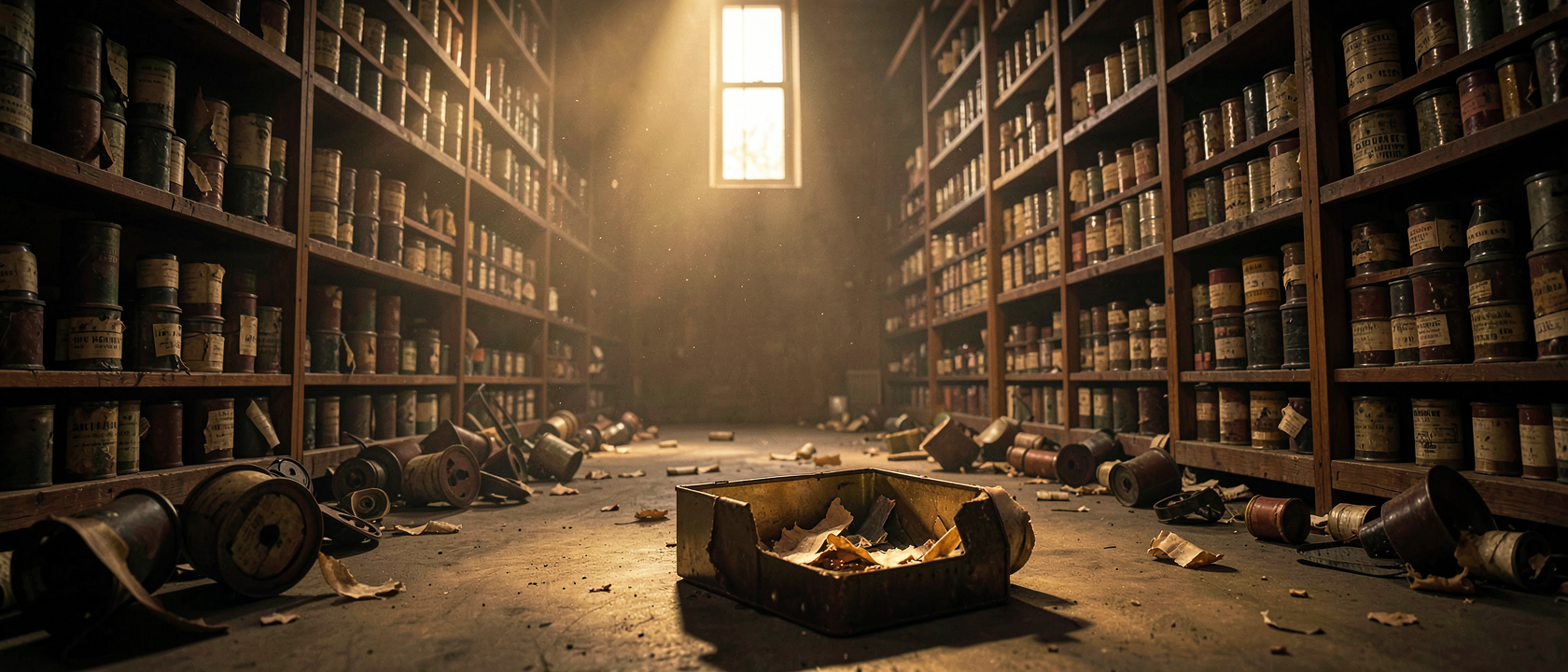
No frame of The Devil Dancer is known to survive anywhere: not in a studio vault, not in a foreign archive, not in a private collector’s reel. That means there is nothing left to restore. No scanning technology and no future archival find can bring back a film of which nothing remains. It exists now only as a cast list, a release date, and a runner-up credit.
It is one entry in a far larger count. A study commissioned by the Library of Congress‘s National Film Preservation Board, published in 2013 and written by historian David Pierce, found that of the roughly 11,000 American silent feature films released between 1912 and 1929, only 14 percent, about 1,575 titles, survive complete on their original 35mm film. Another 11 percent survive only as foreign-language versions or on smaller formats like 16mm. Add it together and an estimated three-quarters of the era’s output is gone. (The Film Foundation, started by Martin Scorsese, puts the loss for American films made before 1929 even higher, above 90 percent; the two estimates disagree, but neither is small.) The reason most often given is simple: before television and home video gave old films a second life, a studio had little incentive to keep a print once its theatrical run ended, and the single largest cause of loss was deliberately destroying the negative.
What the Record Doesn’t Say
There is no document naming the day The Devil Dancer was destroyed, no paper trail showing who held its rights by then, and no public account of who decided it was not worth keeping. The three-quarters estimate is built by comparing what survives against what was released, not from a ledger of what was thrown out and by whom. No source pins down exactly when the industry began treating its own back catalog as worth protecting rather than clearing out.
Of the more than 3,300 American silent films that did survive in some form, roughly a quarter turned up outside the United States, a share of them later repatriated from the Czech Republic, which holds more surviving American silents than any other foreign country. Those prints exist largely by accident, kept by someone who simply never got around to throwing them out. The Devil Dancer had no such accident in its favor. What is left of it is a title, a cast, a nomination, and a blank where the film should be.