
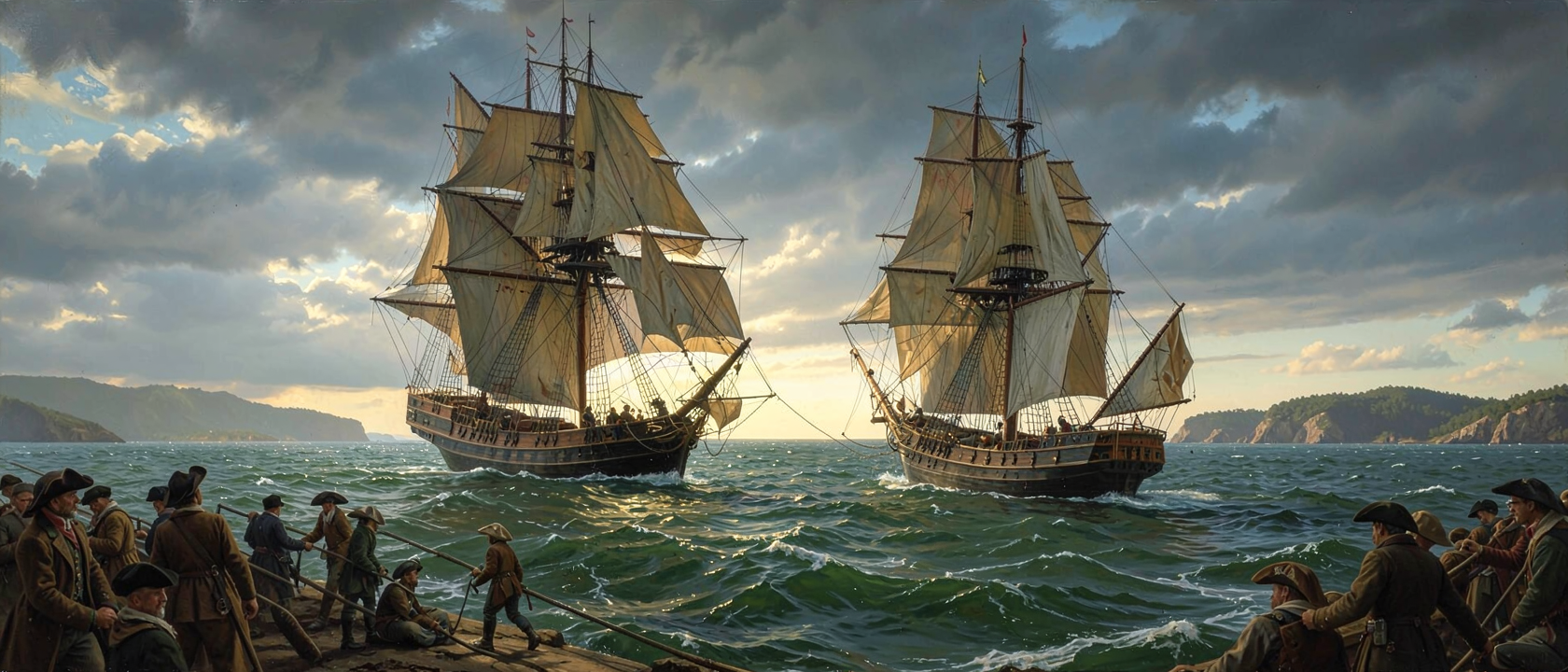
Two Ships, Two-Thirds Sick
In October 1793, two French ships, the frigate Recherche and the smaller Espérance, dropped anchor about 25 miles off Surabaya, a Dutch colonial port on the island of Java, in what is now Indonesia. Surabaya is now the country’s second-largest city. Aboard both vessels, an estimated two-thirds of the crew were too sick to work, most of them down with scurvy after long months without fresh food. The ships needed water, provisions, and medical help before they could go any further.
They had been at sea since leaving Brest on September 28, 1791 (some accounts give the 29th), sent out by the French Constituent Assembly on what became known as the d’Entrecasteaux expedition, in search of Jean-François de La Pérouse’s expedition, missing since it sailed from Botany Bay in 1788. That search is a different story. This one is about what happened while the Recherche and the Espérance sat still, waiting for a Dutch port to let them come ashore.
A Courtesy Built for a World That No Longer Existed
The assumption that kept the crews calm was an old one. Rival colonial powers in the Pacific generally let a sick foreign crew take on food and water in their ports; a war between two kingdoms in Europe did not usually stop a dying sailor from being fed in a foreign harbor. It was a courtesy built for a world in which kings dealt with other kings.
The Recherche and the Espérance had sailed out as ships of a kingdom that no longer existed. By October 1793 they had been away more than two years, long enough to miss two deaths inside their own chain of command. Jean-Michel Huon de Kermadec, who led the Espérance, died in New Caledonia on March 6, 1793. Antoine de Bruni d’Entrecasteaux, the expedition’s commander, died aboard the Recherche that July. Command had passed to Alexandre d’Hesmivy d’Auribeau, originally second-in-command of the Recherche. None of the three men, nor anyone else aboard, knew that Louis XVI had been executed in Paris on January 21, 1793, or that the flag flying over their two ships now belonged to a republic at war with the Dutch.
Four Days of Silence
To arrange the resupply, d’Auribeau sent Count de Trobriand, who had served as second-in-command of the Espérance under the now-dead Kermadec, ashore to open contact with Surabaya’s Dutch authorities. Four days passed with no word from him and no sign of his return. What delayed him, or what happened to him onshore, is not recorded.
Command of the expedition rested with d’Auribeau, who was himself sick. Some accounts raise the possibility that laudanum, an opium tincture commonly used at the time for pain and illness, affected his judgment during these days. This is speculation, not something confirmed in the record. What is certain is that two ships full of sick men sat anchored off a foreign port with their own envoy gone silent onshore.
The White Flag and the Chief’s Message
D’Auribeau’s response to the silence was to send a second boat, this one flying a white flag, a signal meant to guarantee safe and peaceful contact. It reached the shore, and this time an answer came back. A local Javanese chief told the French what had happened at home: Louis XVI was dead, executed by his own people, and France was no longer a kingdom but a republic. That republic was at war with the Dutch.
Nothing about the ships themselves had changed in the hours it took to hear those words. The same sick men were aboard the same two vessels, flying the same flag they had carried out of Brest two years before. What had changed was what that flag now meant to the men holding the port they needed.
From the King’s Flag to Prisoners of War
On October 28, 1793, the Dutch captured both the Recherche and the Espérance at Surabaya. Men who had sailed out under a king’s commission were now prisoners of war of a colonial power they had approached, only days or weeks earlier, as a friendly port willing to sell them food and water.
There was no transition, no period of negotiation over what an expedition sent by a government that no longer existed owed to the power now holding it. The courtesy described earlier, the understanding that sick sailors from a rival nation could still be fed and watered in a foreign port, depended on knowing which side a ship belonged to. Once Surabaya’s officials knew France was a republic at war with the Dutch, that understanding no longer applied to the Recherche or the Espérance. Two-thirds of the crew were already fighting scurvy. Now every one of them, sick or well, was a prisoner of a war that had been fought and half-settled while they were still at sea.
What the Record Doesn’t Say
Some parts of this episode are not filled in. No record explains why Trobriand took four days to make contact, or what became of him onshore during that time. The idea that laudanum shaped d’Auribeau’s judgment remains a suggestion, never confirmed. Among the crew was a woman who had been sailing disguised as a man since before the voyage began; how she came to be aboard, what she made of the news from home, and what became of her as a prisoner are not part of the account told here.
What happened to the two ships and the men who sailed them after October 1793 belongs to a longer story than this one. The anchorage off Surabaya is the part that can be told cleanly: two sick crews, a four-day silence, a white flag, and a chief’s message that turned a scientific expedition into prisoners of a war that had started without them, months before the news ever reached the ship.