
The Only Obstacles Left
On November 2, 1960, Rafael Trujillo, who had run the Dominican Republic since a coup around 1930, said in public that he had only two problems left to deal with. One was the Catholic Church. The other, according to the account that has come down to us, was three sisters: Patria, Minerva, and María Teresa Mirabal. He named them three weeks before they were killed.
By then the sisters were known across the country as organizers of the underground opposition. In secret they went by the name Las Mariposas, the butterflies. Patria Mercedes Mirabal was 36, Minerva was 34, and María Teresa, the youngest, was 25. A dictator had just told the public that three women, alongside a church he could not silence, stood between him and full control of the country.
Political Enemy, Personal Grudge
The sisters’ opposition was not abstract. Minerva had co-founded the 14th of June Revolutionary Movement (14 de Junio) with her husband, Manolo Tavárez Justo. María Teresa’s husband, Leandro Guzmán, belonged to the same underground network. By late 1960 both men were political prisoners of the regime, along with other members of the movement.
Scholarship on the case, including work by historian Nancy P. Robinson, points to a second motive layered on top of the political one. Years earlier, Minerva had turned down Trujillo’s advances, a rejection the dictator reportedly never let go of. His hostility toward the sisters, by this account, was not only about crushing opposition. It was also about a woman who had said no and then gone on to organize against him anyway.
The Road Back From the Prison
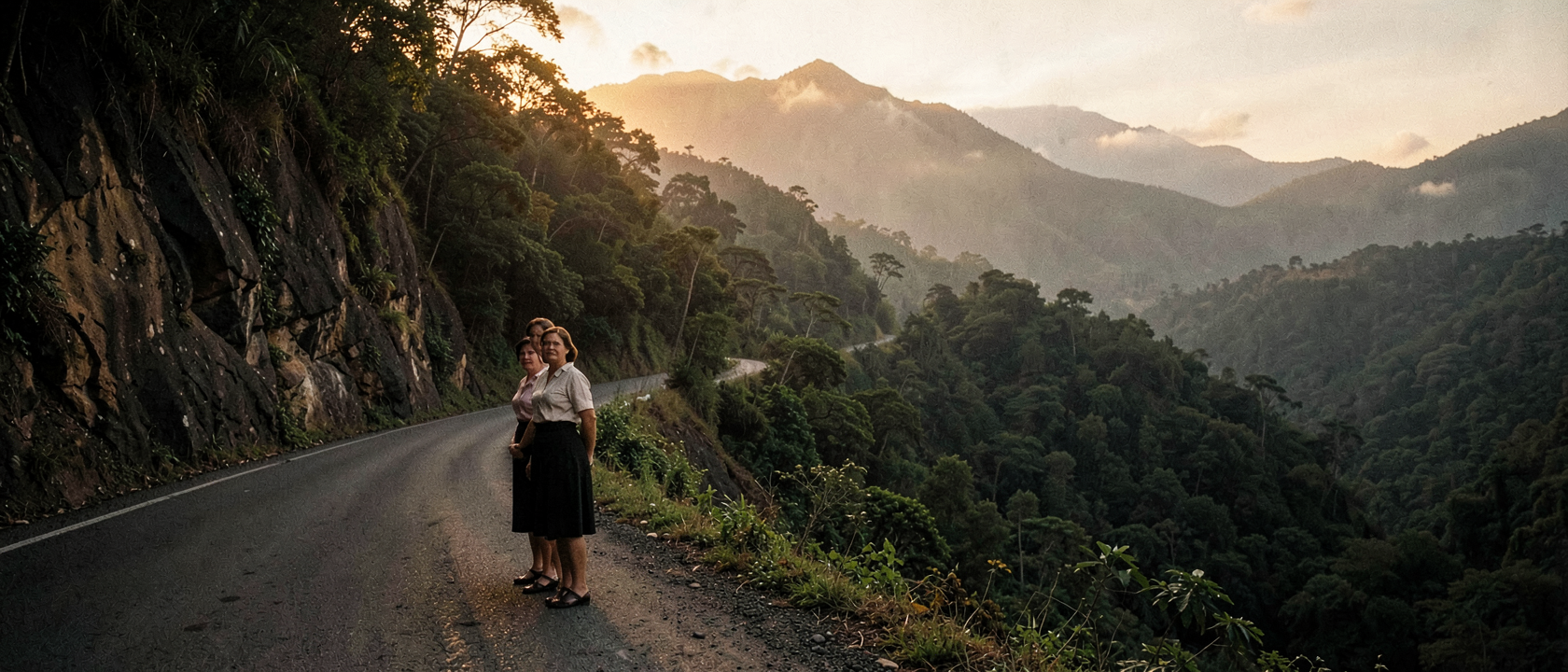
On November 25, 1960, Patria, Minerva, and María Teresa drove home after visiting their imprisoned husbands. On a mountain road outside Puerto Plata, agents of the regime’s Military Intelligence Service (SIM, Servicio de Inteligencia Militar) stopped the car. The three sisters and their driver, Rufino de la Cruz, were strangled and beaten to death. Their bodies were placed back inside the vehicle, which was then pushed off a cliff.
The next day, El Caribe, a newspaper the government controlled, reported that three sisters had died in an automobile accident after their car went over a cliff. That was the version the regime put into print.
What the Record Doesn’t Say
Whether Trujillo gave the direct order, or whether SIM agents acted on their own reading of his public remarks three weeks earlier, is not settled in the historical record. The men convicted of the murders were sentenced to 30 years in prison the following year, then escaped with help from military groups loyal to the regime, which leaves the chain of command murky rather than closed.
The record is just as approximate about what came next. Trujillo was assassinated roughly six months after the murders; sources agree on that interval without agreeing on, or giving, an exact date.
The Six Months After
Word of how the sisters had actually died spread despite the official story, and it hardened public anger at a government that had already named them as enemies. That anger fed into the conspiracy that killed Trujillo in 1961, ending three decades of rule that had begun with his coup around 1930. A murder staged to look like an accident had instead become one of the pressures that brought the regime down.
The Sister Who Stayed
Patria, Minerva, and María Teresa left behind a fourth sister, Dedé Mirabal, who had not been in the car that day. Born February 29, 1925, Dedé spent the decades that followed keeping her sisters’ story in public view, work that continued until her death on February 1, 2014. What began as one family’s private grief became, through that work, a piece of national memory, and the three sisters are now counted among the country’s best-known historical figures.
A Regional Date Is Set
In 1981, delegates to the First Feminist Encounter of Latin America and the Caribbean, meeting in Bogotá, Colombia, declared November 25 a regional day against violence toward women, in the sisters’ memory. The declaration did something specific: it placed domestic violence, rape, and political assassination on the same line, as expressions of one problem rather than separate categories of harm.
Butterflies, on the Page and Screen
In 1994, Julia Alvarez published the novel In the Time of the Butterflies, built around the sisters’ story. A film adaptation followed in 2000. Between the two, the Mirabal name moved past the Dominican Republic and Latin America and reached readers and audiences who had never heard of Trujillo.
The UN Makes It Official
By the 1990s, international human-rights work was already reckoning with violence against women as a category of its own, pressed into view by the documented use of rape as a weapon in the Bosnian war and the Rwandan genocide. Against that backdrop, the UN General Assembly adopted Resolution 54/134 on December 17, 1999, naming November 25, the date of the sisters’ murder, as the International Day for the Elimination of Violence Against Women.
The day activists in Latin America had already been marking since 1981 became a fixture on the calendar of every UN member state. A killing arranged to look like nothing more than a car going off a cliff ended up naming a day observed around the world.