
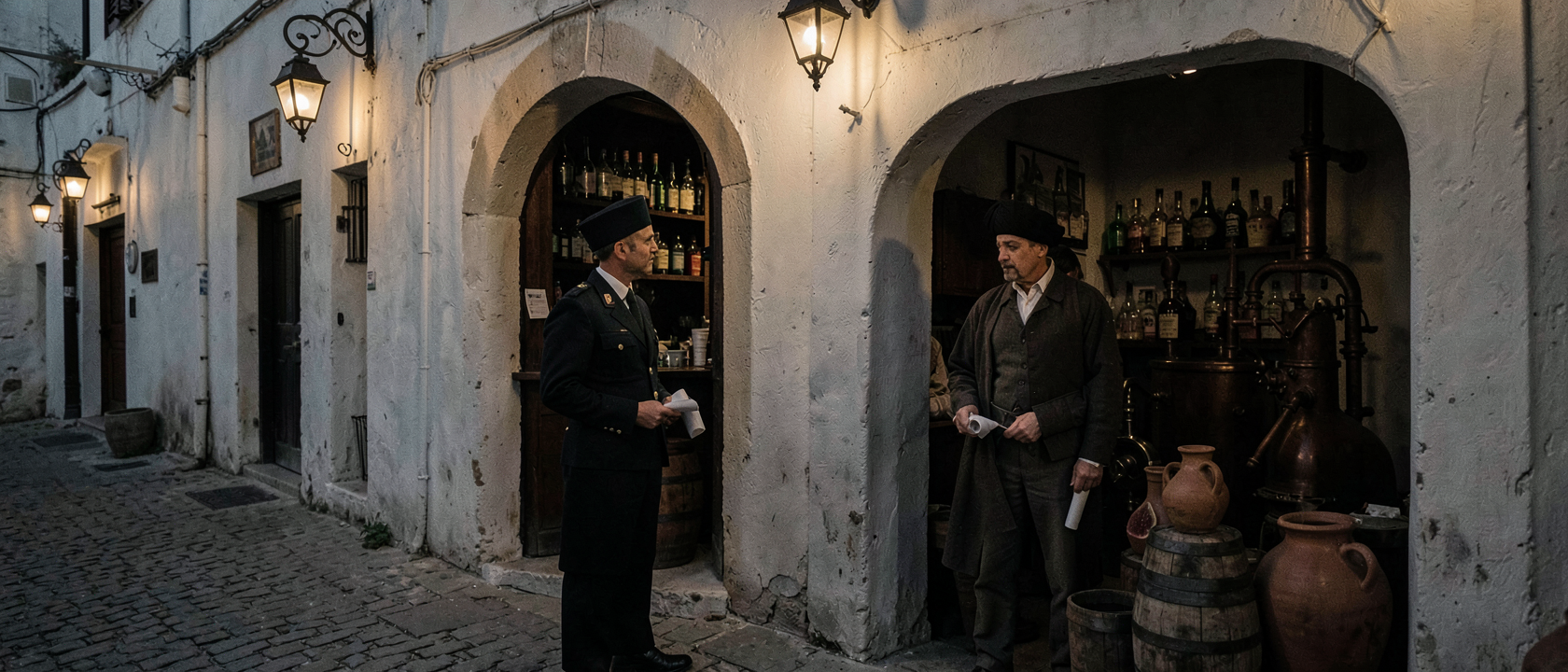
Tozeur, June 28, 1913
On June 28, 1913, a notice went up in Tozeur, a desert town in western Tunisia built around its palm groves and irrigation channels. Tunisia had been a French protectorate since 1881, and matters of this kind were handled locally, by French officials on the ground rather than by any single law issued for the whole territory. What they posted in Tozeur was a decree, a local administrative order with authority over that district alone.
Its terms were blunt. It banned bringing alcohol into the town, selling it, drinking it, and possessing it “for any reason whatsoever.” The phrase comes straight from the decree’s own wording, and nothing in the surrounding text softened it.
Who Was Being Watched
French administrators justified decrees of this kind with a specific worry: that Muslim Tunisians were drinking large quantities of cheap alcohol that paid no tax and moved entirely outside channels the Protectorate could monitor. That was the stated concern, recorded in the administrative record of the period. It should be read as the officials’ own framing of the problem, not as a measured account of how much anyone in Tozeur was actually drinking.
Behind that stated concern sat a quieter one. Jewish and Muslim communities in Tunisia had for generations made and traded local drinks, date and fig spirits among them, alongside wine, as an ordinary part of commerce and custom. The decree drew no line between a man who distilled dates for a living and a man who simply drank too much of what he bought. Both fell under the same ban, the same page of text, the same suspicion.
No Exceptions Carved Out
Read the decree’s mechanics in order and its reach becomes clear. It covered import, sale, consumption, and possession. Then it went one step further: it outlawed giving alcohol away for free.
That last clause is worth pausing on. There was no exception for a household making its own date spirit, none for handing a neighbor a cup as a matter of habit, none for a custom that had nothing to do with buying or selling anything. A gesture that had cost nothing and drawn no attention the day before was now, on paper, a punishable act. The word doing the real work in the decree is “any”: any reason whatsoever.
The Price of a Cup
The decree backed its language with numbers. A first offense carried a fine of 16 to 500 francs, together with a prison term running from six days to six months. A second offense left no room for leniency: a minimum sentence of one month in jail plus a fixed fine of 200 francs.
These were not symbolic figures. Six days in a cell, or six months, for an act that had carried no legal weight at all before June 28, 1913. A fine as high as 500 francs for sharing what had been, until that date, simply a drink passed between neighbors.
What the Record Doesn’t Say
The surviving record of the Tozeur decree does not say how strictly it was enforced, or for how long. It does not say whether drinking habits in the town changed because of it, or carried on much as before, out of official sight. It names no one fined or jailed under its terms, and it is silent on what became of the Jewish and Muslim households whose trade in date spirit, fig spirit, and wine had, overnight, turned into a crime.
That silence belongs to the history itself; it is not a gap to be filled in with guesswork. What the record does preserve is the decree’s severity: a ban written wide enough to catch a cup handed across a doorway, backed by months in prison and fines running into the hundreds of francs. Whatever its practical effect turned out to be, the decree stands as a measure of how far the colonial administration’s distrust reached, and how little of ordinary daily life it was prepared to leave alone.