
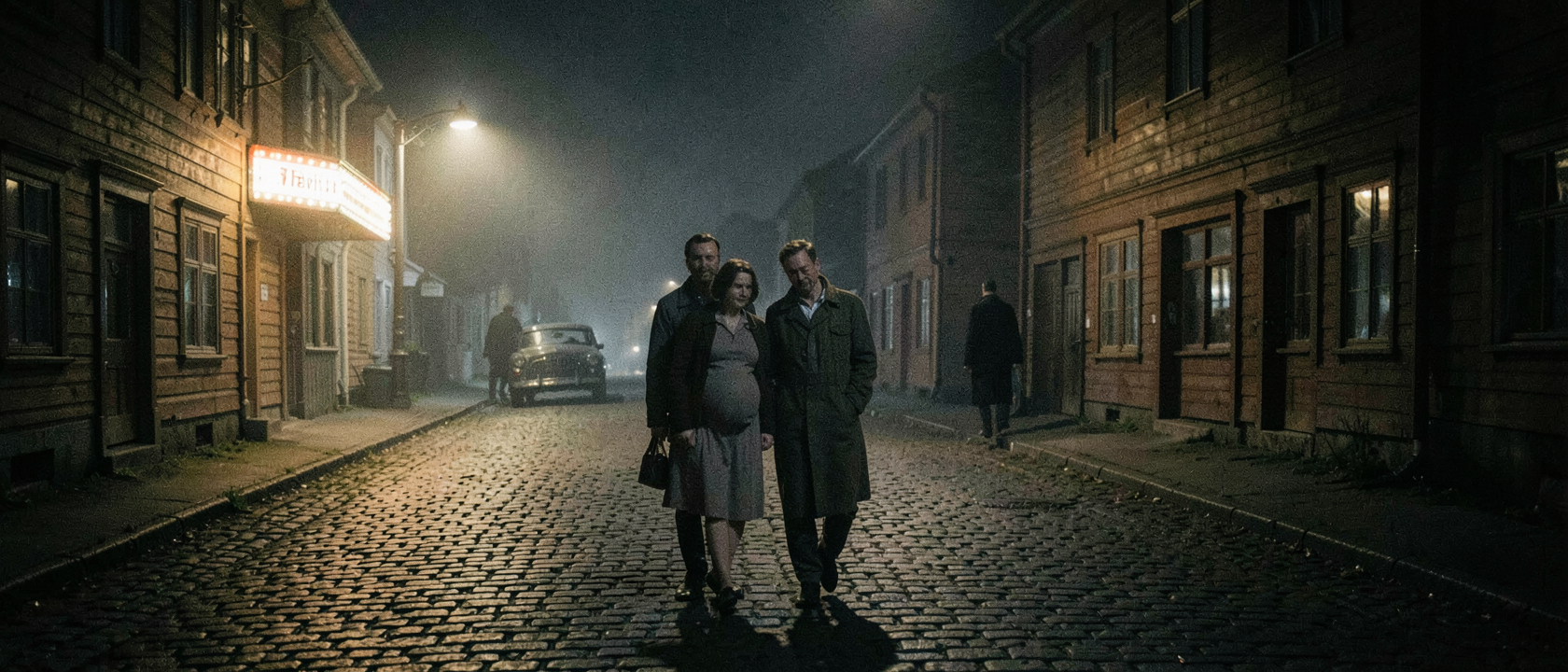
A Cinema in a Small Norwegian Town
On July 21, 1973, a waiter and cleaner named Ahmed Bouchiki left a movie theater in Lillehammer, Norway, and started the walk home with his wife, Toril, who was seven months pregnant. Bouchiki had been born in Morocco and had no ties to Palestinian politics or to any armed group. A gray Volvo pulled up alongside the couple. Two men got out and shot Bouchiki repeatedly in the torso and head. He died on the spot, in front of his wife.
Munich, Eleven Months Earlier
The killing in Lillehammer began with an attack eleven months earlier. In September 1972, members of the Palestinian group Black September took 11 Israeli athletes and coaches hostage at the Munich Olympics and killed them. Israel’s government, under Prime Minister Golda Meir, responded by authorizing a covert program, later known as Operation Wrath of God, to find and kill the people it held responsible for planning or enabling the attack. Mossad, Israel’s foreign intelligence agency, named Ali Hassan Salameh, a senior Fatah and Black September operative known as “the Red Prince,” as the operation’s architect, and he became one of its highest-priority targets. It was the hunt for Salameh that brought a Mossad team to Norway the following summer.
No Room for a Mistake
Carrying out a killing in a neutral European country left almost no room for error. Mossad’s agents worked alone, without any local authority aware of their presence, and had to identify their target by sight from a single known photograph of Salameh supplied by Britain’s MI5. Norway had no part in the conflict between Israel and Black September, and Israel depended on staying on good terms with the Norwegian government. Only secrecy made the operation survivable: any mistake would turn a Mossad team into a group of agents who had carried out a murder on the soil of a government Israel needed to keep on its side.
The Wrong Man
In the summer of 1973, Mossad received word that Salameh was living in Lillehammer and working as a waiter. Bouchiki, it turned out, resembled the man in the MI5 photograph and had been seen in the same town. On July 21, a day after the team believed it had confirmed his identity, the agents carried out the shooting and reported back that the mission had succeeded. Mossad director general Zvi Zamir and operation commander Michael Harari had come to Norway themselves to oversee it. The truth did not stay hidden for long. Norwegian investigators, and soon the Israeli government, learned that the man killed was a Moroccan waiter with no connection to Black September, to Fatah, or to the Munich massacre.
The Bill
Ahmed Bouchiki was dead, and his wife had watched it happen while carrying their child. Norwegian police moved fast. Two members of the assassination team were arrested the next day after reusing their getaway car for a trip to the airport, while nine others, including the two men who had fired the shots, left the country within a day of the killing. Norwegian authorities eventually held six members of the 15-person Mossad team, among them agent Sylvia Rafael, and brought them to trial on charges connected to the killing; several were convicted, a rare instance of Mossad operatives facing a public courtroom. Israel never formally claimed the operation but expressed sorrow to Bouchiki’s family during the trial. In 1996, it paid compensation of $283,000, split between his wife and daughter, with a further $118,000 settled on a son from an earlier marriage. The case became known internationally as the Lillehammer affair, and it strained relations between Israel and Norway for years afterward.
Quiet Help, Public Condemnation
Lillehammer was one of eight missions that Operation Wrath of God carried out in Europe between September 1972 and July 1973. Research into the period indicates that European intelligence services quietly assisted this wider campaign, sharing information or simply looking the other way, even as their own governments publicly condemned assassinations carried out on their soil. Some of that cooperation is believed to have run through a secret information-sharing system called Kilowatt, set up in 1971 among 18 countries, before Munich had even happened. The record does not identify which agencies were involved or how far their help went.
What Was Never Settled
Several parts of the Lillehammer affair were never fully resolved in public record. The two men who fired the shots left Norway within a day, and their later fates were never fully confirmed. The full scope of Norway’s investigation, and the diplomatic cost between Oslo and Jerusalem, remain only partly documented. And the question that started the operation in the first place, whether Salameh truly planned Munich, is still argued over by historians, who call his exact role disputed even while agreeing that Mossad believed him guilty. Operation Wrath of God was reactivated once more in 1979, when a car bomb killed Salameh in Beirut on January 22, nearly six years after a Mossad team shot the wrong man on a street in Lillehammer.