
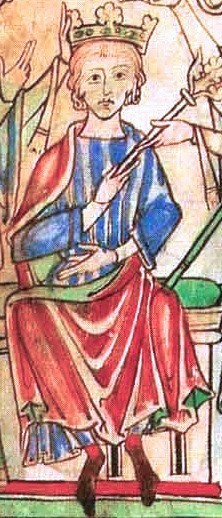
Henry the Young King was the second of five sons born to King Henry II of England and Eleanor of Aquitaine. He came into the world on 28 February 1155 at Bermondsey Abbey, and his position in the family changed when his elder brother William, Count of Poitiers, died in 1156 at the age of two, leaving Henry as the eldest surviving child of the king. On 14 June 1170 he was crowned at Westminster Abbey, a title that gave him status but little authority. He died on 11 June 1183 at Martel, part of the royal line of the Kingdom of England but never ruler of it alone.
Key facts
- Born: 28 February 1155
- Birthplace: Bermondsey Abbey
- Died: 11 June 1183
- Place of death: Martel
- Country: Kingdom of England
- Occupation: ruler
- Awards: Knight Bachelor
Education and training
Henry was educated under the guidance of his father’s chancellor, Thomas Becket, a connection that shaped his early years at court. In 1170, William Marshal was appointed his tutor-in-arms and also became leader of his tournament team, a role Marshal kept until 1182, when he and Henry had a falling out that ended their long association on the tournament circuit.
Coronation and marriage
Henry was crowned king at Westminster Abbey on 14 June 1170 by Roger of Pont L’Eveque, Archbishop of York, standing in for the exiled Thomas Becket. His wife, Margaret of France, was not crowned alongside him that day, because Becket’s exile left no one to perform the rite for her, and the omission infuriated her father, King Louis VII.
To appease Louis VII, a second coronation that included Margaret was held on 27 August 1172 at Winchester Cathedral, performed by Rotrou, Archbishop of Rouen. The two ceremonies, two years apart, marked Henry as a crowned king while his father Henry II still held the real power of the realm.
Revolt against his father
Henry’s crown brought him an income but no genuine share of government, a grievance that fed into open revolt against Henry II. During the fighting, Eleanor of Aquitaine was intercepted and imprisoned by the king as she tried to join her sons in rebellion.
The rebellion ended in 1174 with the Treaty of Montlouis, which granted Henry an income but still no real political responsibility, leaving the underlying dispute unresolved. Henry later became a friend of King Philip II of France, taking part in Philip’s coronation ceremony and the celebratory tournament held in 1179, a sign of the alliances he built outside his father’s court.
Final campaign and death
To fund his mercenaries during the 1183 campaign, Henry looted monasteries and shrines, including the treasury at Rocamadour in June 1183. The campaign was his last; within days of the Rocamadour theft he fell fatally ill at Martel.
Before he died, he repented for his sins by prostrating himself naked on the floor before a crucifix. He died holding a ring his father had sent him as a sign of forgiveness, a final exchange between a king and the son he had crowned but never let rule.
Did you know
- At one coronation banquet, Henry was personally served by his own father, King Henry II. (spartacus-educational.com)
- In 1183, desperate for funds to pay his mercenaries, Henry and his men stole treasure from the pilgrimage shrine at Rocamadour. (creativehistorian.co.uk)
Data sources
Where it appears
- Henry the Young King: Crowned in 1170, Denied Power Until Rebellion November 16, 2026
Data updated: 2026-11-12