
A Meal He Couldn’t Finish
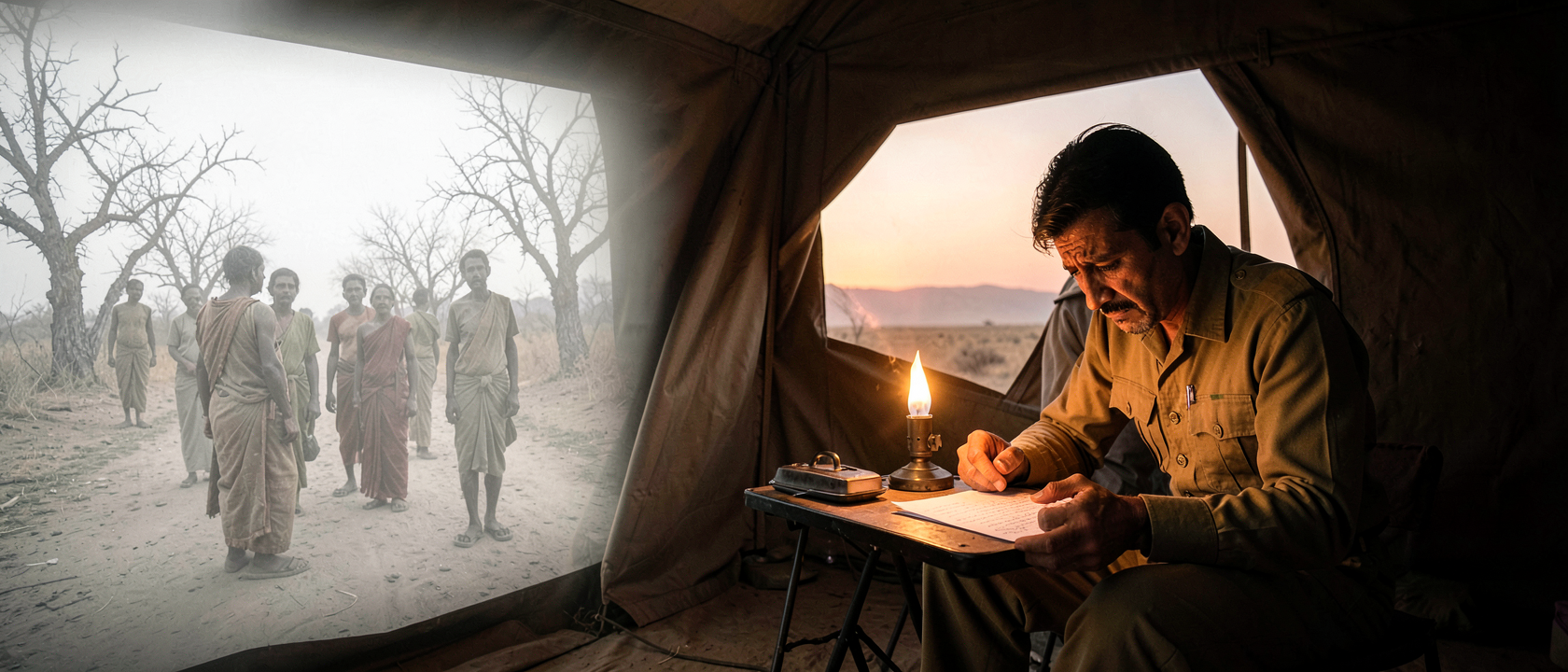
In a letter written in July 1943, a havildar, a junior officer rank in the Indian Army roughly equivalent to a sergeant, described a meal he could not finish. He served with a Sappers and Miners unit, the engineering arm of the Indian Army, responsible for building roads, bridges, and defenses wherever the campaign required them. He was stationed in Egypt, alongside British forces. What he wrote home that month was not about the food itself. He told his family that he could not eat it. The thought of what was happening in Bengal, thousands of miles away, took away his appetite. Eating decently while people at home went hungry made him physically sick, he wrote.
Two and a Half Million Men, One Thread Home
The havildar was one of an estimated 2.5 million men from undivided India who served with British forces during the Second World War, from 1939 through the war’s later years. The figure is often described as the largest volunteer force raised anywhere up to that point, though that description rests on popular repetition rather than a settled scholarly count, and no comprehensive tally backs it up here.
For men stationed in Egypt and other theaters far from home, letters were the only line back to their families. Every one of them passed through official censorship before reaching its destination, a routine feature of wartime mail across the British Empire. That makes a single soldier’s letter more than a private document. It is one sample of a much larger current of correspondence moving between soldiers overseas and a province sliding into famine.
What Got Through
Through 1943, letters describing starvation and death in Bengal kept reaching Indian soldiers stationed abroad, this one among them. Censors reviewed outgoing and incoming mail as standard practice, yet enough detail survived that review for the scale of the crisis to register with men who had no other way of knowing what was happening at home. Letters like this one survive in military censorship reports, held in the British Library’s India Office Records, extracts of soldiers’ correspondence preserved precisely because officials read them before passing them on.
Some accounts place the writer more broadly “in the Middle East” rather than in Egypt specifically, a minor discrepancy consistent with the same stretch of Indian Army service. What the record does not show is how much of the rest of this traffic was cut, softened, or blocked outright. What it does show is narrower and more solid: this particular letter, written in July 1943, got through intact enough to carry its weight.
The Cost, Narrowly Told
The letter gives no death toll. It offers no accounting of what the famine cost Bengal in lives, in money, or in policy, and historians have argued over those figures for decades in ways this account does not touch. What the letter does give is smaller, and in its way harder to dismiss: one man’s loss of appetite, his sickness at eating decently while picturing hunger at home.
That narrowness is the point of telling it this way. The subject here is not the famine’s toll across a province. It is the distance that news of that toll managed to travel, into the ration lines and barracks of men serving Britain in Egypt, and what it did once it arrived.
What the Record Doesn’t Say
The havildar is never named. Nothing in the record says whether his reaction was common among the 2.5 million men serving overseas, or whether censors treated letters like his any differently from others carrying the same news. The figures used to describe the scale of Indian wartime service, the 2.5 million total and the claim that it was the largest volunteer force of its era, are stated without the kind of sourcing that would let a reader weigh them against rival counts.
None of that erases what the letter shows. It is one verified thread, not a proven pattern, and that is a real distinction to hold onto. But a single verified thread, read carefully, still tells you more than a vague impression of suffering ever could. It tells you that in July 1943, a man in Egypt put down his food because of a letter from home.