
A Squash for Someone Else’s Table
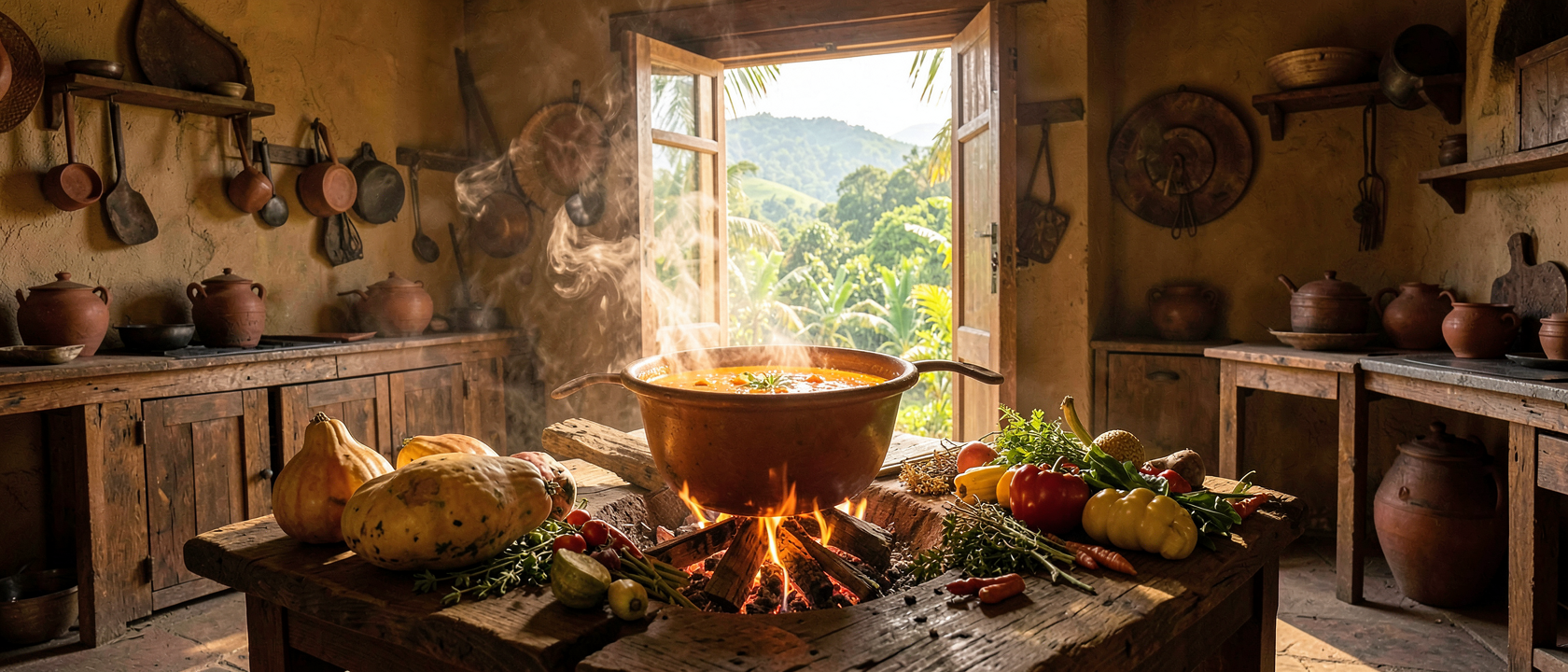
Before 1791, on plantations across the French colony of Saint-Domingue, in what is now Haiti, a soup took shape in kitchens where the cooks were enslaved and the diners were not. Soup joumou starts with a whole calabaza-type squash, cooked down until soft, then lifted out, pureed, and stirred back into its own broth to give the liquid its color and body. Beef was marinated beforehand in citrus juice and seasoning, then added to the pot with chopped vegetables and herbs.
The result was rich enough to count as a delicacy on the plantation table. It was also, by law and custom, off-limits to the people who made it. Enslaved cooks prepared soup joumou, tasted it only to check the seasoning for someone else’s meal, and carried it to French colonists. They did not sit down to eat it themselves.
A Colony Built on Control
A rule about who could eat a bowl of soup sounds small next to what Saint-Domingue actually was. By the late eighteenth century it was France’s most profitable colony, its sugar and coffee grown and processed by enslaved labor under brutal conditions. The tasting ban belongs inside that system rather than beside it. An enslaved person’s labor, time, and body already belonged to someone else. What they were allowed to put in their own mouth was one more thing that could be taken from them.
It’s worth being precise about what kind of claim this is. The ban is not tied in the record to a single surviving colonial statute; it comes down through oral tradition and later cultural writing. One frequently cited account, from cultural anthropologist Bertin Louis Jr. of the University of Kentucky, reads the ban as a way of asserting racial superiority through something as ordinary as a shared meal. That is an interpretation of what the restriction meant, not a citation of the law that created it, and the difference is worth holding onto.
August 22, 1791 to January 1, 1804
On the night of August 22, 1791, enslaved people in northern Saint-Domingue rose against French colonial rule. What began that night did not resolve quickly. It ran for roughly twelve years, through shifting alliances and changing French policy, as the colony’s enslaved population fought to hold the ground it had taken.
On January 1, 1804, Haiti was declared independent, with revolutionary leader Jean-Jacques Dessalines announcing the break from France. It became the first nation in the world founded by a successful revolt of enslaved people.
No Ledger for This War
What the record does not offer here is a count. There is no casualty figure for the twelve years between the 1791 uprising and the 1804 declaration, no tally of the dead or wounded, no reckoning of what the fighting cost in ruined plantations or lost harvests. The material behind this account describes the revolution as large in scale and hard fought, but in general terms, not numbers.
That gap is worth naming rather than smoothing over. The dates and the outcome are documented: a revolt starting in August 1791, an independent nation declared in January 1804. The size of what was lost in between is asserted, not measured, at least in the sources this account draws on.
From Forbidden to Ceremonial
What changed after January 1, 1804, was not the recipe. It was who was allowed to eat it. The same soup, still built on a whole squash pureed back into its broth, still carrying its marinated beef and vegetables, stopped being a dish reserved for French colonists and became a dish Haitians ate together, on their own independence day.
The custom has held since. Haitians mark January 1, both Independence Day and New Year’s Day, by eating soup joumou more than once over the course of the day, commonly said to run to four or five bowls, though that specific count is repeated as tradition rather than backed by any survey. In 2021, UNESCO added Joumou Soup to its Representative List of the Intangible Cultural Heritage of Humanity, formal recognition for a dish that began as something enslaved cooks were forbidden to taste and became the meal their descendants choose, every year, to mark the day they stopped being property.