
55 Strelitzer Strasse
On the evening of October 4, 1964, Andreas Springer, 21, had a last dinner with his family in East Berlin, saying nothing about where he was going. Afterward he set out to find 55 Strelitzer Strasse, where he had been told a way out of the city was waiting.
Springer had been born in 1943 in Dreilinden, on the edge of Berlin. By his early twenties he had applied to three art schools to study graphic design, and all three had turned him down, citing his Catholic upbringing, his refusal to join the state’s socialist youth organization, and the fact that two of his brothers were already living in the West.
He could not find the address on his first pass through the streets and turned back, waited, changed his coat, and went out again. This time he found the building: an old outhouse in the rear courtyard, unremarkable from the street.
Why This Was His Only Way Out
The stakes went back three years. In August 1961, his older brothers Klaus and Ulrich were in Paris when East Berlin sealed itself off behind the Berlin Wall. Neither returned home; they settled in West Berlin, cut off from their family unless Andreas found his own way across.
A first plan, to smuggle him past a checkpoint by car, was dropped after a similar attempt ended with someone caught. Instead a West Berliner named Gerd connected him to a tunnel that a group of West Berlin students (35 by one count) had begun digging from a disused bakery at 97 Bernauer Strasse, starting in April 1964.
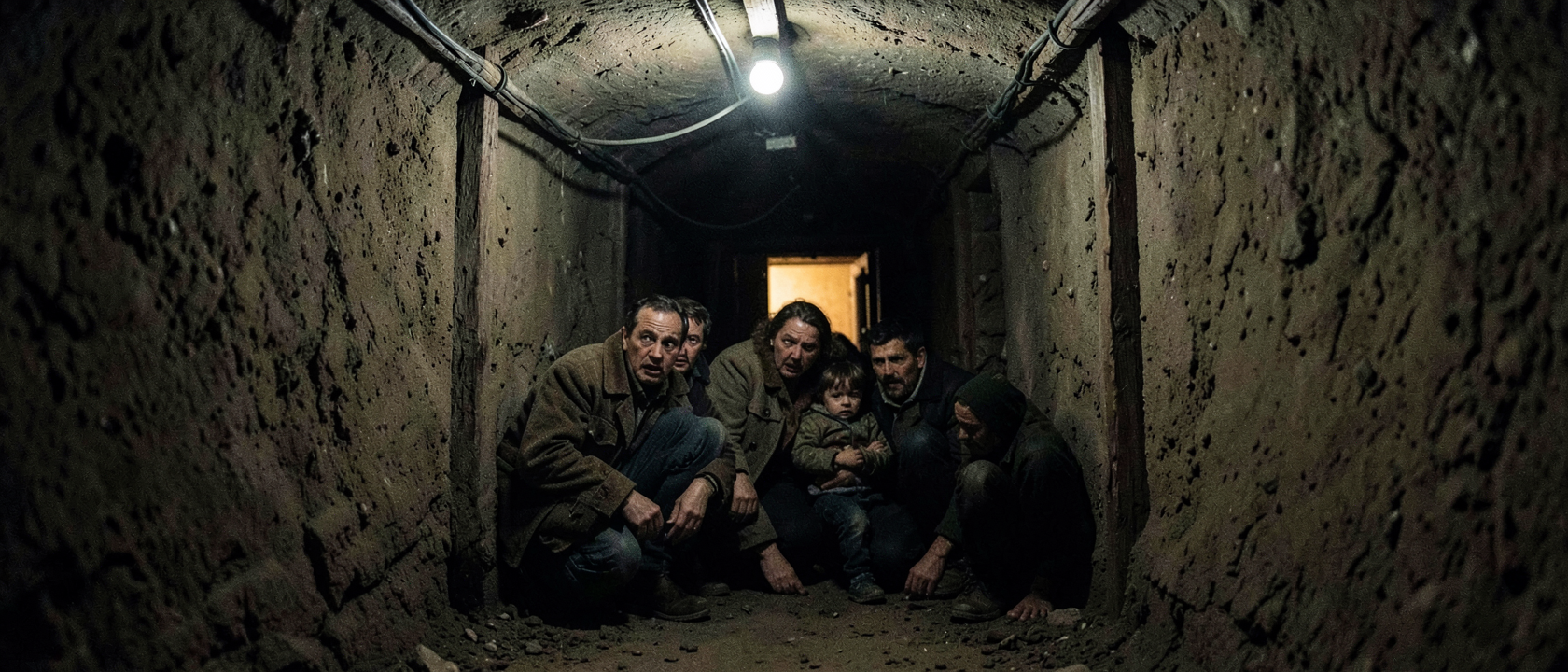
By October the tunnel ran 476 feet (145 meters) and reached 39 feet (12 meters) down at its deepest point (other accounts give 36 feet, or 11 meters). The passage itself was roughly two feet high and three feet wide. Over two nights, 57 people made it through, the number by which the tunnel is now known: Tunnel 57.
The Password and the Crawl
Springer reached the courtyard and gave the password he had been told to use, “Tokyo,” a nod to the Olympic Games about to open in the Japanese capital. He was let through and went down into the tunnel.
For 476 feet he moved on his hands and knees, the ceiling brushing his back the whole way. At the far end, helpers hauled him up the shaft with a rig of rope and board, into the disused bakery that hid the tunnel’s western end. From there it was a short walk to his brothers’ apartment. He arrived a little after 2 a.m.
Midnight at Strelitzer Strasse
Guards reached the courtyard only minutes after Springer’s exit. Shortly after midnight, East German border patrol found the passage. Helpers still on the East Berlin side scrambled to get clear; one crossed the tunnel’s length on all fours, roughly 475 feet, with guards firing behind him.
In the gunfire that followed, a border guard named Egon Schultz was shot and died. He was 21, the same age as the man who had crawled to freedom under that same street a short time before.
News by Newspaper
The Springer family learned none of this through any channel connected to Andreas’s escape. They read about the shooting the way most Berliners did, in the newspaper the next day: relief that Andreas had reached his brothers safely, and on the same page, word that a guard not much older than a boy had died at the very spot he had passed through hours earlier. Nothing in the report linked the two facts.
The Official Story, and What Was Later Found
East German newspapers reported the next day that West Berlin “terrorists” had murdered Schultz, and the state kept using that version for years, naming streets and schools after him.
The fuller account that later surfaced was more complicated. One of the helpers on the East Berlin side that night, Christian Zobel, did fire on the approaching guards and hit Schultz in the shoulder. But the fatal shot came a moment later, as he tried to get back up: fired by one of his own fellow officers. That finding came to light after German reunification in 1990, when files on the case were opened for review. Exactly when the conclusion was reached, and by what process, is not spelled out in the record this account draws on.
What became of most of the tunnel’s other builders and couriers is not recorded here. One of them, Klaus von Keussler, a former law student who worked as a digger and courier for the network, appears in the record only up to that point.
What Springer Did With It
Springer went on to work as a graphic designer, then a photographer. In 1989 he was in Berlin with a camera when the Wall came down, photographing crowds standing on the same barrier he had once crawled beneath in the dark.
For years he said little in public about the night of October 4 and 5, 1964. He has since begun to describe it in his own words: the missed address, the change of coat, the password, the crawl on his hands and knees.
The building at 55 Strelitzer Strasse is now an ordinary apartment block in Berlin’s Prenzlauer Berg neighborhood. A plaque there marks where Schultz died, and another, on Bernauer Strasse, marks the route of the tunnel underneath. Nothing else at either address gives away what happened there in October 1964.