
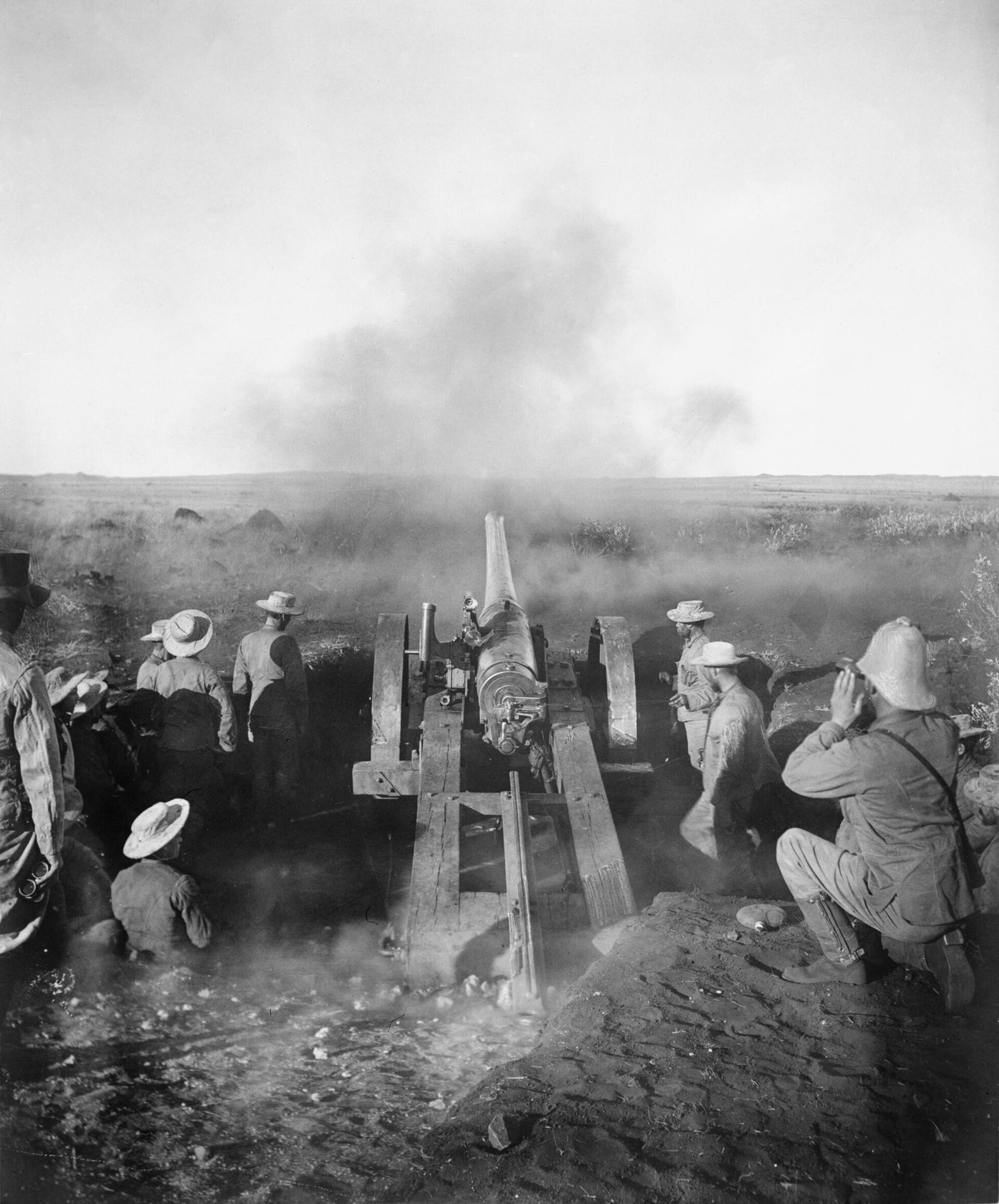
The Second Boer War, fought from 11 October 1899 to 31 May 1902, pitted the British Empire against two Boer republics: the South African Republic (Transvaal) and the Orange Free State. Also known as the Anglo-Boer War, the South African War, and in Afrikaans as the Tweede Vryheidsoorlog (Second War of Independence), it drew 448,435 British and Imperial officers and men into southern Africa across its two and a half years. The conflict cost the British government £210 million, equivalent to over £25 billion in modern values, and left behind ruined farmlands, wrecked towns, and camps whose death tolls are still debated.
Key facts
- Country: South Africa
- Type: war
- Start: 11 October 1899
- End: 31 May 1902
- Location: South Africa
- Participants: British Empire; Orange Free State; South African Republic; Robert Gascoyne-Cecil, 3rd Marquess of Salisbury
Origins
The war’s roots ran through the goldfields. The 1886 discovery of gold on the Witwatersrand drew a flood of foreign migrant workers, known as Uitlanders, into the South African Republic, transforming both the economy and the demographics of the Transvaal. The republican government responded by restricting Uitlander voting rights: foreigners had to have lived in the country for 14 years or more before they could vote. That restriction handed Britain a grievance that diplomats could exploit and that British capital had every interest in amplifying.
Negotiations between the British high commissioner and the Transvaal government failed to resolve the franchise question, and on 11 October 1899 the two Boer republics issued an ultimatum and simultaneously crossed into British-held territory. The war that followed fell into three distinct phases: a Boer offensive in late 1899, a British counter-offensive in 1900, and a guerrilla campaign that ground on until May 1902.
The Boer Offensive and the Sieges
In the opening months of the war, Boer forces moved quickly into Cape Colony and Natal, surrounding the towns of Kimberley, Mafeking, and Ladysmith. The siege of Mafeking, which began on 16 October 1899, proved the longest of the three, lasting 217 days before the town was relieved on 17 May 1900. Battle casualties on both sides at Mafeking reached 463 in total.
December 1899 brought what the British press called Black Week, a string of defeats that exposed the limits of conventional British tactics against an enemy that knew the terrain. At the Battle of Colenso alone, British forces suffered 1,137 casualties while inflicting only 38 on the Boers. The shock was acute enough to force command changes at the top.
The British Counter-Offensive
Following Black Week, General Redvers Buller was replaced as overall commander by Lord Roberts, who arrived in Cape Town on 10 January 1900 with Lord Kitchener as his chief of staff. Roberts launched a major offensive, and within months the two Boer republics had been formally annexed. The war, however, did not end.
As Boer commandos refused to surrender and melted into the countryside, Roberts initiated a scorched earth policy on 16 June 1900. Kitchener intensified it after Roberts returned to Britain. By the war’s end, approximately 30,000 Boer farmhouses and more than 40 towns had been destroyed.
Concentration Camps
To support the scorched earth campaign and to deprive the commandos of shelter, food, and information, the British established 46 concentration camps for Boer civilians. Separate camps were built for Black Africans. By 1902 those camps held 117,000 Boer women and children and 119,000 Black Africans.
British welfare campaigner Emily Hobhouse arrived in Bloemfontein on 24 January 1901 and documented what she found. Her report, published in June 1901, exposed the conditions inside and turned the issue into a national scandal in Britain. The death toll ultimately reached 28,000 Boers, the great majority of them women and children, while around half that number of Black Africans perished in the separate camps.
The Guerrilla Phase
After conventional resistance collapsed, Boer commanders reorganised into mobile commando units and launched a sustained guerrilla campaign across the vast South African interior. To contain them, the British constructed over 8,000 blockhouses linked by barbed wire fences covering 6,000 km of railway lines. By the war’s end, 50,000 British troops and 16,000 Africans were deployed to man the network.
The logistical demands of the campaign were immense. Across the entire war, 350,000 horses and 50,000 mules perished, reflecting how much the British effort depended on animal transport to move men and supplies across the terrain.
Unlikely Participants
Among the figures present at the war was Mahatma Gandhi, who in October 1899 organised the Natal Indian Ambulance Corps, consisting of 1,100 Indians: 300 free Indians and 800 indentured labourers. The corps served as stretcher bearers for the British. Gandhi himself served at the Battle of Spion Kop.
Also present at Spion Kop was Winston Churchill, then working as a war correspondent for the London Morning Post. Churchill recorded the actions of Gandhi’s corps and was reportedly astonished by what he witnessed.
Peace and Aftermath
The war ended with the Treaty of Vereeniging, signed on 31 May 1902 at Melrose House in Pretoria. Under its terms, the Boers accepted British sovereignty. In return, the treaty guaranteed the use of Afrikaans in schools and courts and provided £3 million in compensation for destruction inflicted on Boer farms.
The human and financial cost to Britain was severe. More than 120,000 British and Imperial casualties were recorded, including 22,000 dead. Of those deaths, two thirds were caused by disease rather than battle wounds. The total financial bill reached £210 million, equivalent to over £25 billion in modern values.
In 1910, the two former Boer republics, the Transvaal and the Orange Free State, were unified with Cape Colony and Natal to form the Union of South Africa, a new dominion of the British Empire. That outcome fulfilled the promise of self-government written into the Treaty of Vereeniging, though it left unresolved the status of the Black African majority who had also been caught up in the war’s destruction.
Did you know
- During Black Week in December 1899, the British suffered 1,137 casualties at the single Battle of Colenso while inflicting only 38 on the Boers, a loss ratio that shocked a Victorian public accustomed to imperial victories. (historyofwar.org)
- When a British ambassador to Germany protested Nazi concentration camps on the eve of World War II, Hermann Goering reportedly silenced him by pulling out an encyclopedia crediting Britain with being the first nation to use concentration camps, in the Boer War. (scientiamilitaria.journals.ac.za)
- The war was one of the first conflicts to generate a massive patriotic souvenir industry, with soldiers and generals appearing on everything from boxes of matches to porcelain mugs. (worldhistory.org)
- Winston Churchill, then a war correspondent for the London Morning Post, was present at the Battle of Spion Kop and recorded the actions of Gandhi’s Indian Ambulance Corps, reportedly astonished by what he witnessed. (livehistoryindia.com)
Data sources
- Wikidata
- nam.ac.uk
- sahistory.org.za
- worldhistory.org
- bl.uk
- fffsafaris.co.za
- oxfordreference.com
- queensroyalsurreys.org.uk
- livehistoryindia.com
Where it appears
- Mental Deficiency Act of 1913: Britain’s 46-Year License to Confine November 5, 2026
Data updated: 2026-11-02