
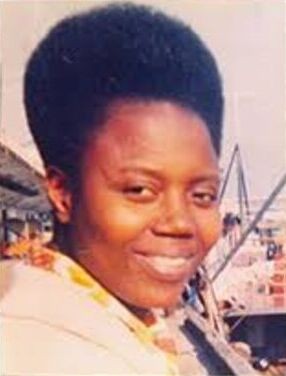
Félicité Niyitegeka was a Rwandan Hutu Catholic lay worker who ran a church-affiliated center in Gisenyi and used it to hide and move Tutsi refugees to safety during the 1994 genocide. Born in 1934 in Butare to Simon Sekabwa and Angelina Nyirampabuka, she spent her final years directing Centre Saint Pierre, an institute overlooking Lake Kivu that housed about 30 nuns. In April 1994 she organized escapes across the border into Zaire and refused an armed escort offered by her brother, a colonel in the army. She was killed on April 21, 1994, alongside the Tutsis she had been sheltering.
Key facts
- Born: 1934
- Birthplace: Butare
- Died: 21 April 1994
- Place of death: Gisenyi
- Country: Rwanda
- Occupation: religious sister
Early life and work
Félicité Niyitegeka came from a Hutu family in Butare, a background later relevant to her protection of Tutsi refugees during the genocide. Before 1994 she worked as a teacher, and a former schoolmate recalled her maintaining composure even during sports events. She later served for several years as a trainer of sisters in the Nyundo Diocese, in Gisenyi sector, and belonged to the Auxiliaries of the Apostolate, a Rwandan lay order whose members included both Hutu and Tutsi.
By the time the genocide began, she directed Centre Saint Pierre, a Catholic missionary institute in Gisenyi overlooking Lake Kivu that housed a community of about 30 nuns.
Sheltering refugees in April 1994
As killings spread through Rwanda in April 1994, Niyitegeka helped Tutsi refugees cross the border into Zaire, now the Democratic Republic of Congo, via the Goma crossing. On the night of April 19, 1994, with help from Adria Umurangamirwa, she organized the escape of ten to fifteen people across that border. On April 20, 1994, she was preparing to help a further group of 43 people escape their pursuers.
When militia came to the center demanding she hand over the Tutsi she was sheltering, she told them: “I haven’t any inyenzi [cockroaches]. They are human beings, your brothers and sisters.” Her brother, a colonel in the Rwandan army, sent soldiers to offer her an armed escort out of the area. She refused it, writing a final letter to him saying she preferred to die with the 43 people about to be killed rather than save herself by abandoning them.
Death at Commune Rouge
Niyitegeka was taken with the refugees to Commune Rouge, a cemetery that had been turned into an extermination site. She was killed there by an assassin’s bullet alongside her Tutsi companions on April 21, 1994. Only two people from her group survived the attack. Her death reportedly prompted the architects of the genocide to immediately order the start of mass killings that ultimately claimed more than a million lives.
As of 2017, the Chancellery for Heroes, National Orders and Decorations of Honour reported that the search for her remains was still underway.
Commemoration
Her name is inscribed on the heroes’ mausoleum in Rubavu district, at the Saint Pierre center where she served. Her life story and her final letter were reproduced in Aylward Shorter’s book “Christianity and the African Imagination,” and a separate book, “No Greater Love,” compiles testimonies from people who knew her and recounts her life and killing. Family members have continued to honor her by laying wreaths at her grave during commemorative ceremonies.
Did you know
- Her parents nicknamed her “ikimanuka,” reflecting what they saw as her friendly and honest personality. (en.gariwo.net)
- She was also known by the honorific nickname “Imena.” (newtimes.co.rw)
- Genocide survivor and Ishami Foundation co-founder Eric Murangwa described her strength, recalling her belief that the best she could offer refugees was to stay with them. (en.gariwo.net)
- She reportedly sang hymns while being taken away with those she had sheltered, believing she would go straight to heaven. (ktpress.rw)
- Well before the massacres began, she told a friend, “I foresee an imminent danger,” a remark later recorded among her most quoted. (en.wikiquote.org)
- The site where she and the refugees were killed became known as Commune Rouge (“Red Commune”), later turned into a genocide memorial. (ktpress.rw)
Data sources
- Wikidata
- en.wikiquote.org
- en.gariwo.net
- newtimes.co.rw
- ktpress.rw
- francegenocidetutsi.org
- dignitypress.org
- sapiens.org
Where it appears
Data updated: 2026-11-11