
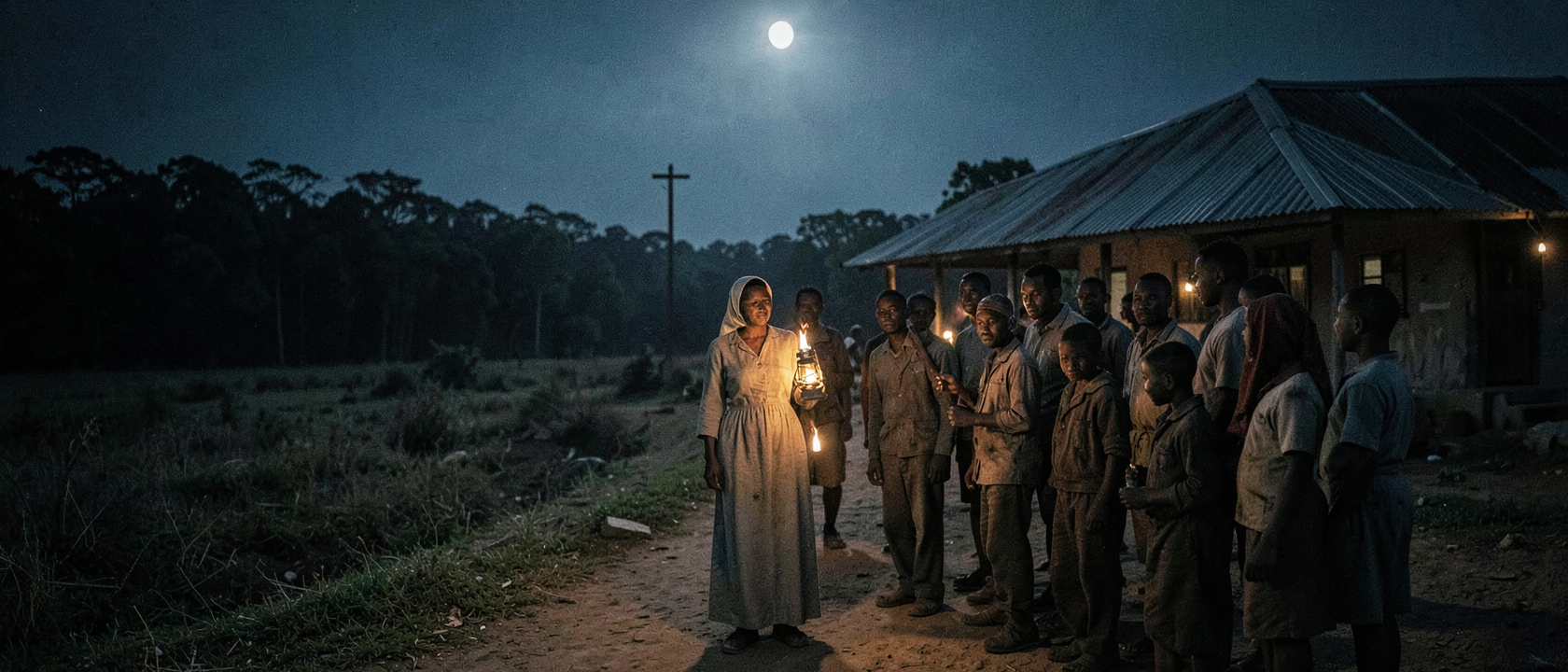
The Centre Saint-Pierre, Gisenyi
Félicité Niyitegeka was born in 1934 into a Hutu family in Rwanda. In the 1950s she joined the Auxiliaries of the Apostolate, a lay Catholic order in Rwanda that counted both Hutu and Tutsi members. She trained as a teacher and received part of her religious formation in Lourdes, France, before returning home. By 1994 she was directing the Centre Saint-Pierre, a Catholic charity and retreat center in Gisenyi, a town in western Rwanda on the border with Zaire, today the Democratic Republic of Congo. Gisenyi is known today as Rubavu Town, and the center had long served both Hutu and Tutsi neighbors through its retreats and charity work.
In the second week of April 1994, as militia violence spread through the region, Niyitegeka began hiding Tutsi neighbors and retreat participants inside the building. She told a friend she sensed danger closing in and had grown too anxious to sleep. The people she took in that week were the same ones she would soon describe, in writing, as hers to protect.
A Letter to Her Brother
On April 6, 1994, President Juvénal Habyarimana died when his plane was shot down, an event that set off the genocide against the Tutsi across Rwanda. Within days, Interahamwe militia, Hutu paramilitaries whose name is often translated as “those who attack together,” were active around Gisenyi. By April 12, the parish where Niyitegeka worked had already come under attack, struck with gunfire, stones, and machetes.
Her brother, Alphonse Nzungize, a colonel in the Rwandan army, urged her to leave, offering the protection his rank could buy her. Niyitegeka wrote back and refused. In the letter, she told him she would rather die than save herself by abandoning the 43 people she now felt responsible for.
A Crossing Before Dawn
Before dawn on April 19, 1994, around two in the morning, Niyitegeka organized an escape for more than a dozen Tutsi refugees sheltering at the center. Adria Umurangamirwa, one of those hiding there, led the group on foot through dense brush toward the border with Zaire, about a mile (1.6 km) away, watching for a signal light to guide them through the dark. Soldiers posted at the crossing had been paid to let the group pass unharmed. They reached Zaire safely and made their way to the Hôtel des Grands Lacs, where they marked their arrival with a hymn. Of everyone Niyitegeka tried to save that month, this is the group whose survival is documented most clearly: more than a dozen people, moved across a border at night, known to have lived.
The Afternoon of April 21
Two days after that crossing, on the afternoon of April 21, 1994, Interahamwe militia reached the Centre Saint-Pierre. Accounts place the moment at around 4 p.m. Niyitegeka warned the people hidden inside to stay out of sight, then went out to meet the militia herself.
They demanded she hand over the inyenzi, cockroaches, the word extremist propaganda used for Tutsi. Niyitegeka would not use it. She told the militia that the people inside were human beings, their own brothers and sisters. The militia offered her a way out: because her brother held the rank of colonel, she could stay behind. She did not take it. When the captured Tutsis were loaded onto two minibuses, about 30 people in all, Niyitegeka boarded with them.
Commune Rouge
That same afternoon, the buses reached Commune Rouge, a cemetery and killing site outside Gisenyi, now part of the Gisenyi genocide memorial in Rubavu District. Niyitegeka prayed with the people around her. Then she was shot, along with everyone who had been loaded onto the buses that day.
She had helped roughly two dozen people reach safety earlier that month. On April 21, her own name was added to the dead. It was one death inside a genocide that historians estimate killed between 800,000 and more than a million people, overwhelmingly Tutsi, a range that reflects genuine disagreement among historians rather than a gap in the telling. Forces of the Rwandan Patriotic Army brought the killing to a halt in July 1994.
An Unfinished Record
The record does not say how many of the 43 people named in Niyitegeka’s letter survived beyond the roughly two dozen known to have reached Zaire earlier that April. It gives no exact death toll for the Centre Saint-Pierre or for Commune Rouge beyond the two busloads taken there on April 21. Her body was never identified among the remains later recovered at the killing site, though Rwanda’s National Heroes Cemetery lists her among the buried, a discrepancy the sources do not resolve. Accounts also differ on whether she was a professed nun: most describe her as a lay worker within the order, though one source calls her a nun outright.
Her letter still names the 43 people she called her responsibility, written before she chose to board the bus rather than use her brother’s rank to stay behind. Rwanda’s Chancellery for Heroes, National Order and Decorations of Honours later gave her its highest Hero’s Award, a category that includes only four Rwandans. Niyitegeka is counted among them.