
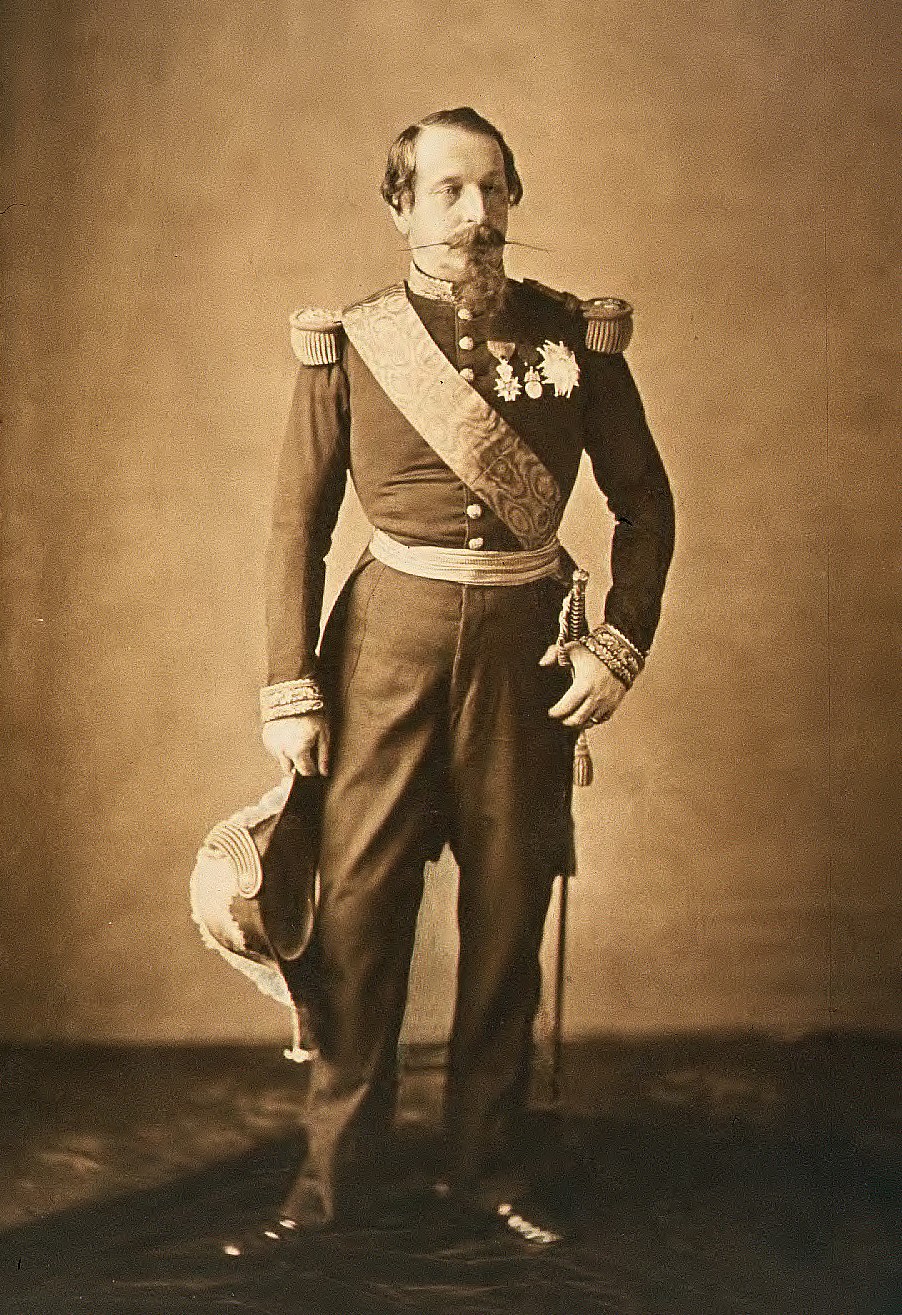
Napoleon III was President of the Second French Republic and then Emperor of the Second French Empire, the last monarch to rule France. Born in Paris on 20 April 1808, he died in Chislehurst on 9 January 1873. His rise combined a failed coup, imprisonment, escape and eventual seizure of power: on 2 December 1851 he dissolved the National Legislative Assembly and occupied Paris with the army, a move that a referendum on 20 and 21 December 1851 approved by seventy-six percent of voters. As emperor he reshaped French banking, railways, trade and the city of Paris itself.
Key facts
- Born: 20 April 1808
- Birthplace: Paris
- Died: 9 January 1873
- Place of death: Chislehurst
- Country: France
- Occupation: politician; writer; draftsperson; illustrator
- Education: Waffenplatz Thun
- Awards: Grand Cross of the Legion of Honour; Knight of the Order of the Golden Fleece; Knight of the Order of St. Alexander Nevsky; Order of Saint Anna, 1st class
From conspirator to prisoner of Ham
Napoleon III attempted a coup at Boulogne in 1840. It failed, and he was sentenced to life imprisonment, serving his term at the fortress of Ham in the Somme. Prison authorities allowed him to read and study there, and he referred to his quarters as the “University of Ham.”
On 25 May 1846 he escaped from Ham disguised as a laborer and fled to London, where he lived before returning to France to pursue political power.
Seizing and holding power
On 2 December 1851 he staged a coup d’état, dissolving the National Legislative Assembly, restoring universal male suffrage, and occupying Paris with the army to stop any opposition from organizing. The public referendum of 20 and 21 December 1851 backed the coup with seventy-six percent support, giving him the mandate to consolidate his rule.
He went on to modernize the French banking system, expand and consolidate the national railway network, and build the French merchant marine into the second largest in the world. In 1860 he negotiated the Cobden-Chevalier free trade agreement with Britain, along with similar accords with other European trading partners. His government also extended social reforms, including a law passed in 1864 that granted French workers the right to strike.
Rebuilding Paris
The street plan and much of the appearance of central Paris today result from the renovation he commissioned under Georges-Eugène Haussmann. A parliamentary report in 1859 on the Rivoli street-widening project credited it with bringing “air, light, and healthiness” and easier circulation through the city.
Under mounting political opposition, Napoleon III dismissed Haussmann in January 1870. The renovation projects he had set in motion continued long afterward, with work on them lasting until 1927.
Did you know
- Despite being sentenced to life imprisonment at the fortress of Ham, he escaped on 25 May 1846 disguised as a laborer. (napoleon.org)
- A statue of a fictional character called “Badinguet,” said to have helped him escape, stands at the ruins of the château de Ham. (france3-regions.franceinfo.fr)
- A parliamentary report in 1859 on his Rivoli street-widening project declared it had brought “air, light, and healthiness and procured easier circulation.” (oldworldvoyages.com)
- Work on the Paris renovation projects he initiated continued until 1927, long after his death. (courses.lumenlearning.com)
- His Minister of State Eugène Rouher called the Mexican intervention “la plus grande pensée du règne” (the loftiest idea of the reign), a phrase later turned into mockery of the failed venture. (link.springer.com)
Data sources
Where it appears
- Salvation Islands: a century of French convicts behind two famous names November 12, 2026
- Emperor Maximilian of Mexico Dies Before a Firing Squad at Querétaro November 10, 2026
Data updated: 2026-11-08