
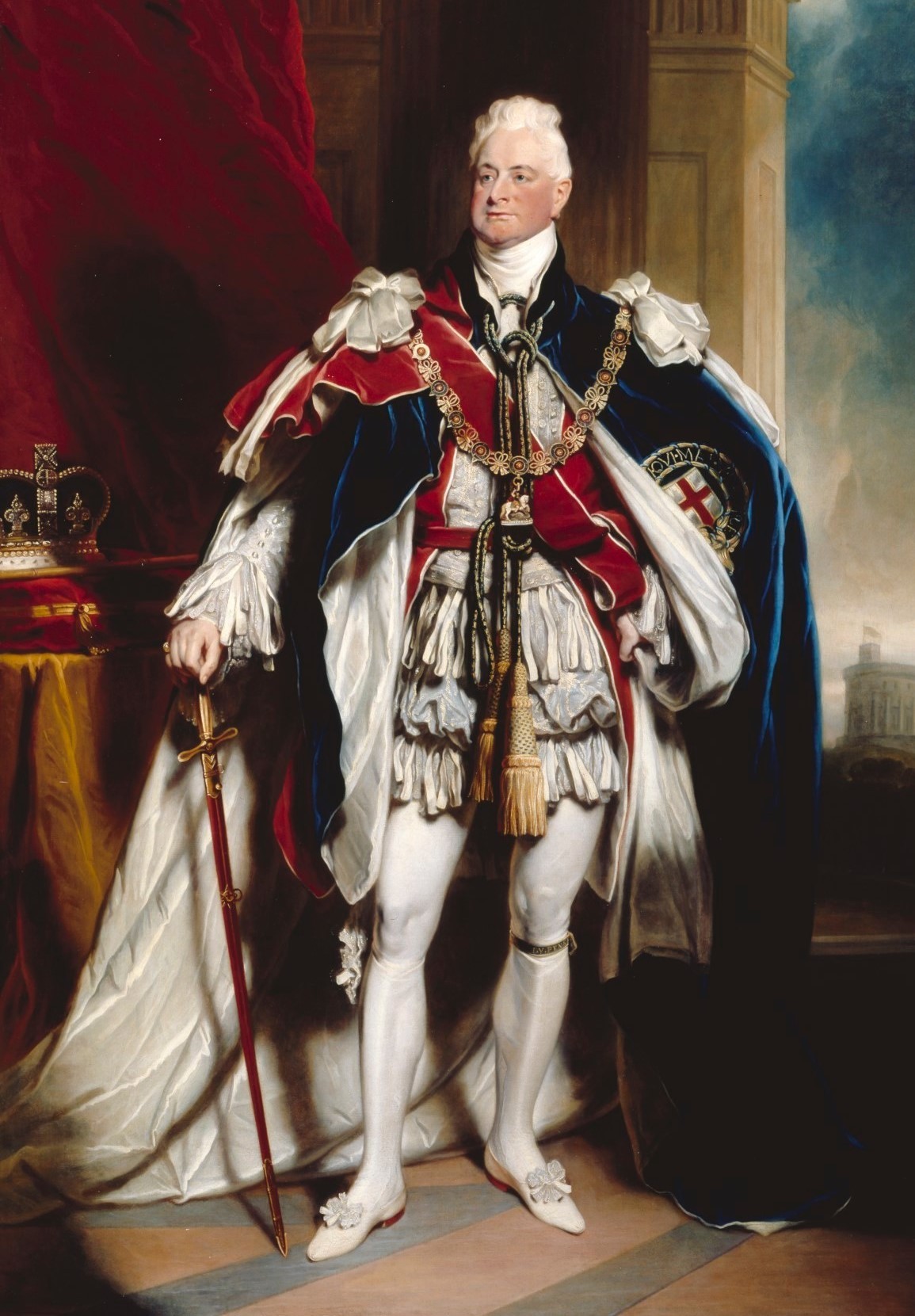
William IV was King of the United Kingdom of Great Britain and Ireland and King of Hanover from 1830 to 1837. Born on 21 August 1765 at Buckingham Palace, he was the third son of King George III and Queen Charlotte and spent much of his early life as a naval officer rather than as an heir to the throne. He succeeded his brother George IV in June 1830 at age 64, and during his reign Parliament passed the Abolition of Slavery Act in 1833. He died on 20 June 1837 at Windsor Castle, aged 71, and was succeeded by his niece Victoria.
Key facts
- Born: 21 August 1765
- Birthplace: Buckingham Palace
- Died: 20 June 1837
- Place of death: Windsor Castle
- Country: United Kingdom of Great Britain and Ireland; Kingdom of Hanover; Kingdom of Great Britain
- Occupation: monarch; politician; naval officer
- Awards: Knight of the Order of the Holy Spirit; Knight of the Order of Saint Michael; Order of the Black Eagle; Order of St. Andrew
Early life and naval career
William was tutored privately at Kew Palace from 1772 before joining the Royal Navy. He fought at the Battle of Cape St Vincent against the Spanish fleet in 1780, gaining direct combat experience well before any prospect of kingship.
While serving in New York, William became the target of a kidnapping plot approved by George Washington. The plan was leaked before it could be carried out, and William continued his naval service unharmed.
Family with Dorothea Jordan
For many years William lived with the actress Dorothea Jordan, with whom he had ten children, all given the surname FitzClarence. Nine of the ten were named after nine of William’s fourteen siblings. Dorothea Jordan died in Saint-Cloud, France, on 5 July 1816, at the age of 54, reportedly in poverty.
William had no surviving legitimate children by the time of his death in 1837, which meant the throne passed outside his direct line to his niece Victoria.
Accession and reign
William succeeded George IV as king in June 1830 at the age of 64, making him at the time the second oldest person to succeed to the British throne. His accession came after decades spent largely outside the political and courtly mainstream of royal life.
During his reign, the Abolition of Slavery Act was passed in 1833, ending slavery across most of the British Empire. This came despite William having earlier spoken out against abolition during his political career, a position formed before he became king.
William held several foreign honours, including Knight of the Order of the Holy Spirit, Knight of the Order of Saint Michael, the Order of the Black Eagle, and the Order of St. Andrew.
Did you know
- William was once exonerated for his role in a drunken fight in Gibraltar, a leniency his fellow naval officers would not have received. (historic-uk.com)
- The historian Tom Pocock argued that William regarded himself first as a naval officer who happened to become king, rather than the reverse. (ebsco.com)
- William’s tenth child with Dorothea Jordan was named Henry, which was also William’s own middle name. (unofficialroyalty.com)
Data sources
Where it appears
- London Bridge’s new arches sped up the Thames and killed its frost fairs November 21, 2026
Data updated: 2026-11-16