
The Floating Court
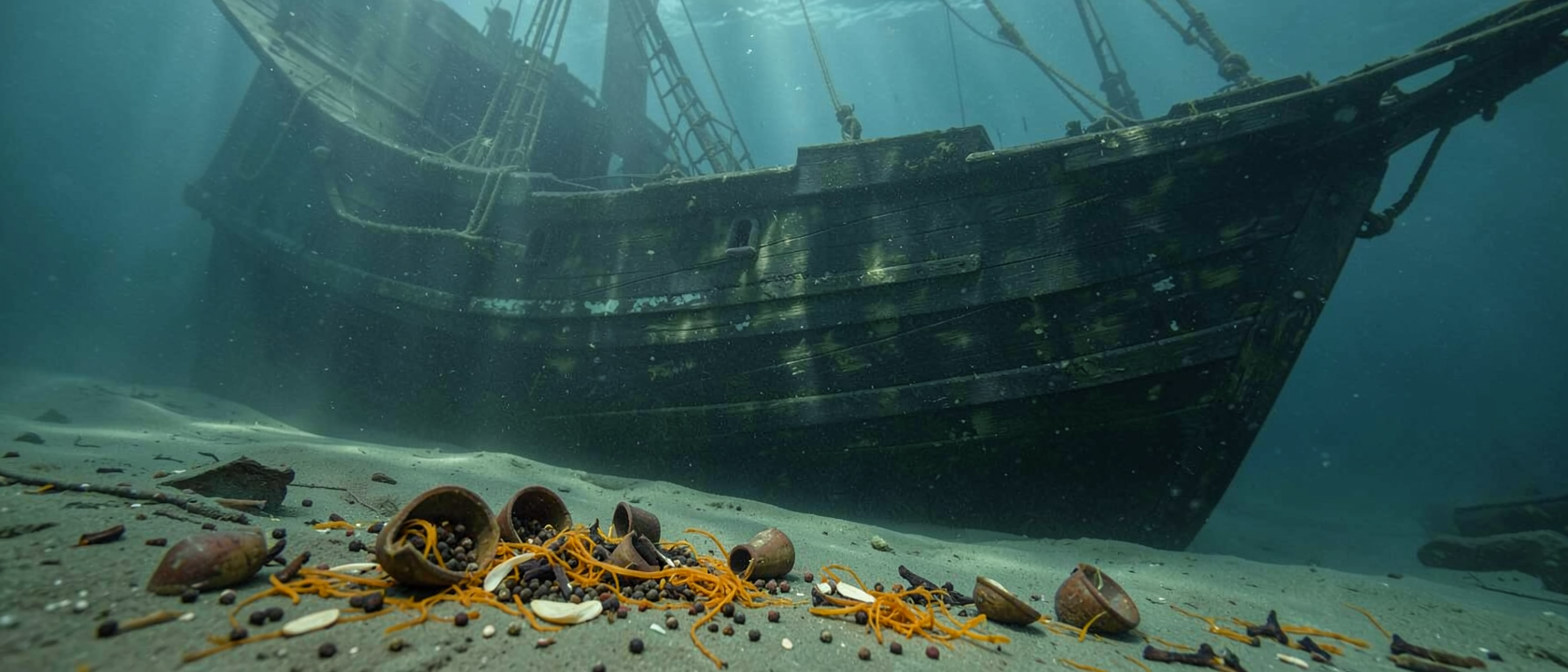
King Hans of Denmark and Norway had his flagship built in 1485, its timbers felled the previous winter in what is now northeastern France, the hull likely finished in a shipyard in the Low Countries. He named it Gribshunden; a letter dated May 16, 1486, calls it simply “our ship Griffon.” It was never just a warship, loaded with cannon, artwork, and diplomatic gifts, it functioned as a floating extension of the Danish court, and in 1487 it helped put down unrest on the Danish-held island of Gotland. One recent, unconfirmed estimate puts its construction cost at as much as 8 percent of Denmark’s entire national budget for 1485. Hans ruled Denmark and Norway under the Kalmar Union, the alliance meant to bind the three Nordic crowns together, and he wanted Sweden back inside it.
Anchored Off Ronneby
In the summer of 1495, Gribshunden sailed from Copenhagen toward a summit at Kalmar, Sweden, carrying the king, his courtiers, soldiers, and, by one account, as many as 150 people in total. Hans expected the Swedish Council to elect him king of Sweden on the spot. In late June, just before the Midsummer holiday, the ship anchored off Stora Ekön, an island in the Blekinge archipelago near Ronneby, then Danish territory. Its hold carried weapons, artwork, and rare foods and spices, cargo meant less to feed the crew than to show Sten Sture the Elder, the Swedish regent Hans was due to meet, exactly what he was dealing with.
Fire and Sinking
Hans went ashore near Ronneby, presumably to meet local officials before the summit. While he was on land, fire broke out aboard Gribshunden; what started it was never established. An explosion followed, and the ship sank in shallow water, roughly 33 feet deep (10 meters), with slightly different figures depending on the survey. An unknown number of the roughly 150 people believed to have been aboard died; the sources agree only that the toll was significant. Hans continued on to Kalmar. The meeting with Sten Sture never happened.
The Political Aftermath
Two years later, in 1497, the Swedish Council named Hans king after Sten Sture stood down, though whether that happened through military defeat or a negotiated resignation is disputed among historians. His hold on the Swedish crown lasted only until 1501, when Swedish nobles reinstated Sten Sture and pushed Hans out again. Six years of effort to bring Sweden back into the Kalmar Union ended almost exactly where it began.
Found Again
Gribshunden lay off Stora Ekön for close to five centuries. A local diving club found the wreck in the 1970s, but it drew no archaeological interest until 2001, when a diver alerted researchers and the first formal excavation began. Written sources identified the wreck as Gribshunden roughly a decade later, sometime between about 2011 and 2013 depending on the account.
What the Silt Gave Up
The site kept producing finds. In 2015, divers recovered a carved wooden figurehead shaped like a monster devouring a screaming man. Researchers also reported finding a well-preserved Atlantic sturgeon at the site in 2019, a claim that so far rests on a single source. In 2021, excavation near the stern, thought to be where the ship’s highest-ranking passengers had traveled, turned up almond shells, peppercorns, clove, ginger, and strands of saffron, collected by hand and sealed in a 1.3-gallon (5-liter) bag underwater. Archaeologists Mikael Larsson and Brendan Foley of Lund University published the findings in PLoS ONE in 2023, reporting more than 13 ounces (400 milliliters) of saffron recovered in total. Clove, ginger, and saffron had never before turned up in a medieval Baltic excavation; the saffron is described as the first documented find of its kind from any shipwreck in the world.
Why It Survived
None of this should have lasted, organic material rots. But the Baltic off Ronneby is cold, low in salinity, and starved of dissolved oxygen, conditions that choke off the microbes that normally break down plant tissue. Researchers reported that after 527 years underwater, the saffron still carried its scent. The same water chemistry kept the warship Vasa intact after she sank in 1628 and was raised in 1961 with her hull and fittings whole. Fire took Gribshunden down; the water it sank into is what kept its cargo together.
What Still Isn’t Known
Much of the story stays open. Nobody knows what started the fire, or the exact death toll. The idea that the stern held Hans’s most important guests is a working assumption, not a confirmed fact. No jar, box, or container turned up around the saffron; researchers suspect a fabric bag disintegrated and left the spice behind, but that is a guess, not a finding. Even the saffron’s exact place of origin is unclear, and whether the spices were meant for the voyage itself or for a feast planned at Kalmar is something the excavators can only propose.
The Bill
Set the ledger side by side. Hans lost a flagship, a cargo built to project power, and an unknown number of men out of a crew estimated at up to 150, though he himself was not among them. He lost six years of work toward bringing Sweden back into the Kalmar Union, undone again by 1501. What survived, brought up by hand from the silt starting in 2015 and especially in 2021, is a more complete record of a medieval royal household’s private wealth than any surviving written account of the period offers: spices from South India, Southeast Asia, Indonesia, and the Mediterranean and Southwest Asia, still identifiable more than five centuries later. The fire that sank Gribshunden cost Hans his crew, his ship, and eventually his Swedish throne. The water that swallowed it preserved, in every sense of the word, exactly what he had wanted Sten Sture to see.