
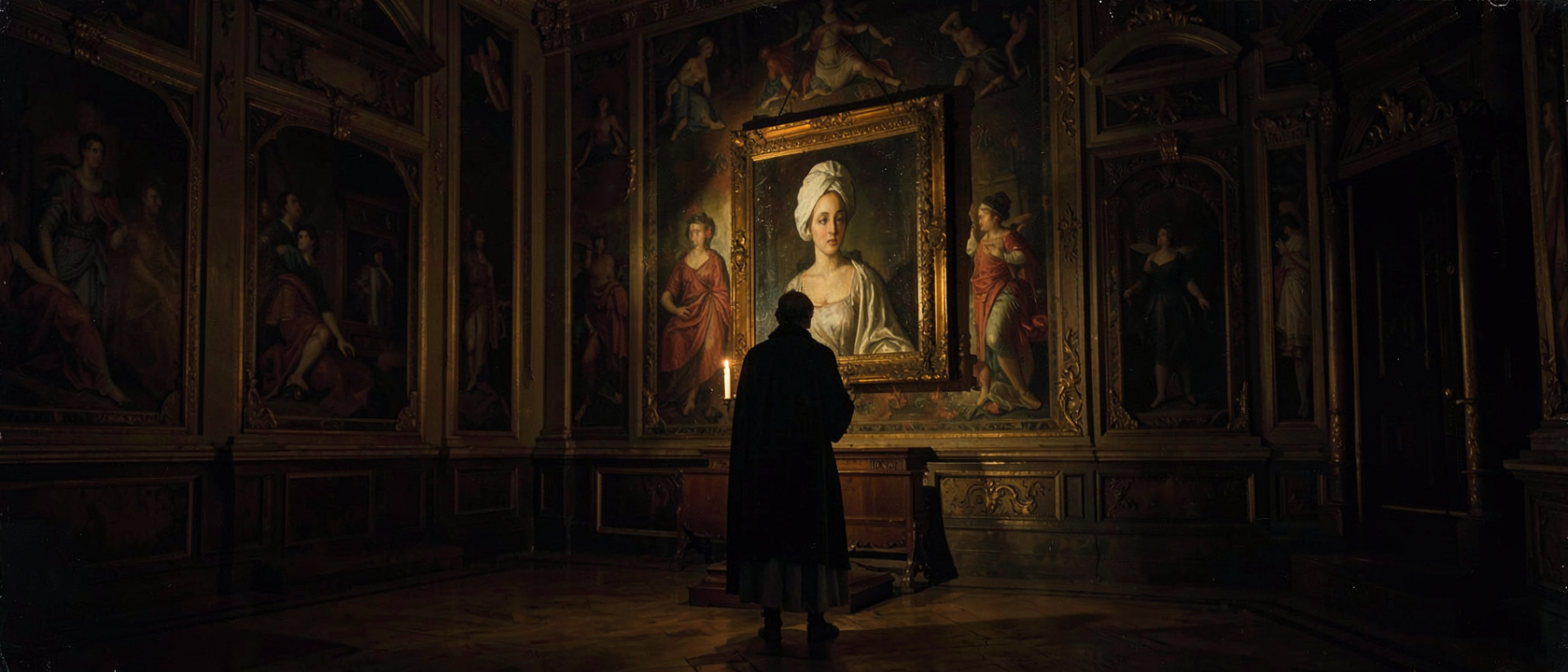
Rome, 11 September 1599
On September 11, 1599, three members of the Cenci family were brought to Ponte Sant’Angelo in Rome for public execution. Lucrezia Cenci, the stepmother, and Giacomo, the eldest brother, died first. Then came Beatrice, aged 22, beheaded with a small axe. A fourth family member, Bernardo, aged 12, was made to watch and condemned to life as a galley slave.
The charge was the killing of Count Francesco Cenci. He had died on September 9, 1598, at the family castle at Petrella Salto in the Abruzzi mountains: drugged, beaten to death, and his body dropped from a balcony to simulate an accident. At trial, Beatrice testified that Francesco had raped her. Whether that testimony was true is disputed; his record of violence is not, and included a documented charge of molesting a child from which he had been freed because of his noble status. Pope Clement VIII rejected all appeals for clemency. After the executions, the Cenci properties were confiscated and transferred to the pope’s own family.
A Gap of Nearly Two Centuries
Between September 1599 and roughly the 1740s, no documented connection existed between any painting and Beatrice Cenci. The portrait that would eventually bear her name existed during this entire interval without it. That gap runs to approximately 140 to 150 years, roughly the same distance that separates the French Revolution from the mid-twentieth century. Any identification made across a span of that length is retrospective by definition, assembled from inference rather than recorded at the time. The historian Ludovico Antonio Muratori helped reopen the story when his Annali d’Italia was published in the late 1740s, bringing the Cenci case back into wider circulation. The portrait’s identification as Beatrice followed from there.
An Unknown Woman Acquires a Name
At some point in the late 18th century, a small oil-on-canvas portrait of a woman in a white turban came to be identified as Beatrice Cenci, with an attribution to Guido Reni, the Bolognese Baroque painter whose name carried institutional authority. The canvas measures approximately 29.5 by 19.7 inches (75 by 50 centimeters) and now hangs in the Galleria Nazionale d’Arte Antica at Palazzo Barberini in Rome.
Attached to both was a legend: that Reni had visited Beatrice in her cell, or encountered her on the road to the scaffold, and recorded her face before the execution. No document supports this. Scholarship has established that Reni was not in Rome in September 1599; he arrived around 1600 or 1601. The encounter the legend describes could not have taken place. The earliest Barberini catalogue entry describes the work only as likely depicting the Cenci girl, painted by an unknown hand.
What Shelley, Stendhal, and Dickens Made of It
Once the identification was in circulation, the portrait stopped functioning as an illustration of the story and became evidence for it. Percy Bysshe Shelley encountered the image in Rome and wrote The Cenci, a verse drama in five acts, during the summer of 1819, published in London by Charles and James Ollier the same year. Henri Beyle (Stendhal) worked on his version from 1833 onward; Les Cenci appeared in 1839 as part of Chroniques italiennes. Both writers responded in good faith to what the scholarship and gallery labels of their era presented as a verified likeness. Nathaniel Hawthorne, Alexandre Dumas, Antonin Artaud, and Alberto Moravia also produced work connected to the case.
Charles Dickens traveled in Italy between 1844 and 1845 and stood in front of the portrait. His account appeared in Pictures from Italy, published in 1846 by Bradbury and Evans in London. He described a young woman looking back over her shoulder, reading in her eyes, in his own words, “celestial hope, and a beautiful sorrow, and a desolate earthly helplessness.” Given what scholarship has since established, his response is a precise measure of how thoroughly the legend had replaced the object: what he believed he was looking at was not there.
Ginevra Cantofoli and the Credit That Did Not Survive
The portrait is now attributed, with a question mark retained in the 2021 Galleria Barberini Corsini catalogue, to Ginevra Cantofoli. Born in Bologna in 1618 (some sources give 1608), she trained under Giovanni Andrea Sirani and worked as a history painter in Bologna during the Baroque period, recognized professionally in her own lifetime. She died in Bologna in 1672. Her reputation did not survive the 17th century in any form the wider world retained. The portrait she most likely painted outlasted her name by roughly two centuries, during which time it generated one of the most sustained bodies of Romantic literary response the period produced. None of that response acknowledged her.
What the Attribution Cost
Every piece of cultural recognition the portrait produced accrued elsewhere. Shelley’s drama belongs to Shelley. Stendhal’s prose belongs to Stendhal. Dickens’s paragraph belongs to Dickens. Guido Reni’s legacy absorbed a work he almost certainly did not make, painted in a meeting that could not have happened. The mechanism was not deliberate: a famous name required no verification; an unfamous woman’s name required evidence, and no one thought to look for it.
The reattribution to Cantofoli now stands in the scholarly literature, marked honestly with a question mark because no signed document confirms it. The correction has not crossed into general circulation, and the literary works it generated remain exactly as they are. What the canvas shows is a woman whose name no document records.