
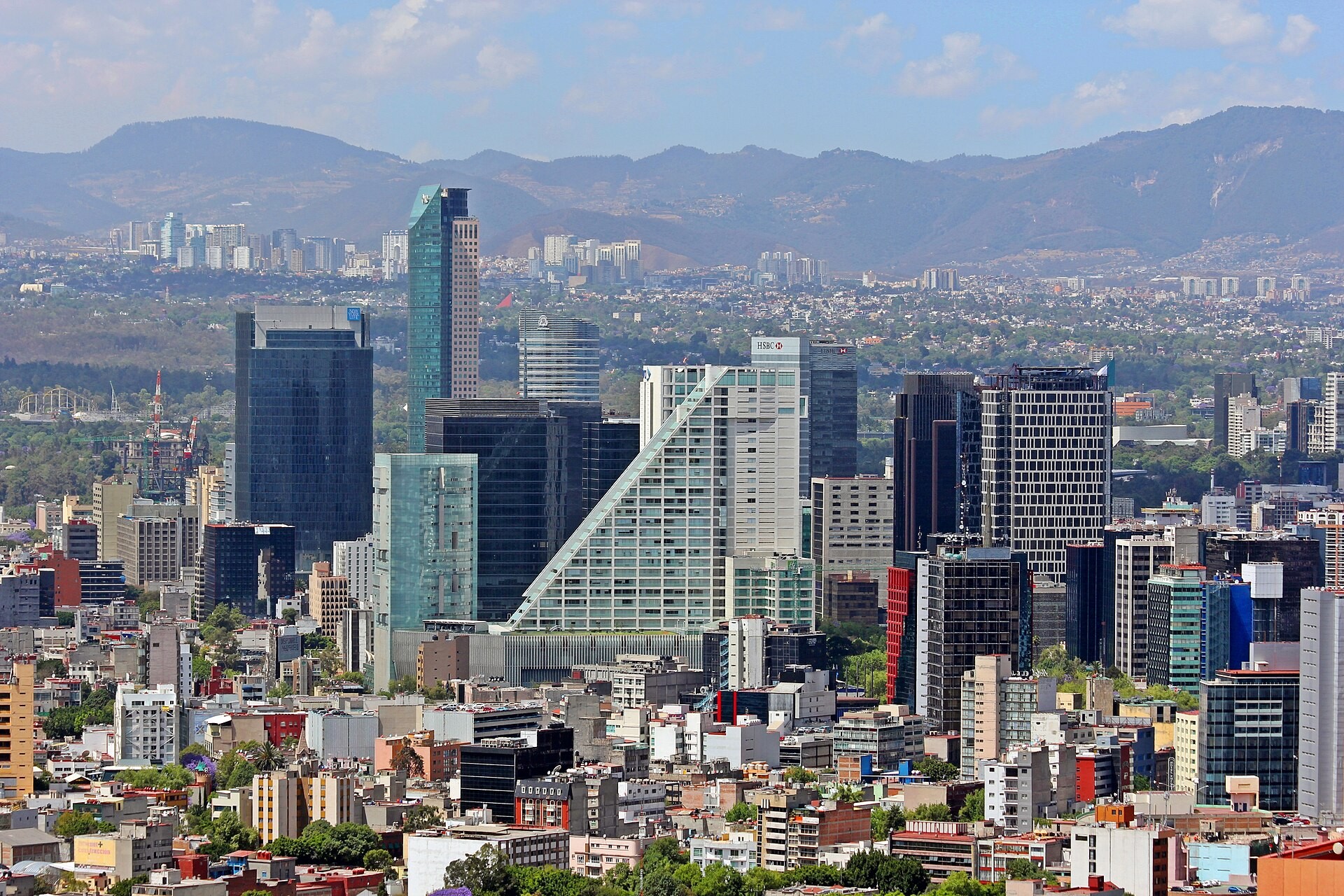
Mexico is a country in North America with a population of 132,274,416 people and an area of 1,960,647 km², making it one of the larger nations of the Americas by both measures. Its capital is Mexico City, and its official languages include Spanish, Nahuatl and Yucatec Maya. The country traces its founding as an independent nation to 16 September 1810, though the territory was home to advanced Amerindian civilizations long before Spanish colonization in the early 16th century. Mexico runs a free market economy tightly bound to the United States through trade and manufacturing, and it holds 36 UNESCO World Heritage Sites, more than any other country in the Americas.
Key facts
- Capital: Mexico City
- Continent: North America
- Population: 132,274,416
- Area: 1,960,647 km²
- Official language: Spanish; Nahuatl; Yucatec Maya
- Currency: peso
- ISO code: MX
- Founded: 16 September 1810
Before and after conquest
The land that is now Mexico was the site of several advanced Amerindian civilizations, including the Olmec, Toltec, Teotihuacan, Zapotec, Maya and Aztec. The Aztecs ruled most of Central Mexico from 1428 to 1521 from their capital at Tenochtitlan, the site of modern-day Mexico City. Spain conquered and colonized the region in the early 16th century, ending centuries of independent rule by these civilizations.
Mexico’s modern political history includes a long period of single-party dominance by the Institutional Revolutionary Party (PRI), which followed the 1910 Mexican Revolution. Elections in 2000 broke that pattern for the first time since the Revolution, when opposition candidate Vicente Fox of the National Action Party (PAN) won the presidency. In December 2018, left-leaning politician Andrés Manuel López Obrador of the National Regeneration Movement (MORENA) became president.
Economy and trade
Mexico’s economy is classified as free market and upper-middle-income, and it is highly integrated with the United States through trade and nearshore manufacturing. Its real GDP, measured at purchasing power parity, was estimated at $2.883 trillion in 2024, with a growth rate of 1.5% that year and inflation at 4.7%. By sector, the 2024 GDP composition was estimated at 3.8% agriculture, 31.6% industry and 58.2% services.
Trade between Mexico, the United States and Canada tripled after the North American Free Trade Agreement entered into force in 1994. In 2001, Mexico added free trade agreements with Guatemala, Honduras, El Salvador and the European Free Trade Area, bringing more than 90% of its trade under free trade agreements by that point. As of 2022, Mexico was the second-largest goods trading partner of the United States after Canada, with nearly $780 billion in two-way goods trade that year. The economy grew by 4.8% in 2021, driven largely by increased remittances despite pandemic-related supply chain challenges, and by 3% in 2022.
Heritage and cuisine
Mexico has 36 UNESCO World Heritage Sites as of 2025, comprising 28 cultural sites, 6 natural sites and 2 mixed sites, the highest total of any country in the Americas. Ancient Teotihuacan, near present-day Mexico City, was built between 100 BC and 700 AD, predating the rise of the Aztec Empire by over a millennium.
In 2010, UNESCO declared traditional Mexican cuisine an Intangible Cultural Heritage of Humanity, the first time any national cuisine received that designation.
Did you know
- Pico de Orizaba, Mexico’s highest peak, last erupted in 1687 and stands tall enough that ships approaching the Gulf of Mexico coast can see its summit. (peakery.com)
- Pico de Orizaba holds Gran Glacier Norte, the largest glacier in Mexico, despite the country lying largely in tropical and subtropical latitudes. (worldatlas.com)
- Pujol, a Mexico City restaurant that applies molecular techniques to traditional ingredients, has held a spot on The World’s 50 Best Restaurants list since 2011. (timeout.com)
- Mexican sweets come in over 300 traditional varieties, including cocadas and muéganos, reflecting the country’s regional culinary diversity. (timeout.com)
- Ancient Teotihuacan, near present-day Mexico City, was built between 100 BC and 700 AD, predating the rise of the Aztec Empire by over a millennium. (chimuadventures.com)
Data sources
Where it appears
- Emperor Maximilian of Mexico Dies Before a Firing Squad at Querétaro November 10, 2026
Data updated: 2026-11-26