
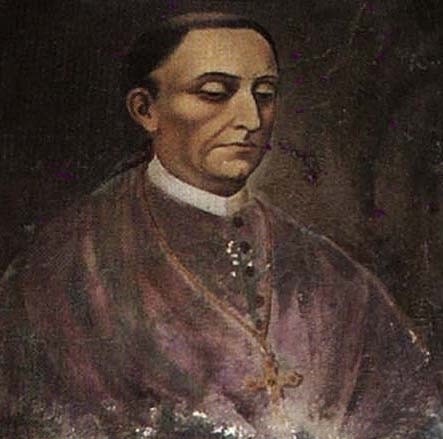
Diego de Landa was a Spanish Franciscan friar, chronicler and conquistador-era churchman who became the second bishop of Yucatán. Born on 12 November 1524 in Cifuentes, he spent most of his adult life in the Spanish Empire’s Yucatán territory, arriving at Mérida in 1549. He is best known for ordering an inquisition against Maya communities that culminated in a mass burning of idols and 27 Maya codices at Maní on July 12, 1562. He died in Mérida on April 29, 1579 and is buried in the city’s cathedral.
Key facts
- Born: 12 November 1524
- Birthplace: Cifuentes
- Died: 29 April 1579
- Place of death: Mérida
- Country: Spanish Empire
- Occupation: conquistador; chronicler; mayanist; Catholic priest
- Field: Catholicism
Early life and arrival in Yucatán
Diego de Landa was born on 12 November 1524 in Cifuentes. His wife, Inesa de Inchaurduy, with whom he had two sons, Diego and Juan, died a few years before he sailed for the Americas. He arrived in Mérida from Spain in 1549 and was among the first Franciscans to reach Yucatán.
The Maní auto-da-fé of 1562
By 1562, Landa held the position of Franciscan provincial of Yucatán. Alarmed by evidence that recently converted Maya people were continuing to practice idolatry, he ordered an inquisition against them. It culminated on July 12, 1562, in an auto-da-fé at the town of Maní.
During the proceedings, floggings and burnings at the stake were carried out under Landa’s direction, assisted by friars Miguel de la Puebla, Pedro de Ciudad Rodrigo and Juan de Picaro, who were called the Inquisition’s “ordinary inquisitors.” Thousands of idols and other cultural artifacts were destroyed, and 27 Maya codices were burned. Later records state that 157 people were killed during the inquisition Landa led and that thirteen took their own lives to avoid torture.
Investigation, acquittal and return as bishop
Landa was recalled to Spain to face a Church investigation into his conduct of the Maní inquisition. He was later acquitted by the Spanish Council of the Indies. Following consultation with the Council of the Indies and Franciscan elders, King Philip II approved his appointment in 1572 as the second bishop of Yucatán, succeeding Bishop de Toral, who had died in Mexico City in 1571.
Landa returned to Yucatán, landing at Campeche in early 1573 with a retinue of thirty Franciscan friars. As bishop, he reportedly defended Maya communities from abuses by the encomenderos, the Spanish landholders who controlled their labor.
Later years and death
Landa served the Franciscan order for thirty-eight years, most of it in Yucatán, until his death from natural causes on April 29, 1579. He is buried in the cathedral of Mérida.
Archaeological traces
Modern archaeologists working at Maní have identified pottery fragments as remnants of the thousands of idols destroyed during Landa’s 1562 auto-da-fé, giving physical confirmation to the events recorded from that day.
Data sources
Where it appears
- Maní, 1562: Friar Diego de Landa’s Bonfire of Maya Codices November 26, 2026
Data updated: 2026-11-04