
The Roads South
In May 1940, more than two million refugees from Belgium, the Netherlands, and Luxembourg were already on the roads into France, pushed ahead of the German invasion of the Low Countries. Paris watched them pass through on the way south. Within weeks the city’s own residents joined them.
Germany’s campaign against France took six weeks, ending with the armistice signed at Compiègne on June 22, 1940. Paris is the fixed point to hold onto before the story starts moving: the capital of a republic that had governed France since 1875, now a city people were leaving rather than entering.
A Nation on the Move
Independent estimates put the number of French civilians who took to the roads that summer at six to ten million, nearly a quarter of the population. Chartres fell from roughly 23,000 residents to about 800. Lille dropped from roughly 200,000 to about 20,000. Towns in the south, Pau and Bordeaux among them, swelled as fast as the north emptied.
By one contemporary count, never independently confirmed, more than 90,000 families reported losing track of their children in the crush. Whatever the exact figure, this was the condition the French government was trying to govern through: no working rail or road network, no clear chain of command, and no agreement yet on who, if anyone, would hold the country together.
A Government in Flight
The government did not stay in Paris to find out. Around June 10, 1940, it left the capital for Tours; by June 14, with German troops entering Paris, it had regrouped in Bordeaux. From there it moved again, to Clermont-Ferrand, before settling for good in Vichy, a spa town in the Auvergne, where parliament convened on July 1 and 2. The exact date of the stop in Clermont-Ferrand is not recorded. What is clear is that the whole sequence, Paris to Tours to Bordeaux to Clermont-Ferrand to Vichy, took about three weeks.
Reynaud Resigns, Pétain Steps In
On June 16, 1940, Prime Minister Paul Reynaud resigned. He was replaced by Philippe Pétain, an 84-year-old field marshal whose reputation rested on the First World War, where he was known as the victor of Verdun. To a country that had just watched its army collapse in six weeks, handing power to the man associated with France’s hardest-fought defense of the previous war read, to many at the time, like a return to steady hands.
The Vote That Ended the Republic
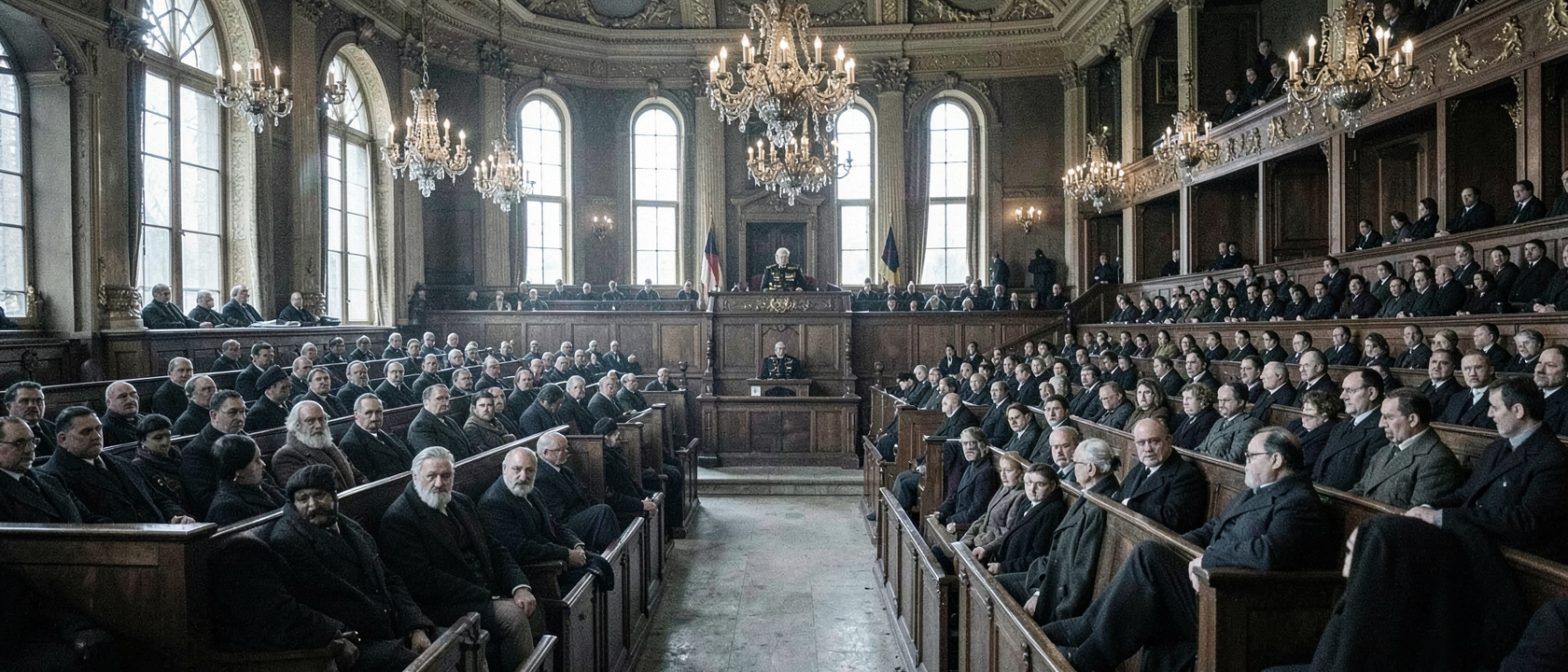
The transfer became permanent on July 10, 1940, when the National Assembly met at the Vichy Opera and voted 569 to 80, with 20 abstentions, to grant Pétain full powers, including the authority to write a new constitution. The text did not say, in so many words, that the Third Republic was finished. Pétain treated it that way. The words “République française” disappeared from official documents; in their place stood the État Français, the French State.
A constitutional system that had governed France for 65 years ended with a show of hands in a converted opera house.
What the Silence Meant
Through these weeks, Pétain said little in public. At the time, many read that silence as calculated, the mark of a leader holding his strategy close, a reading that a press sympathetic to him did a great deal to encourage. That is what people believed at the time, not something that can be shown to be true. The record treats it as a perception of the moment, not a settled account of what Pétain was actually doing or planning.
The Bill
Add it up. A republic that had stood for 65 years was gone, replaced by a government built on a vote whose legality most French historians have since disputed. An ordinance issued by the Provisional Government on August 9, 1944, would later declare the entire legal basis of the Vichy regime void from the start, not merely repealed. The 80 who voted against became known afterward as the Vichy 80. No figure survives, in this account, for the French soldiers killed or wounded in the six-week collapse that set all of this in motion. The fate of the families still missing children that summer goes unmentioned in the same records that counted them.
Pétain, Reynaud, Vichy: the names are familiar enough that most people could place them on a timeline without being told. What usually gets left off that timeline is the three weeks in between, and what they cost the people who were living through them rather than reading about them later.