
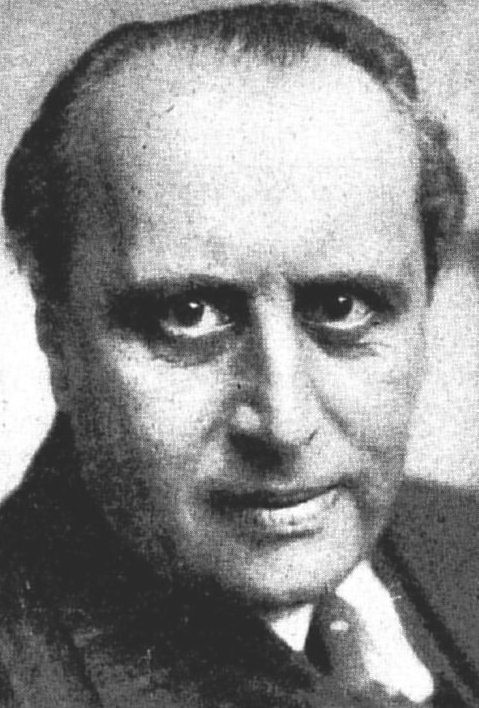
Arthur Kronfeld (9 January 1886 – 16 October 1941) was a Berlin-born psychiatrist, psychologist, and psychotherapist whose career stretched from the corridors of Weimar-era sexology to the neuropsychiatric institutes of Soviet Moscow. He published more than 200 specialist papers, eight books, and fifteen shorter monographs across a working life of roughly three decades, and he held the first-ever adjunct professorship in psychotherapy at a German university.
Key facts
- Born: 9 January 1886
- Birthplace: Berlin
- Died: 16 October 1941
- Place of death: Moscow
- Country: German Reich; Soviet Union
- Occupation: psychiatrist; psychotherapist; university teacher; psychologist
- Field: psychiatry
- Employer: Humboldt-Universität zu Berlin
- Education: Heidelberg University
Early life and education
Kronfeld was born on 9 January 1886 in Berlin as the eldest son of a Jewish lawyer and his wife; he had three younger siblings. After completing his schooling at the Sophiengymnasium in Berlin, he began studying medicine in 1904, moving through the universities of Jena, Munich, Berlin, and Heidelberg. He earned his doctorate of medicine in 1909 at Heidelberg under the psychiatrist Franz Nissl.
His intellectual appetite extended well beyond clinical medicine. In 1912 he received a second doctorate, this one in philosophy, from the University of Giessen, with a thesis on experimental psychological work supervised by August Messer. That same year, his monograph ‘On the Psychological Theories of Freud and Related Opinions’, published by Engelman in Leipzig, brought him international recognition for its close critical reading of psychoanalytic theory.
Early career in Berlin
In 1913, Kronfeld took a post at the Dalldorf Mental Asylum in Berlin, where he researched aphasia under the neurologist Hugo Liepmann. World War I interrupted that work: he served as a front-line physician, primarily in France near Verdun, until a shrapnel injury led to his transfer to a military reserve hospital in Freiburg im Breisgau.
The end of the war drew him into political life. On the occasion of the November Revolution of 1918, Kronfeld acted as spokesperson and leading delegate of the Freiburg Soldiers’ Council, a role that placed him squarely in the turbulent civic events of that autumn.
The Institute for Sexual Science
On 6 July 1919, Kronfeld joined Magnus Hirschfeld and Friedrich Wertheim in opening the Institut für Sexualwissenschaft (Institute for Sexual Science) in Berlin, the first sexology institute in the world. Within the Institute, Kronfeld headed the Department for Psycho-sexual Maladies and was the only physician on the payroll. Its scientific reputation rested substantially on his contributions.
In 1922, he was elected to the board of directors of the Wissenschaftlich-humanitäres Komitee (Scientific-Humanitarian Committee), Hirschfeld’s homosexual rights organisation. Beyond research and administration, Kronfeld contributed expert psychiatric opinions in several high-profile sex crime court cases during the Weimar period, bringing clinical science directly into German courtrooms.
From 1930, Kronfeld served as co-editor (Schriftleiter) of the ‘Zentralblatt für Psychotherapie’, one of the leading psychotherapy journals of the Weimar era, consolidating his influence over the professional literature of the field.
Academic appointment and expulsion
The appointment followed his conversion to Protestantism.
From 1933, Jews were progressively barred from teaching in Germany. Kronfeld was specifically forbidden to lecture in February 1935, and the Nazi authorities subsequently invalidated both his medical licence and his doctorate. He emigrated to Switzerland in 1935, but was refused asylum and handed an expulsion ultimatum. In 1936, he applied for and was granted a research professorship in Moscow.
Moscow years
From 1936, Kronfeld held a professorship at the Gannushkin Neuropsychiatric Research Institute in Moscow and eventually became director of its Department for Experimental Pathology and Therapy of Psychoses. He introduced insulin coma therapy for schizophrenia to the Soviet Union, reporting results on 120 patients at the Second All-Union Congress of Neurologists and Psychiatrists in December 1936. The method spread rapidly: by 1940, at least 60 of the Soviet Union’s 144 psychiatric hospitals had adopted it on the strength of his findings.
Kronfeld and his wife Lydia were granted Soviet citizenship in 1937. In 1941, he wrote the pamphlet ‘Degenerates in Power’, in which he set out psychiatric diagnoses of Hitler and his associates, and he participated in anti-fascist programmes on Moscow Radio.
On 15 October 1941, as German troops advanced on Moscow, Arthur Kronfeld and his wife Lydia took their own lives by ingesting an overdose of Veronal. Documented scholarly controversy exists over whether the precipitating cause was fear of the Nazi advance or of Stalinist repression. Despite his output of more than 200 papers and multiple books, no obituary was published at his death.
Intellectual standing and legacy
Scholarly literature characterises Kronfeld as ‘perhaps the most outstanding theoretician of psychological psychiatry’ of the interwar period, while also noting that his concept of intentionality met persistent reluctance from contemporaries and from later psychiatrists. In Russian psychiatric literature he is counted among the ‘classics’ of Soviet psychiatry.
A commemorative exhibition titled ‘Arthur Kronfeld 1886–1941 – Life and Work of a Pioneer of Psychology, Sexology, and Psychotherapy’ was originally mounted for the centenary of his birth on 9 January 1986. Kronfeld also wrote poetry for expressionist literary journals during his early career, a thread of his work that sits apart from but alongside his scientific output.
Did you know
- Kronfeld’s published scientific output comprised more than 200 specialist papers, eight books, and fifteen shorter monographs, yet no obituary was printed at his death in 1941. (sgipt.org)
- Kronfeld was a member of the Neo-Friesian School of philosophy, centred in Göttingen under Leonhard Nelson; his fellow members included Nobel Prize winner Otto Meyerhoff and theologian Rudolf Otto. (muse.jhu.edu)
- Kronfeld reported testing insulin coma therapy on 120 patients in Moscow by December 1936; by 1940 at least 60 of the Soviet Union’s 144 psychiatric hospitals had adopted the method on the strength of his findings. (dokumen.pub)
- During his time at the Institute for Sexual Science, Kronfeld contributed expert opinions in several high-profile sex crime court cases in Weimar Germany, bringing psychiatric science directly into the courtroom. (gedenkort.charite.de)
- Kronfeld also wrote poetry for expressionist literary journals during his early career, revealing an artistic dimension alongside his scientific work. (magnus-hirschfeld.de)
Data sources
- Wikidata
- magnus-hirschfeld.de
- gedenkort.charite.de
- archiv.hkw.de
- hirschfeld.in-berlin.de
- sgipt.org
- dokumen.pub
- muse.jhu.edu
Where it appears
Data updated: 2026-10-27