
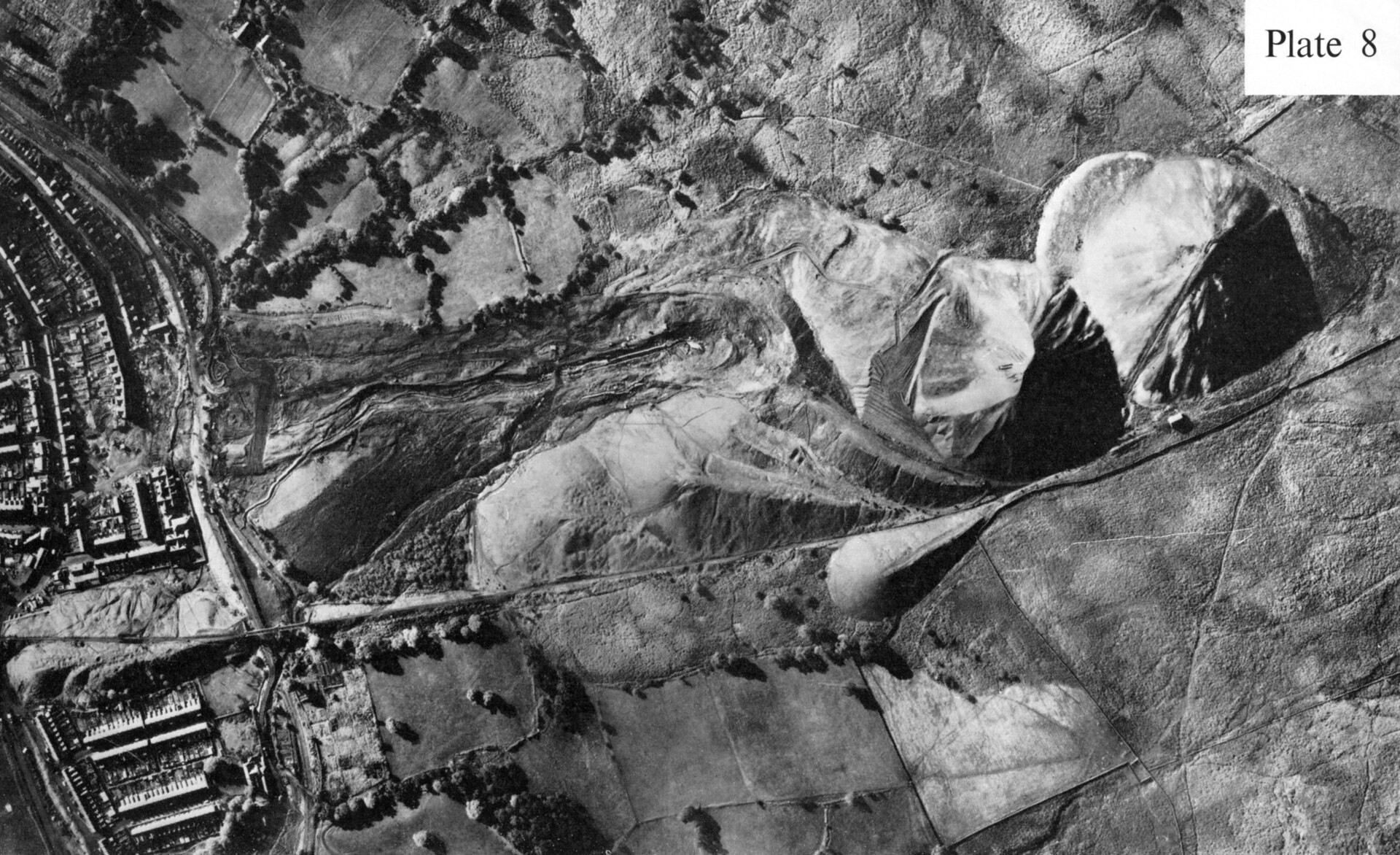
On the morning of 21 October 1966, a colliery spoil tip above the village of Aberfan in South Wales collapsed and buried Pantglas Junior School and a row of houses, killing 144 people in total: 116 children and 28 adults. The children who died were mostly aged between seven and ten, and October 21 was the last school day before the autumn half-term holiday. The disaster was the direct result of the National Coal Board’s failure to maintain any coherent policy for managing the waste tips it had built on the hillside above the village, a finding confirmed in full by the official tribunal a year later.
Key facts
- Country: United Kingdom
- Type: mining accident
- Date: 21 October 1966
- Start: 21 October 1966
- Location: Aberfan
The tips above the village
When the Merthyr Vale Colliery ran out of tipping space on the valley floor in 1916, spoil tips were constructed on the steep hillside above Aberfan. By 1966, seven such tips had been built there, collectively holding an estimated 2.1 million cubic metres of colliery spoil. The most recently active of these was Tip 7, which sat directly above the school.
Underground springs ran beneath Tip 7. Their position was not secret: they appeared on standard Ordnance Survey maps. The tips had never been formally surveyed by NCB engineers up to the time of the landslide, and the Board’s own engineering staff had given no guidance to the local workers responsible for tipping. Earlier slides had occurred at the Aberfan tip complex in 1944 and again in November 1963, but tipping on Tip 7 continued after each event.
The collapse and its immediate consequences
When Tip 7 failed on the morning of 21 October 1966, low cloud covered the valley, meaning no one could see the slide as it began. Residents reported hearing it and described it as moving too fast to outrun. The slurry swept down the hillside, destroyed 18 houses, struck Pantglas Junior School and part of the neighbouring County Secondary School, before coming to rest on the Aberfan Road.
Approximately 240 children had arrived at Pantglas Junior School that morning. No survivors were recovered after 11:00 on the morning of the disaster; the last child brought out alive was found at that hour.
Rescue, response, and the NCB’s conduct
NCB chairman Lord Robens did not travel to Aberfan when he heard news of the collapse. He instead proceeded with his installation as Chancellor of the University of Surrey, arriving in Aberfan approximately 36 hours after the slide.
Queen Elizabeth II visited Aberfan on 29 October 1966, eight days after the disaster. She had first sent Prince Philip and Lord Snowdon to the village in her place. Her private secretary, Lord Charteris, later described the delay as ‘a mistake’ and ‘one she regrets.’
The tribunal and its findings
A formal tribunal was appointed to examine the cause of the disaster. Its report, published on 3 August 1967, placed responsibility squarely on the National Coal Board. The tribunal found a ‘total absence of tipping policy’ as the basic cause, noted that the NCB’s engineering experts had given no guidance to local workers, and confirmed that the tips had never been formally surveyed. Nine NCB employees were named as bearing some degree of responsibility.
No criminal prosecution followed. The families of those killed received financial compensation that began at an initial offer of £50 per family, later raised to £500. NCB insurance staff described the revised figure internally as a ‘good’ offer.
The Disaster Fund and the removal of the tips
A public disaster fund was established and received donations from across the world. In 1968, £150,000 was taken from that fund to contribute to the cost of clearing the remaining coal tips from the hillside above Aberfan. Those tips were the property of the National Coal Board, not the village, and the charge to the fund was widely condemned.
Long-term effects on survivors
A study conducted by the University of Wales and published in the British Journal of Psychiatry found that 46% of child survivors who agreed to be interviewed had suffered post-traumatic stress disorder at some point in their lives. After 33 years, 29% were still experiencing PTSD.
The disaster also reshaped legislation governing disused tips in Wales.
Did you know
- The valley was covered in low cloud on the morning of 21 October 1966, so no one could see the slide beginning. Everybody in the village heard it, and residents said it came too fast to outrun. (historyandpolicy.org)
- The springs underlying Tip 7 appeared on standard Ordnance Survey maps of the area, and local villagers had played in them as children. Despite this, NCB chairman Lord Robens initially attributed the disaster to ‘natural unknown springs,’ as if their existence had been unforeseeable. (nuffield.ox.ac.uk)
- The NCB’s initial compensation offer to each bereaved family was £50, later raised to £500. The NCB’s own insurance staff described the revised sum internally as a ‘good’ offer. (historyandpolicy.org)
- The Tip 7 collapse was recorded in the National Landslide Database as entry ID 3176/1 by the British Geological Survey, which now uses Aberfan as a case study in landslide risk. (bgs.ac.uk)
Data sources
- Wikidata
- bgs.ac.uk
- itv.com
- historyandpolicy.org
- nuffield.ox.ac.uk
- thecourtjeweller.com
- hiraeth.org.uk
- welshwords.com
Data updated: 2026-10-27