
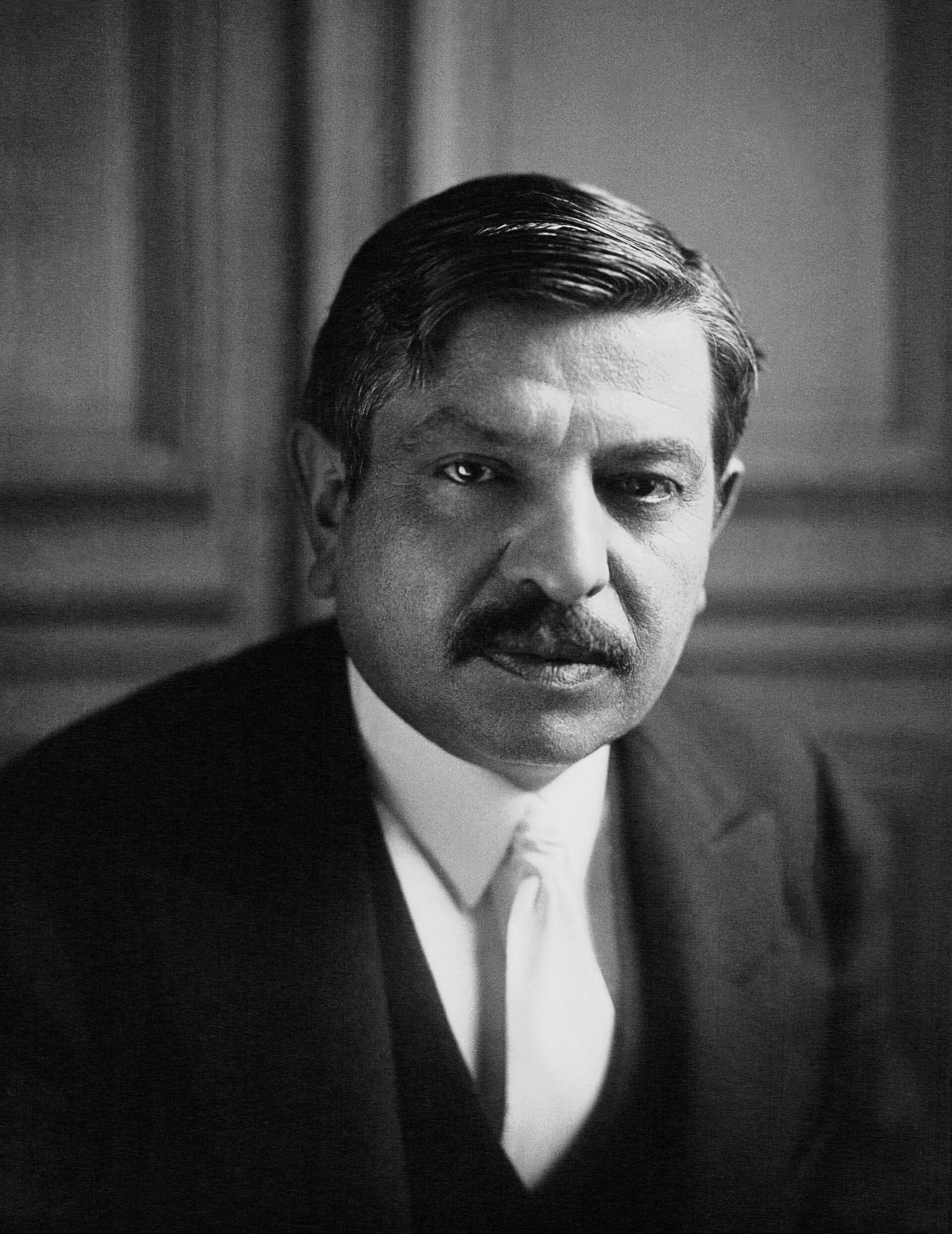
Pierre Laval (28 June 1883 – 15 October 1945) was a French lawyer turned politician who rose from provincial obscurity to become prime minister under the Vichy regime and, after the Liberation, the most prominent Frenchman executed for collaboration with Nazi Germany. Born in Châteldon in the Auvergne, he served in several Third Republic ministries before the German occupation gave him the stage on which his career would finally collapse. His name entered the French language after 1945 as a synonym for “traitor,” a weight his family spent decades trying to lift.
Key facts
- Born: 28 June 1883
- Birthplace: Châteldon
- Died: 15 October 1945
- Place of death: Fresnes Prison
- Country: France
- Occupation: politician; lawyer; jurist
- Awards: Order of Pius IX
Early career and ministerial years
Laval trained as a lawyer and built a political career through the institutions of the Third Republic. In 1925 he served as Minister of Public Works in the government of Paul Painlevé. The following year he held the Justice portfolio under Aristide Briand, and in 1930 he was Minister of Labour under André Tardieu. These postings gave him experience across the machinery of the French state and a wide network of contacts across the political spectrum.
His profile grew considerably in the early 1930s. Time magazine named him its Man of the Year for 1931, one of the very few French politicians to receive that distinction. In 1931 he also purchased the medieval Château de Châteldon, a fortified structure dating to the twelfth century already listed as a historic monument since 1926, paying 200,000 francs and commissioning extensive renovation works.
On the international stage, Laval’s most controversial pre-war act was co-authoring the Hoare-Laval Pact of December 1935, which proposed to resolve the Second Italo-Ethiopian War by awarding Italy approximately two thirds of Ethiopia’s total landmass, leaving Ethiopia only its mountainous interior. Public outrage in Britain forced the British foreign secretary Samuel Hoare to resign; the pact was abandoned, but the episode permanently damaged Laval’s reputation abroad.
The fall of France and the Vichy years
After France’s defeat in 1940, Laval became a central figure in the Vichy government under Marshal Philippe Pétain, advocating close accommodation with Germany. In November 1940, following his dismissal by Pétain, he met with Nazi leader Hermann Göring and expressed willingness to engage in military cooperation, proposing a formal Franco-German military alliance.
Under German pressure, Pétain recalled Laval as head of the Vichy government on 18 April 1942. That same day, George Orwell, in a BBC radio broadcast, described him as ‘a French millionaire who has been known for many years to be a direct agent of the Nazi Government.’ Two months later, on 22 June 1942, Laval announced the ‘relève’ scheme — a programme meant to exchange French volunteer workers sent to Germany for French prisoners of war — and in the same speech publicly declared his desire for a German victory over the Allies. That declaration was broadcast and widely reported, and it defined his image for the rest of his life.
During this period Laval lived at the Château de Châteldon, approximately 20 kilometres from Vichy, between 1942 and 1944. The Laval government in July 1941 had also instituted an extensive programme of ‘Aryanization,’ appropriating Jewish-owned property for the French state, leaving most Jews in France destitute, according to the United States Holocaust Memorial Museum.
On 27 August 1941, before Laval’s return to the head of government, French nationalist student Paul Collette shot him four times at Versailles during a ceremony marking the departure of French volunteers to fight alongside German forces in the Soviet Union. One bullet penetrated Laval’s body approximately one inch from his heart. He survived and recovered.
Flight, capture, and trial
After the Allied liberation of France in August 1944, Laval fled with the remnant Vichy government to Sigmaringen in Germany, then escaped to Spain in May 1945. He surrendered to American forces in Austria on 31 July 1945 and was extradited to France.
His trial before the High Court of Justice began on the afternoon of 4 October 1945 and concluded on 8 October. The charges were treason, aiding the enemy, and violating state security. The court included Resistance veterans who shouted curses at the defendant throughout the proceedings. Conditions became so chaotic and hostile that Laval eventually refused to attend the remainder of the trial and declined to continue defending himself. Some historians have described the proceedings as flawed; some legal historians have characterized them as falling well short of due process standards.
Execution
On the morning of 15 October 1945, Laval attempted to kill himself by ingesting a cyanide capsule he had concealed. The capsule had lost its potency. After his stomach was pumped, he was carried to the firing squad at Fresnes Prison still semiconscious. He was shot and killed that morning.
Laval had intended to be buried in a mausoleum he had built in the courtyard of the Château de Châteldon. Successive post-war governments refused his daughter’s requests to allow this, and he was interred in Paris instead.
Legacy and memory
His daughter Josée Laval and her husband René de Chambrun established the Josée and René de Chambrun Foundation, which collected 445 depositions relating to French conduct during the German Occupation. These were deposited at the Hoover Institution with the aim of rehabilitating Laval’s memory.
The word ‘Laval’ passed into French usage after World War II as a synonym for ‘traitor.’ His legacy remains deeply contentious in France, where debates about collaboration, national identity, and wartime justice have continued for decades. The trial itself contributed to those debates, given the questions raised about whether the proceedings met basic standards of fairness.
Did you know
- Time magazine named Laval its Man of the Year for 1931, making him one of very few French politicians to receive the distinction. Fourteen years later, the same man was executed as a traitor. (ebsco.com)
- The Hoare-Laval Pact of December 1935 proposed to give Italy approximately two thirds of Ethiopia’s total landmass, restricting Ethiopia to its mountainous regions, in exchange for a halt to hostilities. The plan collapsed after a public outcry, but Laval’s co-authorship of it never left him. (thesecondworldwar.org)
- George Orwell, in a BBC radio broadcast on 18 April 1942, described Laval as ‘a French millionaire who has been known for many years to be a direct agent of the Nazi Government.’ Orwell made that characterization the same day Laval was recalled as head of the Vichy government, and before Laval’s most notorious wartime speech. (spartacus-educational.com)
- The château Laval bought in his native Châteldon in 1931 for 200,000 francs was a fortified medieval structure dating to the twelfth century and already listed as a historic monument since 1926. Laval had a mausoleum built in the courtyard, intending to be buried there, but successive post-war governments refused his daughter’s requests, and he was interred in Paris instead. (auvergne-centrefrance.com)
- At his trial in October 1945, Resistance veterans on the court shouted curses at Laval throughout the proceedings. The atmosphere grew so hostile that Laval stopped attending and refused to continue his own defence, leading some legal historians to characterize the trial as falling well short of due process standards. (stewross.com)
Data sources
- Wikidata
- baike.baidu.com
- ebsco.com
- history.com
- oac.cdlib.org
- encyclopedia.ushmm.org
- stewross.com
- auvergne-centrefrance.com
Data updated: 2026-10-28