
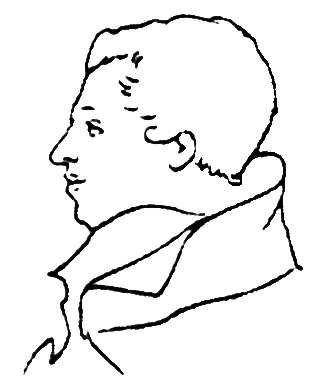
Mikhail Bestuzhev-Ryumin (1801–1826) was a Russian noble and military officer who became one of the central figures in the Decembrist movement, the network of secret societies that mounted an insurrection against the autocracy of Nicholas I. Born in Nizhny Novgorod on 4 June 1801, he served as a second lieutenant and used the position to spread political ideas among troops. He was 25 years old when he was hanged in Saint Petersburg on 25 July 1826, making him the youngest of the five Decembrists executed that day.
Key facts
- Born: 4 June 1801
- Birthplace: Nizhny Novgorod
- Died: 25 July 1826
- Place of death: Saint Petersburg
- Country: Russian Empire
- Occupation: military personnel
Early activity and the Southern Society
Bestuzhev-Ryumin was a member of the Southern Society, one of the principal Decembrist organizations operating in the southern provinces of the Russian Empire. He attended conferences of the society held in Kiev and Kamenka, taking part in the deliberations that shaped its political program.
In 1823 he personally conducted negotiations with the secret Polish Patriotic Society, establishing direct contact between that organization and the Southern Society. The link he forged connected the Russian underground with its Polish counterpart, extending the conspiratorial network across imperial borders.
Character and methods
Contemporaries described Bestuzhev-Ryumin as “resolute to the point of madness” and “an enthusiastic fanatic.” He was also recognized as a capable orator, and he put that ability to practical use, conducting political propaganda among soldiers while holding the rank of second lieutenant.
He carried one firm conviction to the end: that revolution in Russia would be bloodless and carried out by the army without popular participation.
Trial and execution
Following the failure of the uprising, Bestuzhev-Ryumin was tried and condemned to death. His death sentence was delivered only a day and a half before the execution was carried out on 25 July 1826 in Saint Petersburg.
Later commemoration
After the Bolshevik Revolution of 1917, the Soviet state reframed the Decembrists as precursors of revolutionary change and celebrated them accordingly. Bestuzhev-Ryumin was among those incorporated into this official memory.
The composer Yuri Shaporin gave him a bass role in the opera The Decembrists, which premiered in 1953 and became one of the most popular productions at the Bolshoi Opera in the years that followed. The opera brought his name to audiences who might never have encountered the primary historical record.
Did you know
- In 1950, the Soviet Union issued a postage stamp (catalogue number CPA 1591) to mark the 125th anniversary of the Decembrist Revolt. The stamp depicted Decembrists and Senate Square, and is one of the philatelic commemorations of the men alongside whom Bestuzhev-Ryumin was executed. (commons.wikimedia.org)
Data sources
Data updated: 2026-10-30