
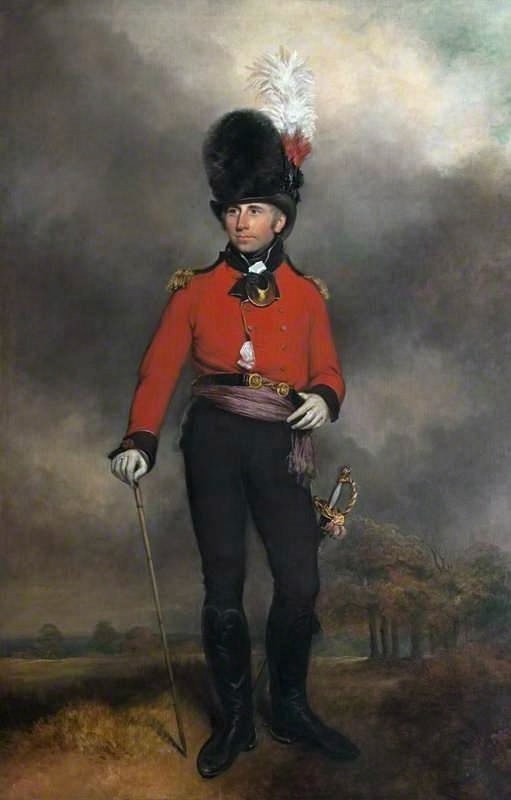
William Pitt Amherst, 1st Earl Amherst, born in Bath on 14 January 1773, was a British diplomat and politician who spent much of his career in the service of the Foreign Office and the East India Company’s wider imperial interests. He is remembered chiefly for leading the 1816 embassy to the court of China’s Qing Dynasty, an ambitious attempt to improve commercial relations between Britain and China that ended without a formal agreement, and for his subsequent tenure as Governor-General of India. He died on 13 March 1857 at Knole House, having outlived most of the world he had travelled.
Key facts
- Born: 14 January 1773
- Birthplace: Bath
- Died: 13 March 1857
- Place of death: Knole House
- Country: United Kingdom of Great Britain and Ireland
- Occupation: diplomat; politician
- Employer: Foreign Office
- Education: Christ Church; Westminster School
Early Life and Education
Amherst was born in Bath in 1773 and received his education at Westminster School and then Christ Church, Oxford. These institutions shaped the political and diplomatic instincts he would carry across three continents over the following decades.
The Embassy to China, 1816–1817
In 1816, Amherst was appointed ambassador extraordinary and sent to the court of the Qing Dynasty with instructions to establish more satisfactory commercial relations between China and the United Kingdom. The mission had been prompted largely by difficulties that British traders faced with the Viceroy of Canton, and the East India Company financed the entire undertaking, dispatching it in the first instance to protect its own commercial interests.
The return voyage proved eventful in the extreme. On 18 February 1817, HMS Alceste struck a hidden reef and was wrecked in the Gaspar Strait in the Java Sea. There was no loss of life, and Amherst was transferred to the brig HMS Lyra, which carried him to Batavia. From there the embassy made its way westward, stopping at Saint Helena on 27 June 1817. General Bertrand introduced Amherst to the exiled Napoleon Bonaparte, and the two men remained alone together for more than an hour. The mission finally reached Spithead on 17 August 1817.
Governor-General of India
After the China embassy, Amherst went on to serve as Governor-General of India. During that tenure he sanctioned the establishment of Sanskrit College in Calcutta on 1 January 1824, an institution intended to promote classical Indian learning under colonial administration.
Later Years
Amherst died at Knole House on 13 March 1857. His career had taken him from the lecture rooms of Christ Church to the court of the Qing Dynasty, to a private audience with Napoleon on a remote Atlantic island, and ultimately to the governing councils of British India.
Did you know
- The quotation attributed to Napoleon — “When China awakes, the world will tremble” — is popularly said to have been spoken during his 1 July 1817 meeting with Amherst at Saint Helena, but historians have found no reliable source linking those words to that specific conversation. (napoleon-empire.org)
- During the China mission of 1816, HMS Alceste under Captain Maxwell was one of the first British vessels to visit Okinawa Island (then called Lewchew), the largest of the Ryukyu Islands of Japan, while exploring the region after Amherst had disembarked. (collections.reading.ac.uk)
- The East India Company financed the entire 1816 Amherst embassy to China. The mission was dispatched primarily in the commercial interests of the Company, following interference with its trade by the Viceroy of Canton. (anthony.sogang.ac.kr)
Data sources
Data updated: 2026-10-30