
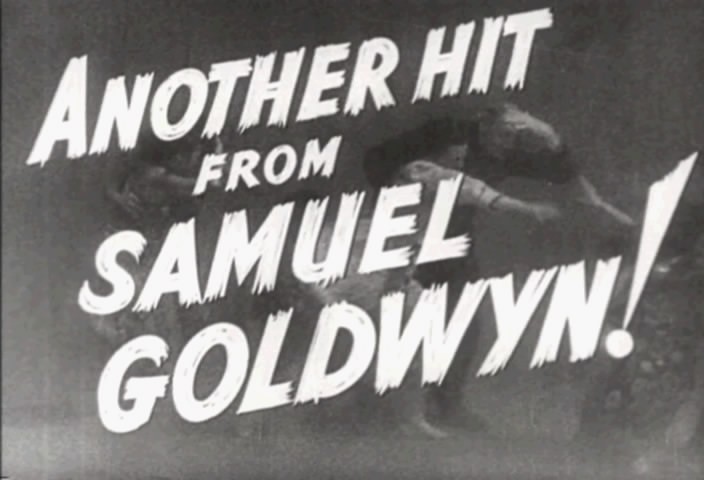
Samuel Goldwyn Productions was an American film production company founded in 1923 by Samuel Goldwyn and dissolved in 1959, operating for thirty-six years as one of Hollywood’s most prominent independent studios. Over that span, the company produced eighty motion pictures without the backing of a major studio, an output that placed it alongside United Artists and a handful of other independents as a sustained alternative to the dominant studio system. Its best-known credit, The Best Years of Our Lives (1946), won seven Academy Awards at the 19th Academy Awards ceremony on March 13, 1947, including Best Picture. The company’s library passed to The Samuel Goldwyn Company, founded in 1979 by Samuel Goldwyn Jr., which joined the classic catalogue to a new production operation.
Key facts
- Country: United States
- Founded: 1923
- Dissolved: 1959
- Founder: Samuel Goldwyn
- Type: film production company
Origins and Structure
Samuel Goldwyn established the company in 1923, choosing to work independently rather than within an integrated studio system, financing and distributing each picture through separate arrangements. James A. Mulvey served as president of Samuel Goldwyn Inc. and was the company’s most trusted business executive, handling the business side of an operation that Goldwyn ran as a personal production unit rather than a factory.
The company’s physical home was an 18-acre studio lot at Santa Monica Boulevard and Formosa Avenue in Hollywood. In 1955, Mulvey outbid Mary Pickford at a court-ordered auction to make Goldwyn sole owner of that property, consolidating control of both the creative and physical infrastructure of the enterprise.
Production Output
The eighty pictures the company produced between 1923 and 1959 were divided into three distinct phases. The first, from 1923 to 1935, accounted for forty-one films. The second, from 1936 to 1946, yielded twenty-seven. The third and final phase, from 1947 to 1959, produced twelve pictures. The declining pace reflects a deliberate shift toward fewer, more expensive productions rather than any loss of activity in the early years.
Among the most decorated titles in the catalogue were Wuthering Heights (1939), directed by William Wyler, which received eight Academy Award nominations including Best Picture and won the Oscar for Best Cinematography for Gregg Toland’s work; Arrowsmith (1931); Dodsworth (1936); Dead End (1937); and The Little Foxes (1941), each of which earned a Best Picture nomination. The Best Years of Our Lives (1946), distributed by RKO Radio Pictures, swept the 19th Academy Awards, taking Best Picture, Best Director for William Wyler, and Best Actor for Fredric March, among its seven wins. At the same ceremony, Goldwyn personally received the Irving G. Thalberg Memorial Award.
Independence and Industry Politics
Goldwyn was a founding member of the Society of Independent Motion Picture Producers (SIMPP), formed in 1941. The group’s other founders included Charles Chaplin, Walt Disney, Alexander Korda, Mary Pickford, David O. Selznick, Walter Wanger, and Orson Welles. SIMPP was organized to push back against the distribution and exhibition advantages held by the vertically integrated major studios. Goldwyn remained a SIMPP member from 1941 until 1955, when he resigned following disagreements with other independent filmmakers.
In 1973 he received the Golden Globe Cecil B. DeMille Award in recognition of his career as a producer.
The Porgy and Bess Fire and Final Years
On July 2, 1958, a fire broke out in Sound Stage 8 at the Samuel Goldwyn Studio during preparations for the musical Porgy and Bess. The blaze destroyed all sets and costumes, with losses reported at $2 million. The cause of the fire was never officially determined. Production continued despite the destruction, and Porgy and Bess was completed the following year at a total cost of $7 million.
Samuel Goldwyn was 82 years old when he finished Porgy and Bess in 1959, and he retired from active filmmaking upon the picture’s completion. The company dissolved the same year, ending thirty-six years of independent production.
Archive and Legacy
Materials from films produced between 1929 and 1955 are held by the Academy Film Archive as the Samuel Goldwyn Collection. The collection comprises over 350 materials that were relocated in 2012 from various labs and storage facilities. The archive covers roughly the middle and later portions of the company’s output and includes physical elements essential to preservation of those titles.
The company’s library was succeeded by The Samuel Goldwyn Company, founded in 1979 by Samuel Goldwyn Jr., which combined a new production corporation with the classic film library of the original company.
Did you know
- Samuel Goldwyn was the only SIMPP founder to have had a hand in challenging two separate film industry monopolies: the Edison patents trust in 1915 and the Hollywood studio oligopoly in 1948. (cobbles.com)
- Goldwyn’s approach of producing a small number of expensive, high-quality films each year rather than mass-producing cheaper pictures became a model that later independent producers, including David O. Selznick, drew on. (businesshalloffame.org)
- Wuthering Heights (1939) was reportedly Goldwyn’s personal favorite film and the achievement he was proudest of across his entire output of eighty productions. (tcm.com)
Data sources
- Wikidata
- cobbles.com
- ebsco.com
- newworldencyclopedia.org
- oscars.org
- hollywoodsgoldenage.com
- silverscreenmodes.com
- waterandpower.org
Data updated: 2026-10-30