
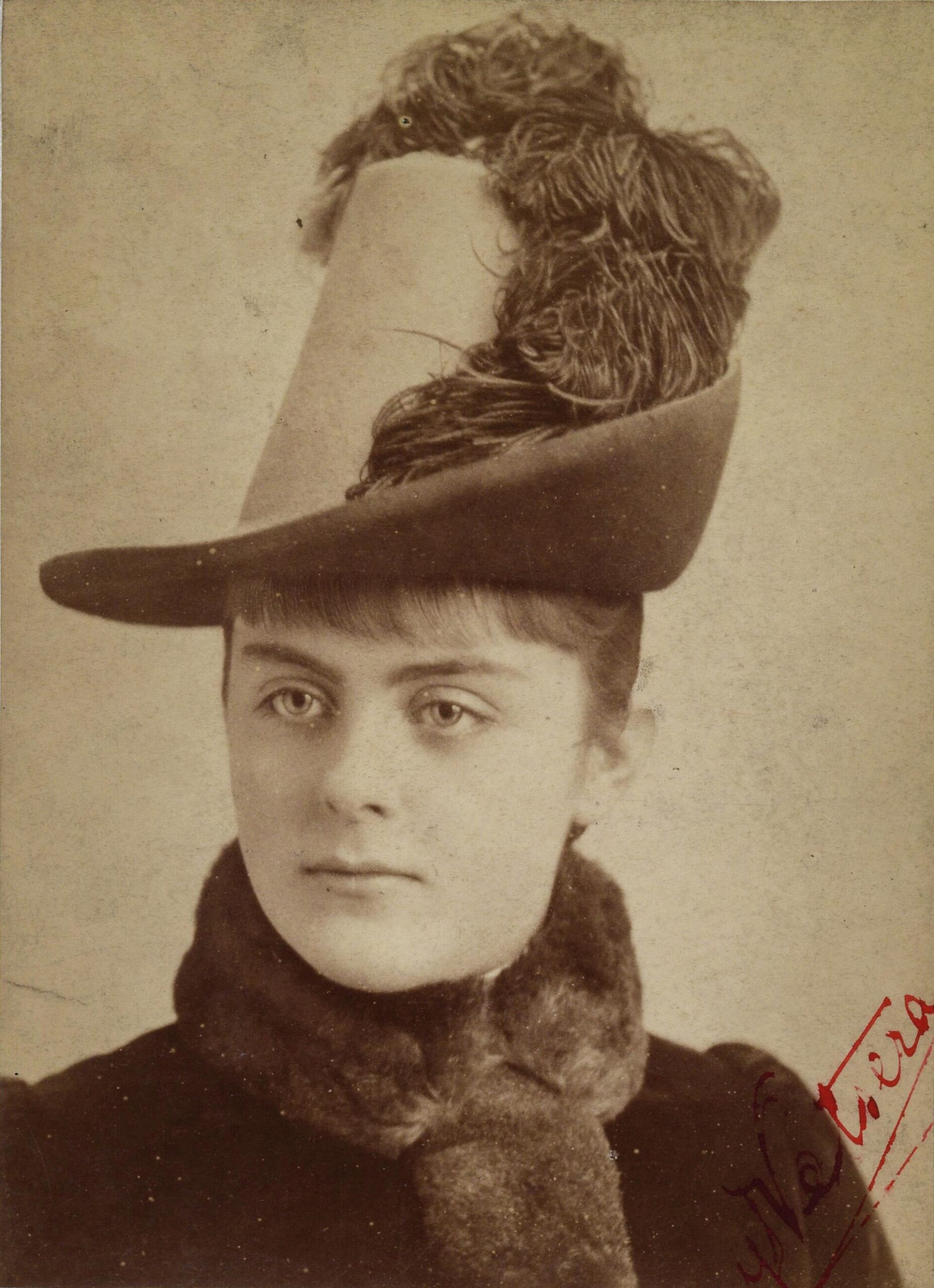
Marie Alexandrine Freiin von Vetsera, known in English as Mary von Vetsera, was an Austrian noblewoman born in Vienna on 19 March 1871. She died on 30 January 1889 at the imperial hunting lodge of Mayerling, alongside Crown Prince Rudolf of Austria, in circumstances that generated one of the most debated scandals of the Habsburg era. Her full baptismal name placed her within the Austro-Hungarian baronial class, yet her family’s wealth came largely from her mother’s side, the Baltazzi banking dynasty of Greek origin. The forensic evidence surrounding her death, and the Habsburg court’s efforts to suppress it, kept her story in circulation long after the empire itself had ceased to exist.
Key facts
- Born: 19 March 1871
- Birthplace: Vienna
- Died: 30 January 1889
- Place of death: Mayerling Castle
- Country: Cisleithania
- Occupation: aristocrat
Family and Early Life
Mary was the third of four children born to Albin Freiherr von Vetsera, an Austro-Hungarian court diplomat originally from Bratislava, and his wife Helene Baltazzi, whose own family had built its fortune in Greek banking. The household moved in the circles of late-Habsburg Vienna, where diplomatic rank and financial means together opened doors to imperial society.
She received her education at the Salesian Institute for Daughters of the Nobility in Vienna, an institution attached to a Salesian monastery that catered specifically to aristocratic girls. Outside the schoolroom, her main passion was sport. She was an accomplished horsewoman and held membership in the Vienna Ice Skating Club.
Grief entered the family early. Her older brother Ladislaus died in the Ringtheater fire on 8 December 1881 in Vienna. Further loss followed when, in the winter of 1887, the family traveled to Cairo because of Albin von Vetsera’s illness; he died there in 1888 without returning to Vienna, leaving Helene von Vetsera to manage the family’s affairs and social position alone.
Introduction to Court Society and Crown Prince Rudolf
Helene von Vetsera cultivated an acquaintance with Countess Marie Larisch von Moennich, who was both niece and confidante of Empress Elisabeth of Austria. The countess became the go-between who connected Mary to the heir to the throne.
The chain of events that brought Mary into Rudolf’s orbit began publicly on 14 October 1888, at the gala opening of the new Burgtheater in Vienna. The Prince of Wales, the future King Edward VII, noticed Mary in the audience and pointed her out to Crown Prince Rudolf that evening. Less than three weeks later, on 5 November 1888, Countess Larisch formally introduced Mary to Rudolf at his rooms in the Hofburg Palace. From that introduction, a relationship developed that would end at Mayerling fewer than three months later.
The Events at Mayerling
Mary was transported to the Mayerling hunting lodge by Rudolf’s coachman, Josef Bratfisch. On 30 January 1889, in the early hours of the morning, Rudolf shot Mary and then shot himself. The sequence was established by the physical evidence: forensic examination showed that the gunshot wound to Mary was fired at close range, with the bullet entering her upper left skull area and exiting behind the right ear. Because Mary was right-handed, the wound’s location raised substantial doubt about whether she had fired the gun herself.
Emperor Franz Joseph I’s first public statement attributed Rudolf’s death to a heart aneurism, a claim the court’s own doctors quickly disproved. The cover-up extended to Mary’s body as well. Her remains were secretly removed from Mayerling and buried on the morning of 1 February 1889 in the cemetery of the Cistercian monastery at Heiligenkreuz. Her mother, Helene, was forbidden from attending the ceremony.
On 16 May 1889, Helene von Vetsera obtained permission to have her daughter’s remains exhumed. The body was transferred from its original wooden coffin to a copper one and reburied in a family crypt at Heiligenkreuz. The remains were moved once more on the morning of 28 October 1993, when they were re-interred in the local cemetery of Heiligenkreuz.
Aftermath and the Habsburg Response
Emperor Franz Joseph I ordered the Mayerling hunting lodge converted into a Carmelite convent, designated as a place of penance and prayer. The convent chapel’s altar was positioned over the spot where the bed of Rudolf and Mary had stood.
Helene von Vetsera eventually broke her enforced silence. In 1921 she published a memoir, ‘Das Drama von Mayerling,’ setting out her own account of the events. Its publication attracted wide notice, arriving more than three decades after the deaths and at a moment when Austria-Hungary had already dissolved.
The Farewell Letters
Mary had written farewell letters before she died. For much of the twentieth century these were believed to have been destroyed. In summer 2015, a bank archivist carrying out a clear-out discovered them in a safe-deposit box in the vault of the Schoeller private bank in Vienna, where they had been deposited since 1926. The find confirmed that the letters had simply been hidden, not lost, for 89 years.
Legacy in Art and Memory
The Mayerling affair lodged itself in cultural memory to a degree unusual even for Habsburg scandals. Choreographer Kenneth MacMillan created the ballet ‘Mayerling’ in 1978 for the Royal Ballet, setting it to the music of Franz Liszt. The work, which depicts the story of Crown Prince Rudolf and Mary Vetsera, entered the Royal Ballet’s core repertory and remained there.
The Carmelite monastery that replaced the hunting lodge has become a significant site for visitors. The altar of its chapel marks the spot where the bed of Rudolf and Mary once stood, and the site now draws more than 100,000 visitors per year.
Did you know
- Mary von Vetsera was only two months shy of her 18th birthday when she died at Mayerling on 30 January 1889. (sg.news.yahoo.com)
- The Mayerling hunting lodge site attracts more than 100,000 visitors per year to the Carmelite monastery that stands on it, and the altar of its chapel marks the spot where the bed of Rudolf and Mary once stood. (timetravel-vienna.at)
- Mary Vetsera’s farewell letters lay undiscovered in the vault of a Viennese private bank for 89 years, from 1926 until they were stumbled upon by the bank’s archivist during a 2015 archive clear-out. (sg.news.yahoo.com)
Data sources
- Wikidata
- unofficialroyalty.com
- timetravel-vienna.at
- factinate.com
- thehistoryblog.com
- findagrave.com
- sg.news.yahoo.com
- lower-austria.info
- rbo.org.uk
- books.google.com
Data updated: 2026-10-30