
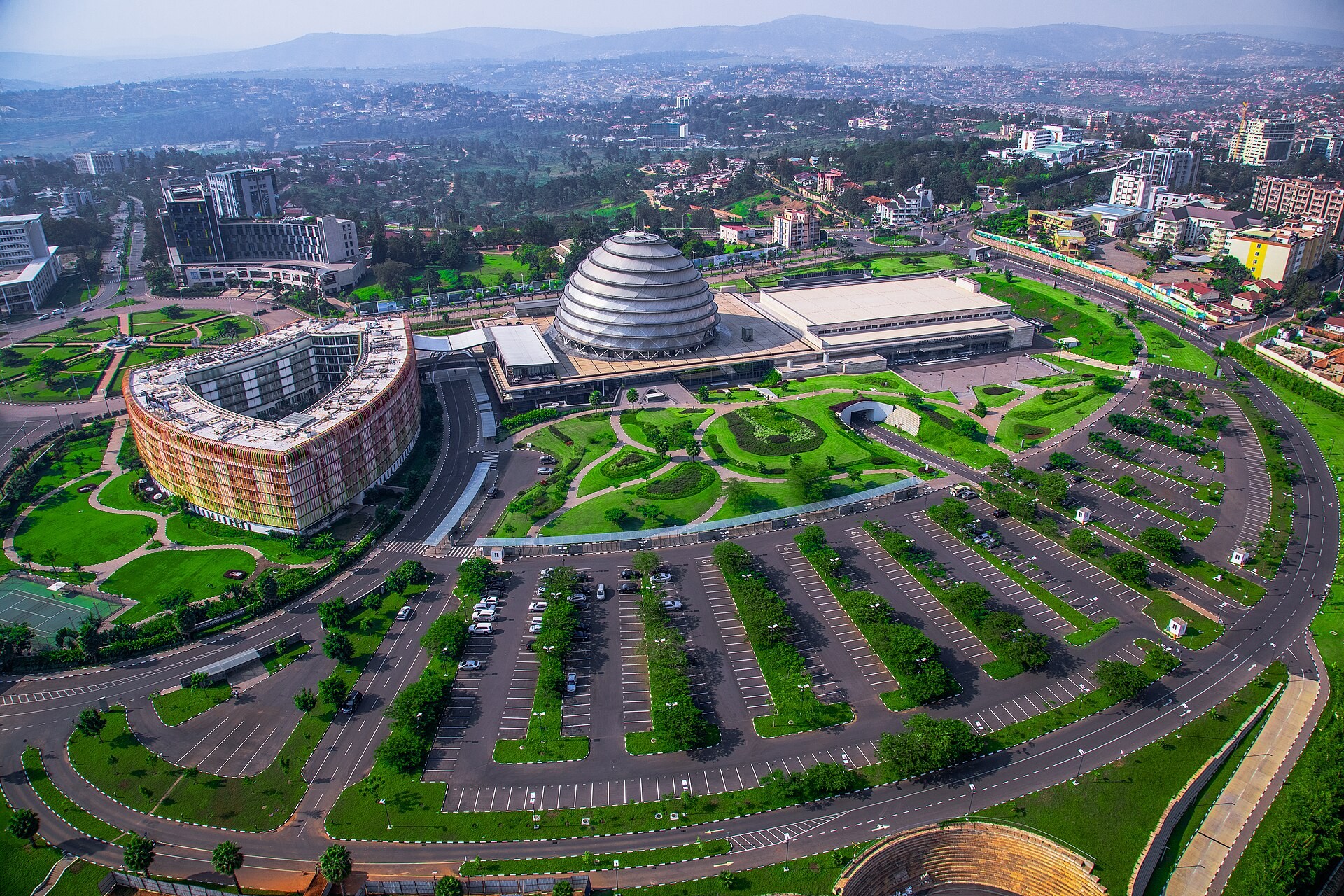
Rwanda is a landlocked country in East Africa covering 26,338 km², with a population of 14,569,341 and its capital in Kigali. Formally independent on July 1, 1962, it has passed through colonial rule, a catastrophic genocide, and a period of reconstruction that reshaped its institutions, economy, and place in regional politics. Its 2022 census recorded a population density of 501 people per square kilometre, making it one of the most densely settled countries on the African continent, and projections suggest that figure will nearly double to around 894 per square kilometre by 2052.
Key facts
- Capital: Kigali
- Continent: Africa
- Population: 14,569,341
- Area: 26,338 km²
- Official language: Kinyarwanda; English; French; Swahili
- Currency: Rwandan franc
- Head of state: Paul Kagame
- ISO code: RW
- Founded: 1962
Colonial Rule and Independence
Belgian authorities administered Rwanda as part of Ruanda-Urundi following World War I, and in 1926 they introduced compulsory ethnic identity cards that classified the population into Hutu, Tutsi, and Twa as fixed racial categories. That codification hardened social distinctions that had existed in more fluid forms before, and the cards would shape political life for decades.
On July 1, 1962, Rwanda became independent. Grégoire Kayibanda, leader of PARMEHUTU, became the country’s first elected president. The republic that emerged was shaped by the ethnic politics Belgian rule had entrenched, and tensions between Hutu and Tutsi communities persisted through successive governments.
Genocide and Its Aftermath
Rwanda experienced a genocide in which a vast number of people, predominantly Tutsi, were killed in a matter of weeks. The scale of violence placed extraordinary demands on any subsequent process of accountability. Rwanda’s response included the gacaca system, community courts adapted from a traditional Kinyarwanda form of outdoor dispute resolution. Between 2002 and 2012, those courts tried more than 1.9 million genocide-related cases, a scope described as the most comprehensive post-conflict justice programme carried out anywhere in the world.
The genocide is central to understanding almost every aspect of Rwanda’s subsequent development, from its constitutional structure to its foreign policy and its approach to ethnic identity in public life.
Government and Constitution
Rwandans adopted a new constitution by referendum on May 26, 2003. It establishes a presidential system with separation of powers and contains two provisions that set Rwanda apart from most constitutional systems. First, it requires that women hold at least 30 percent of seats in parliament and other decision-making bodies. Second, it prohibits political organizations from basing themselves on race, ethnicity, or religion, a direct response to the role that ethnically organised politics played in the lead-up to the genocide.
The July 2024 legislative elections produced a Chamber of Deputies in which women hold 63.8 percent of seats, the highest proportion in any national parliament in the world, up from 61.3 percent recorded after the 2018 elections. Paul Kagame serves as head of state. Rwanda joined the East African Community on July 1, 2007, and entered the Commonwealth of Nations in 2009, one of the few Commonwealth members without a historical connection to the British Empire.
Economy
Rwanda’s economy expanded at a real GDP growth rate of 9.4 percent in 2025, the highest annual rate in four years. The services sector contributed 52 percent of GDP, industry 22 percent, and agriculture 20 percent, with growth driven by domestic demand, public investment, and performance across services, construction, manufacturing, and agriculture.
Agriculture employs approximately 40 percent of Rwanda’s workforce. As of 2024, agricultural exports account for 48 percent of total goods export revenues, with coffee and tea among the principal crops sold abroad.
In 2008, Rwanda enacted Law No. 57/2008, which prohibits the manufacture, importation, use, and sale of all non-biodegradable polyethylene plastic bags. At the time of passage, Rwanda was among the first countries in the world to implement so comprehensive a ban.
Drone Delivery and Health Logistics
In 2016, Rwanda partnered with the California-based company Zipline to operate what became the world’s first national-scale commercial drone delivery service. Fixed-wing drones carry blood and medical supplies to hospitals across the country. A delivery that would take between two and six hours by road is completed in about 30 minutes by drone.
As of 2026, Zipline manages virtually all of Rwanda’s pharmaceutical supply deliveries by drone. Following a USD 150 million expansion agreement, Rwanda became the first country in Africa to implement a nationwide autonomous health drone delivery system.
Official Languages and Regional Membership
Rwanda recognises four official languages: Kinyarwanda, English, French, and Swahili. When the country joined the Commonwealth of Nations in 2009, English became the main medium of instruction in Rwandan schools, replacing French in that role. The currency is the Rwandan franc.
Did you know
- Rwanda is sometimes called the “Land of a Thousand Hills” (Pays des Mille Collines in French), a nickname that reflects a landscape where much of the country lies between 1,500 and 2,500 metres elevation, with only five volcanoes and 23 lakes. (visitrwanda.com)
- In 2016, Rwanda became the launch site of the world’s first national-scale commercial drone delivery network when it partnered with Zipline to supply blood to rural hospitals. A delivery that would take two to six hours by road is completed in about 30 minutes by drone. (london.edu)
- Rwanda’s gacaca community courts, adapted from a traditional Kinyarwanda system of outdoor dispute resolution literally meaning “justice on the grass,” tried more than 1.9 million genocide-related cases between 2002 and 2012, described as the most comprehensive post-conflict justice programme in the world. (today.marquette.edu)
- Rwanda joined the Commonwealth of Nations in 2009, making it one of only a handful of members with no historical link to the British Empire. English simultaneously became the main medium of instruction in Rwandan schools from that year onward. (trade.gov)
Data sources
- Wikidata
- africa.upenn.edu
- hmd.org.uk
- constituteproject.org
- rwanda.un.org
- trade.gov
- statistics.gov.rw
- worldbank.org
- frontiersin.org
- uchumi360.com
- technologyreview.com
- rwandatechnews.com
Data updated: 2026-11-01