
Two Shots Before Dawn
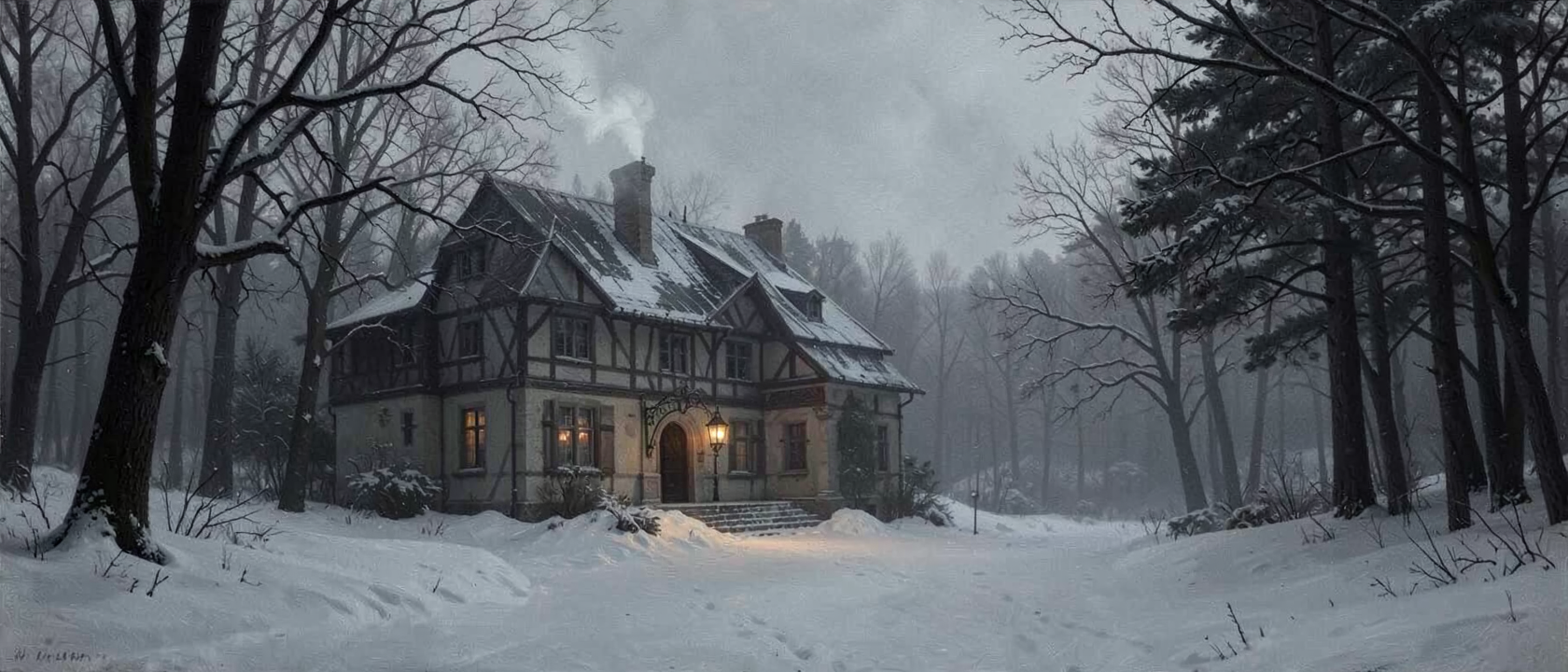
On the morning of January 30, 1889, Crown Prince Rudolf’s valet, Johann Loschek, went to wake him at Mayerling, the imperial hunting lodge in the Vienna Woods, Lower Austria, about 16.5 miles (26.6 km) southwest of Vienna. Loschek forced the locked bedroom door and, with Rudolf’s hunting companion Count Joseph Hoyos, found Rudolf and his guest, Baroness Mary Vetsera, dead inside.
A doctor did not examine the bodies until that afternoon. He found both had died of gunshot wounds, Vetsera shot with a pistol, Rudolf with a wound to the temple. Investigators later established a harder detail: Mary died first, and Rudolf lived for several hours before he fired the second shot.
The Heir and the Girl
Rudolf, born August 21, 1858, was the only son of Emperor Franz Joseph I and Empress Elisabeth, and sole heir to the Austro-Hungarian throne. He was married to Princess Stéphanie of Belgium. In late 1888, at 30, he began an affair with 17-year-old Baroness Marie Alexandrine “Mary” von Vetsera, daughter of a diplomat, Albin von Vetsera, originally from Bratislava, and Helene Baltazzi, daughter of a wealthy Greek banking family. Hers was a lesser aristocratic household, well below his rank. The affair lasted only months.
On January 29, 1889, Franz Joseph and Elisabeth hosted a family dinner. Rudolf excused himself, pleading illness, and left for Mayerling, where he arranged a day’s shooting for the following morning. His surviving farewell letter to his wife says only that his death would be better for everyone. It does not say what he intended, or for whom.
Why a Suicide Had to Disappear
Catholic doctrine of the time denied suicides a funeral Mass or burial in consecrated ground. Rudolf was heir to a Catholic empire whose throne leaned on the Church for legitimacy, so a public finding of suicide would have shut him out of a Church funeral. The family needed a version of events the Church could accept, and that meant Mary Vetsera’s death could not survive intact in the record either.
Erasing Mary Vetsera
In the days that followed, the household moved to remove Vetsera from the record. Her body was smuggled out of Mayerling at night and buried hurriedly in the village cemetery at Heiligenkreuz, among others who had taken their own lives. Her mother, Helene Baltazzi, was refused permission to visit the grave for more than two months, until she had her daughter’s body exhumed on May 16, 1889. For a time, the court would not even confirm publicly that Vetsera was dead.
“An Abnormality of the Brain”
The first word to reach the public was that Rudolf had died of a heart attack. It did not survive the afternoon’s medical examination. What replaced it was a report certifying that the crown prince had suffered an abnormality of the brain, leaving him not responsible for his own act. The wording kept the word “suicide” off the record while still accounting for a death by gunshot, and it was enough for the Church to grant him a funeral and burial with full rites.
A Century of Theories
The shifting official story, from heart attack to brain abnormality, left a gap that filled with rumor for decades. Some theories held that Rudolf and Vetsera had been murdered by foreign agents, or on the order of his uncle, Archduke Albrecht, a man Rudolf reportedly disliked, though that claim rests on a single account. Others pointed to a sexual encounter gone wrong, or to a jealous neighbor. One version, argued by the historian Gerd Holler, held that Vetsera died during a botched abortion and that Rudolf’s suicide followed hers; the farewell letters contradict this. Historians working from the gunshot wounds, the hours-long gap between the two deaths, and the medical findings treat none of these as supported.
What the 2015 Letters Changed
On July 31, 2015, the Austrian National Library released Mary Vetsera’s farewell letters to her mother and other relatives. They had surfaced that summer in the vault of a Viennese private bank, left there by an unidentified person inside a folder of Vetsera family papers, and were handed to the library for safekeeping. Written at Mayerling shortly before her death, they state plainly that Vetsera was preparing to die alongside Rudolf, out of love for him. What they confirm, within the limits of what the library has disclosed, is that Vetsera went to Mayerling expecting to die, not as a victim unaware of what was coming.
The Bill
The toll is plain: a 30-year-old heir and a 17-year-old girl, dead in a single morning. Vetsera’s family spent years unable to speak of it openly, barred even from her grave for two months. Rudolf’s death left Franz Joseph without a son, and the throne passed down the line to his nephew, Archduke Franz Ferdinand, whose assassination at Sarajevo in 1914 helped set off the First World War. For 126 years, until the letters surfaced in 2015, an official cover story stood in for an explanation. The secrecy bought the family a Catholic funeral and a narrative it could control. It cost the historical record more than a century in which rumor filled the silence that two gunshots, and a government’s fear of what they meant, had created.