
The Kitchen Table in Occupied Paris
In the early 1940s, during the German occupation of Paris, Simone de Beauvoir walked her student and companion Olga Kosakiewicz through the city streets to find a woman who performed illegal abortions. According to Beauvoir’s biographer Hazel Rowley, Beauvoir waited outside while the procedure was carried out with a knitting needle. Kosakiewicz began hemorrhaging afterward.
Violette Leduc, a writer and close friend of Beauvoir’s, went through a similar ordeal in the same period: a backstreet abortion that left her with a septic infection severe enough to nearly kill her. She later described what had happened directly to Beauvoir.
By 1949, when Beauvoir published her treatise The Second Sex, she had two firsthand accounts of what the law actually did to women who needed to end a pregnancy. In the book’s chapter on motherhood, she wrote about the squalor and physical harm a ban on abortion produced, and argued that criminalizing the procedure did not stop it. It only decided who survived the attempt, since money bought a safe trip abroad while poverty meant trusting a stranger with whatever instrument was at hand.
The 1920 Law
France in early 1971 was still bound by a law dating to 1920, passed after the staggering losses of the First World War in hopes of pushing the birth rate back up. It classified abortion as an offense against the security of the state. A separate law passed in 1967, the Neuwirth law, had begun to legalize contraception, but the administrative decree needed to put it into practice did not arrive until 1972, so in the meantime contraceptives remained hard to obtain and the old penalties for abortion itself stayed fully in force. Under the relevant clause of the Penal Code, a woman who ended a pregnancy risked, by some accounts, up to ten years in prison, and so did anyone who helped her.
Enforcement fell hardest on women without money. Those who could afford it traveled to clinics in London or Geneva, where the procedure was legal. Those who could not turned to illegal operators, known in French slang as faiseuses d’anges, “angel makers,” and risked infection, sterility, or a perforated uterus. The Catholic Church and conservative legal associations still carried weight with the French government, and police kept pursuing both the women and the people who performed the procedure.
The Confession in Issue 334
On April 5, 1971, issue 334 of the French weekly Le Nouvel Observateur ran a cover article titled “Un appel de 343 femmes” (“An appeal by 343 women”). Its opening lines, written by Simone de Beauvoir, stated that a million French women had an abortion every year, that they did so under dangerous conditions purely because secrecy was forced on them even though the procedure was simple when carried out under medical care, and that she was declaring herself one of that silenced million. The text went on to demand the right to end a pregnancy under medical supervision and free access to contraception.
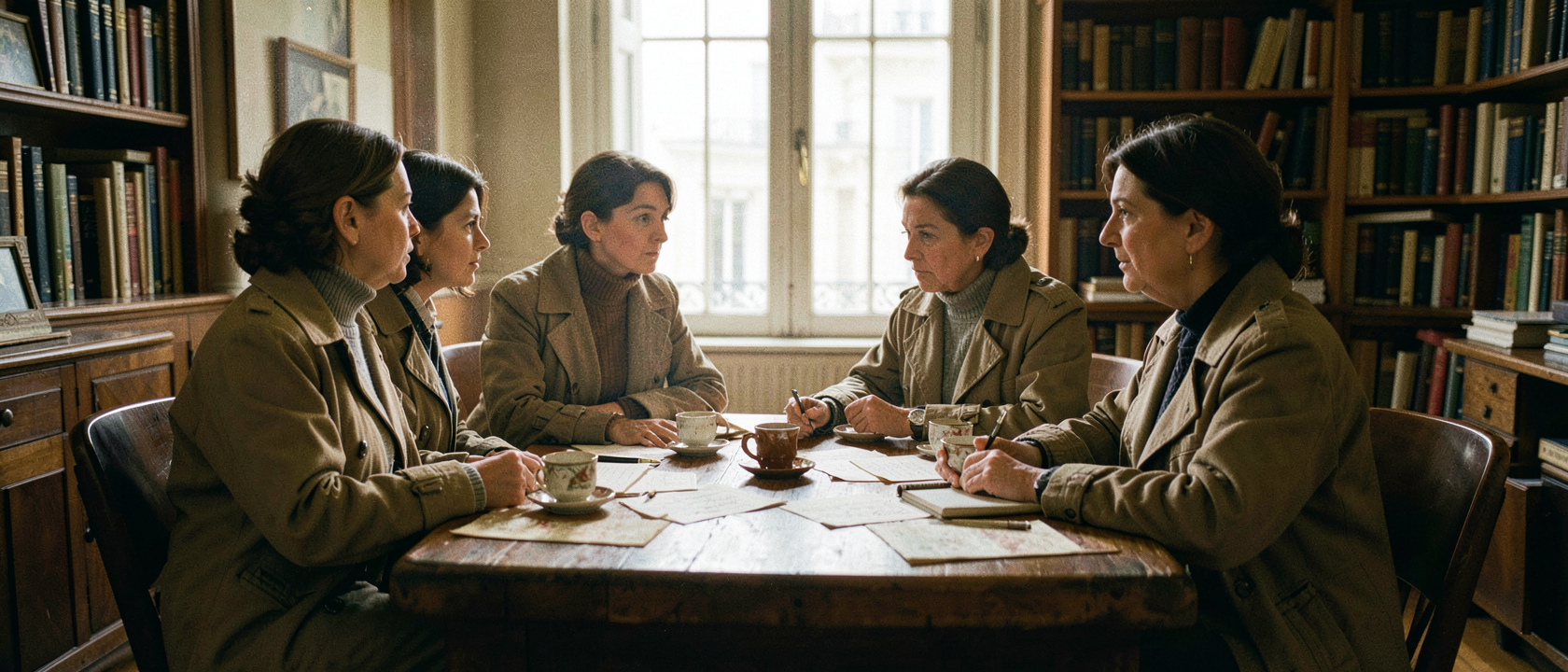
Beneath the text stood 343 signatures, gathered in private apartments across Paris by the Mouvement de Libération des Femmes. The list mixed famous names, among them Catherine Deneuve, Jeanne Moreau, Marguerite Duras, Françoise Sagan, Ariane Mnouchkine, and Agnès Varda, with women nobody outside their own circles had heard of, including the young activist Claudine Monteil and the lawyer Gisèle Halimi, the only attorney among the 343. Each woman was admitting in print to a crime, and daring the Minister of Justice to prosecute all of them at once.
Charlie Hebdo answered with a cartoon asking who had gotten “the 343 sluts of the abortion manifesto” pregnant, aiming its insult at the male politicians behind the law rather than the women defying it. The signatories kept the label, “the manifesto of the 343 sluts,” and used it as a badge instead of a wound.
The State Yields Ground
French authorities chose not to indict the 343 signatories. Putting international film stars and literary figures on trial in Paris would have turned the courtroom into a referendum on the Penal Code itself, and no government wanted that. The threat of prosecution stayed real on paper and empty in practice.
That did not mean no one paid. Several lesser-known signatories lost jobs or were cut off by their families; fame shielded some women and not others. The standoff still broke the 1920 law’s capacity to be enforced, even before it was repealed. Gisèle Halimi, herself one of the 343, founded a group called Choisir (“To Choose”) later in 1971 with Beauvoir and Jean Rostand to protect the women who had signed. The following year, she used that platform to defend a 17-year-old prosecuted in Bobigny for ending a pregnancy that had resulted from rape, and the court acquitted her.
The pressure kept building toward Parliament. Simone Veil, appointed Minister of Health under President Valéry Giscard d’Estaing in 1974, brought an abortion bill before the National Assembly in November of that year, on a date sources give variously as the 13th or the 26th. Conservative deputies subjected her to personal abuse across twenty-five hours of debate. Parliament’s vote came in January 1975, and the law, promulgated on January 17 and known ever since as the Veil Act, legalized abortion on request up to 10 weeks of pregnancy, at first as a temporary measure. Parliament made it permanent in December 1979, and French law now allows abortion on request up to 14 weeks after conception.
What the Archive Left Behind
Two questions about the manifesto remain open. The headline claim, that a million French women had abortions every year, came from activists extrapolating off hospital admissions for complications rather than any national census; it was a political estimate, not a verified count, and historians still treat it that way.
The other open question is who signed as confession and who signed as cover. Simone de Beauvoir herself had never been pregnant or had an abortion, and she put her name on the document anyway. Neither the surviving papers of Le Nouvel Observateur nor the archives of the Mouvement de Libération des Femmes record a clean breakdown of which of the 343 women had genuinely gone through the procedure and which signed to spread the legal exposure across names the state could not prosecute one at a time.