
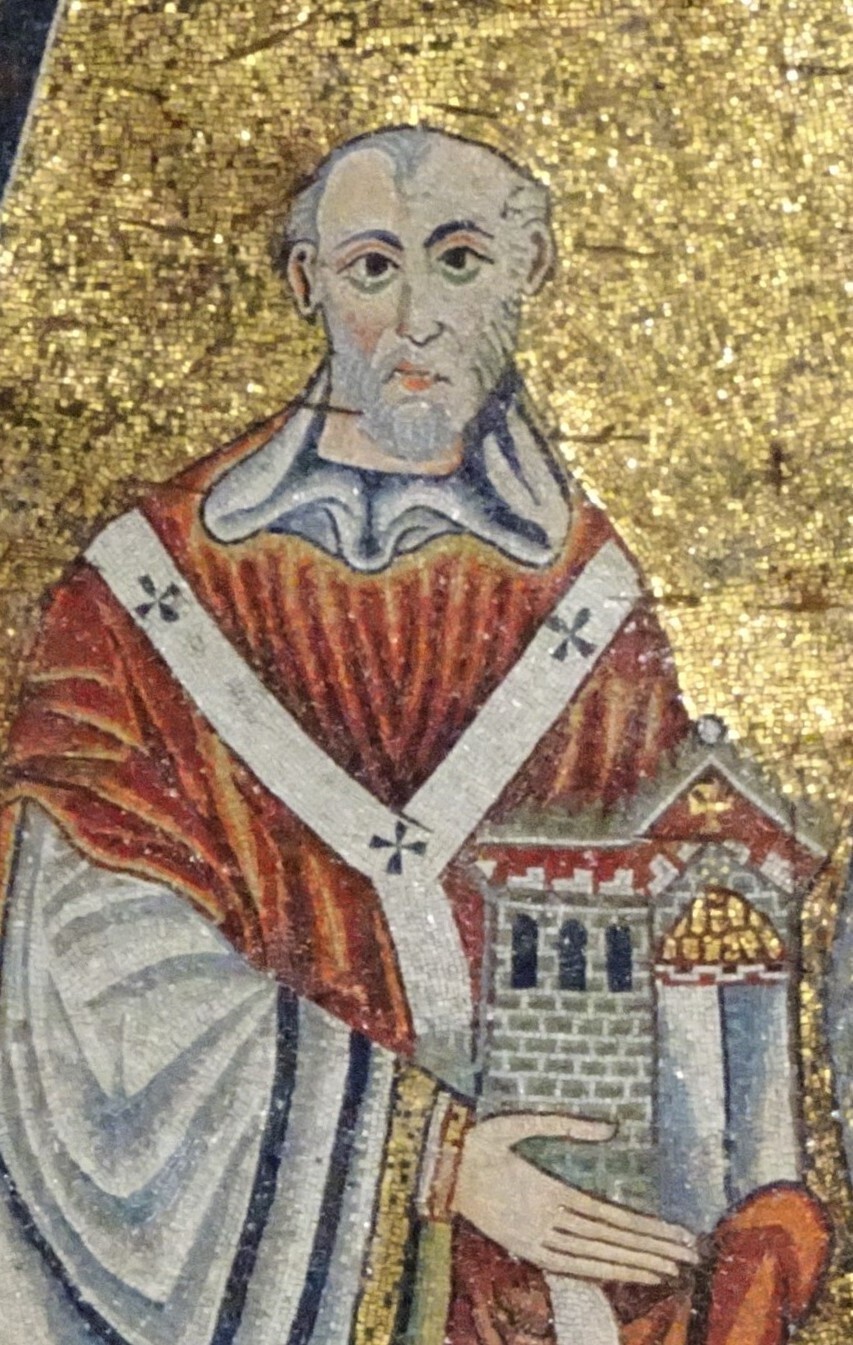
Gregorio Papareschi, born in Rome around 1100, reigned as Pope Innocent II from 1130 until his death on 24 September 1143. His pontificate opened with a contested double election that split the Western Church for eight years, forcing him into exile in France before he was able to secure recognition from the major powers of Europe and return to Rome. The schism with Antipope Anacletus II, and the alliances Innocent built to outlast it, shaped both papal politics and the institutional life of the Church for a generation.
Key facts
- Born: 1100
- Birthplace: Rome
- Died: 24 September 1143
- Place of death: Rome
- Occupation: Catholic priest; writer
Origins and Early Career
Gregorio Papareschi was born in Rome around 1100 and rose through the papal administration to become a cardinal deacon. In that capacity he accompanied Pope Gelasius II into exile in France, part of an entourage that also included Pietro Pierleoni, the man who would later become his rival as Antipope Anacletus II. The two men therefore shared the experience of exile before they found themselves on opposite sides of one of the most damaging schisms in medieval papal history.
The Double Election of 1130 and the Schism
When Pope Honorius II died in February 1130, a faction of cardinals elected Gregorio Papareschi as Innocent II, while another group elected Pietro Pierleoni as Anacletus II. On 23 February 1130, both men were consecrated on the same day: Innocent at the church of Santa Maria Nuova, Anacletus at St. Peter’s Basilica. Anacletus commanded broader support within Rome, and Innocent was driven from the city by Anacletus and his supporters.
Innocent fled through Pisa and Genoa to France. There, Bernard of Clairvaux proved decisive: he secured recognition for Innocent from the French clergy and the royal court. In October 1130, at the synod of Würzburg, Holy Roman Emperor King Lothair III and his bishops formally acknowledged Innocent as the legitimate pope, giving the exile a powerful political foundation from which to press his cause.
Return to Rome and Imperial Alliance
The alliance with Lothair III had a concrete ceremonial expression. On 4 June 1133, Innocent II crowned Lothair III as Holy Roman Emperor at the Lateran Basilica in Rome. The ceremony took place at the Lateran rather than at St. Peter’s because Anacletus and his supporters still controlled that basilica, a detail that shows how partial Innocent’s hold on Rome remained even four years into the schism.
The schism finally ended not through military defeat but through death. Anacletus died on 25 January 1138, and his successor, Antipope Victor IV, submitted shortly afterward, a capitulation urged especially by Bernard of Clairvaux. After eight years, Innocent II was at last the undisputed pope.
Governance and Controversies
At the Council of Sens in 1140, Innocent upheld Bernard of Clairvaux’s condemnation of the theologian Peter Abelard. He ordered Abelard’s writings burned, forbade him to teach, and condemned him to perpetual silence. The condemnation placed Innocent squarely on the side of Bernard’s theological conservatism against one of the most prominent intellectual figures of the age.
Innocent also used the cardinalate to extend his family’s position within the Church. During his papacy he elevated two relatives: his nephew Gregorio Papareschi to the cardinalate in 1134, and his brother Pietro Papareschi in 1142.
Building and Legacy in Rome
Innocent II undertook the rebuilding of Santa Maria in Trastevere, incorporating 22 ancient granite and marble columns salvaged from pagan sites, including the Baths of Caracalla. The columns were arranged in two rows of 11 to create the three-aisled nave that still defines the church.
He died on 24 September 1143 in Rome. His remains were initially placed in the Lateran, in a porphyry sarcophagus that contemporary tradition held had once belonged to the Emperor Hadrian. They were later transferred to Santa Maria in Trastevere, the church he had rebuilt.
Did you know
- Innocent II and Antipope Anacletus II were consecrated on the same day, 23 February 1130, in different churches: Innocent at Santa Maria Nuova and Anacletus at St. Peter’s Basilica. (newadvent.org)
- The papal bull Omne datum optimum, issued by Innocent II on 29 March 1139, became the legal foundation for the Knights Templar’s extraordinary privileges, including exemption from tithes and taxes and accountability to the pope alone. It was later identified as a factor in both the order’s spectacular rise and its violent suppression in October 1307. (papalartifacts.com)
- When Innocent II rebuilt Santa Maria in Trastevere, he used 22 ancient granite and marble columns salvaged from pagan sites, among them the Baths of Caracalla, placing them in two rows of 11 to form the nave. (grokipedia.com)
Data sources
Data updated: 2026-10-29