
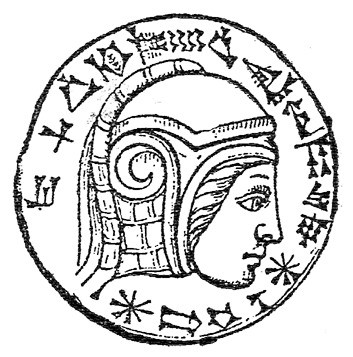
Under Nebuchadnezzar’s reign, Babylon was physically remade: the Etemenanki ziggurat he completed rose approximately 91 meters on a square base of roughly 91 meters per side, requiring at least 17 million bricks.
Key facts
- Born: -642
- Birthplace: Uruk
- Died: -561
- Place of death: Babylon
- Country: Neo-Babylonian Empire
- Occupation: monarch; leader; king
Origins and Early Life
His father Nabopolassar changed that situation by leading a revolt against the Assyrians, forging an alliance with the Medes, and sacking Nineveh in 612 BCE. Growing up as crown prince during this upheaval, Nebuchadnezzar received a deliberate education: the Babylonian gods, the laws of Babylon, and the practice of commanding armies.
His military apprenticeship came early. Between 607 BCE and 605 BCE, Nabopolassar appointed his son as military commander with the specific task of contesting Egypt over the former western Assyrian territories. The campaign succeeded, establishing Nebuchadnezzar as the effective military arm of the empire before he ever formally wore the crown.
Building Babylon
Once king, Nebuchadnezzar turned much of his energy toward construction. He erected or restored many of Babylon’s religious structures, including the Esagila temple dedicated to the god Marduk. The Etemenanki ziggurat, which he completed, had a square footprint of approximately 91 meters on each side and rose in seven tiers to a comparable height of about 91 meters, a scale roughly equivalent to a 30-story building. Its restoration alone consumed at least 17 million bricks.
The Ishtar Gate and the city’s processional street received his attention as well. A 2024 archaeomagnetic study published in PLOS One determined that all three construction phases of the Ishtar Gate were carried out under Nebuchadnezzar II, concentrated around 569 BCE, in rapid succession rather than spread across multiple reigns.
He also commissioned a bridge spanning the Euphrates River, linking the two halves of Babylon. Beyond the capital, he is credited with restoring the Lake of Sippar, opening a port on the Persian Gulf, and rebuilding cult temples in Sippar: the temple of the sun god Shamash and the temple of the healing goddess Ninkarrak.
The Ishtar Gate and Its Later History
The Ishtar Gate became one of the most studied physical remains of Nebuchadnezzar’s building program. A reconstruction assembled from original bricks was completed in 1930 and has been displayed at the Pergamon Museum in Berlin, Germany ever since. Its presence there has prompted continuing debates about cultural heritage and whether such objects should be repatriated.
Data sources
- Wikidata
- worldhistory.org
- ducksters.com
- baike.baidu.com
- biblicalarchaeology.org
- schoyencollection.com
- newadvent.org
- ancient-origins.net
Where it appears
- Babylon, Jerusalem, Babylon Again: A Cycle of Abandoned Gods October 30, 2026
Data updated: 2026-10-27