
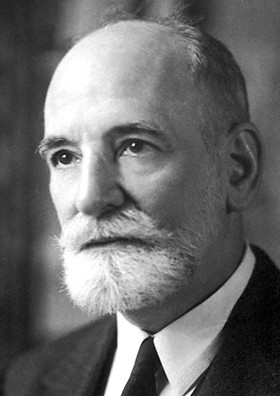
René Cassin (1887–1976) was a French jurist and diplomat whose career spanned two world wars, the founding of Free France, and the drafting of the Universal Declaration of Human Rights. Born in Bayonne on 5 October 1887, he trained as a lawyer, became a professor of international law, and ultimately served as president of the European Court of Human Rights. On 10 December 1968, the twentieth anniversary of the Universal Declaration’s adoption, he received the Nobel Peace Prize, cited for his struggle to ensure the rights set out in that document.
Key facts
- Born: 5 October 1887
- Birthplace: Bayonne
- Died: 20 February 1976
- Place of death: 13th arrondissement of Paris
- Country: France
- Occupation: jurist; diplomat; politician
- Employer: University of Paris; University of Lille; Sciences Po Aix-en-Provence; Faculté de droit d’Aix-en-Provence
- Education: Lycée Masséna; Faculté de droit d’Aix-en-Provence; University of Paris
- Awards: Nobel Peace Prize; Grand Cross of the Legion of Honour; Croix de guerre 1914–1918; Commander of the French Order of Academic Palms
Education and early legal career
Cassin attended the Lycée Masséna before enrolling at the Faculté de droit d’Aix-en-Provence, where he studied political economics, constitutional history, and Roman law. He completed degrees in the humanities and in law in 1908. The following year he was admitted to the Paris bar and began legal practice in the capital.
His doctoral work was formidable in both scope and pace. The thesis on synallagmatic contracts (the exception non adimpleti contractus) was drafted in forty days; the companion piece on the rights of the state in Swiss civil code succession law took four years. Both were successfully defended at the University of Paris in 1914. The contracts thesis, published that year by the Sirey press, was still regarded in 1978 by the internationalist Henri Batiffol as the foundational work in its field.
World War I and its aftermath
Mobilized into the infantry in 1914, Cassin was severely wounded in the abdomen. Surgeons at the field hospital initially refused to operate; the intervention of his mother, who happened to be serving as a nurse there, persuaded the doctors to perform the surgery. He survived, but was assessed as 65 percent permanently incapacitated and was demobilized with the Croix de Guerre with palm and the Médaille Militaire for his conduct. The effects of the wound stayed with him for the rest of his life.
Out of that experience came a sustained commitment to veterans. In 1918 Cassin founded the French Federation of Disabled War Veterans (Union fédérale des associations des mutilés et d’anciens combattants) and served as its president or honorary president until 1940. The federation eventually grew to nearly one million members, and Cassin personally championed the cause of 800,000 French war orphans.
Academic career and the League of Nations
Cassin was appointed professor of law at Lille in 1920 and at Paris in 1929, continuing to teach at Paris until 1960. He also lectured at the Academy of International Law at The Hague and at the University Institute of Advanced International Studies in Geneva.
From 1924 to 1938 he served as a French delegate to the League of Nations, attending the Disarmament Conference and pressing for international institutions to resolve conflicts between states. The League’s failure to prevent war did not diminish his belief in multilateral legal frameworks; it reinforced it.
Free France and World War II
On 24 June 1940, after the French armistice, Cassin boarded a British ship at Saint-Jean-de-Luz and joined General de Gaulle in London. He was among the first civilians to rally to Free France. His legal expertise proved essential to the movement, which needed to establish its legitimacy under both French and international law.
The Universal Declaration of Human Rights
After the war, Cassin played a central part in the drafting of the Universal Declaration of Human Rights. For decades he was widely credited as its principal author. A documented controversy arose in 1988, when law librarian A. J. Hobbins discovered a handwritten original draft by Canadian jurist John Humphrey at McGill University. That find established that Humphrey had written the first version. Most scholars now recognize the final Declaration as the product of collective effort, with Cassin’s contribution significant but not sole.
Postwar public roles
From 1944 to 1960, Cassin served as vice-president of the Council of State (Conseil d’État), France’s highest administrative court. In 1958 he chaired the Consultative Committee responsible for drafting the Constitution of the Fifth French Republic. He was a member of the European Court of Human Rights in Strasbourg from 1959 to 1965, then served as its president from 1965 to 1968.
His two books of autobiography appeared in his final years: La Pensée et l’action (F. Lalou, 1972, 326 pages), collecting autobiographical fragments, and Les Hommes partis de rien (Plon, 1974), a memoir of the Free French period.
Nobel Peace Prize
Cassin received the Nobel Peace Prize on 10 December 1968. The ceremony fell on the twentieth anniversary of the adoption of the Universal Declaration of Human Rights. The prize citation honored him for his struggle to ensure the rights of man as stipulated in the UN Declaration.
Death and the Panthéon
Cassin died on 20 February 1976 in the 13th arrondissement of Paris and was initially buried at the Montparnasse Cemetery. President Valéry Giscard d’Estaing signed a decree authorizing his transfer to the Panthéon in 1980, but the ceremony did not take place until 5 October 1987, the centenary of his birth and eleven years after his death. President François Mitterrand and Prime Minister Jacques Chirac attended, along with some 3,000 guests from around the world.
Cassin is one of only five Companions of the Liberation interred in the Panthéon, alongside Jean Moulin, Félix Eboué, André Malraux, and Pierre Brossolette.
Did you know
- Although Cassin was celebrated for decades as the principal author of the Universal Declaration of Human Rights, it was only in 1988, forty years after the document’s adoption, that a McGill University law librarian, A. J. Hobbins, found John Humphrey’s handwritten original draft, proving that Humphrey had written the first version. (humanrightscommitments.ca)
- Cassin was so severely wounded in World War I that he was assessed as 65 percent permanently incapacitated; the lasting effects of his abdominal wound troubled him for the rest of his life. (actualites.musee-armee.fr)
- The veterans’ federation Cassin founded and led after World War I eventually grew to nearly one million members, and he personally championed the cause of 800,000 French war orphans. (nobelprize.org)
- Cassin drafted his 1914 doctoral thesis on synallagmatic contracts in only forty days, while the companion thesis on Swiss civil code succession law had taken him four years; the first thesis, published that same year by the Sirey press, was still considered by the internationalist Henri Batiffol in 1978 to be the foundational work in its field. (vlex.es)
- Cassin’s transfer to the Panthéon took nearly a decade: President Valéry Giscard d’Estaing signed the decree authorizing it in 1980, but the actual ceremony only took place in 1987, eleven years after Cassin’s death. (cambridge.org)
- Cassin almost did not survive his World War I wounds: surgeons in the field hospital initially refused to operate, and it was only because his mother happened to be serving as a nurse there that she was able to persuade the doctors to perform the surgery that saved his life. (nobelprize.org)
Data sources
- Wikidata
- nobelprize.org
- le-souvenir-francais.fr
- actualites.musee-armee.fr
- jewishvirtuallibrary.org
- defense.gouv.fr
- humanrightscommitments.ca
- bpsgm.fr
- lysias-avocats.com
- sfdi.org
- jta.org
- ordredelaliberation.fr
Data updated: 2026-10-28