
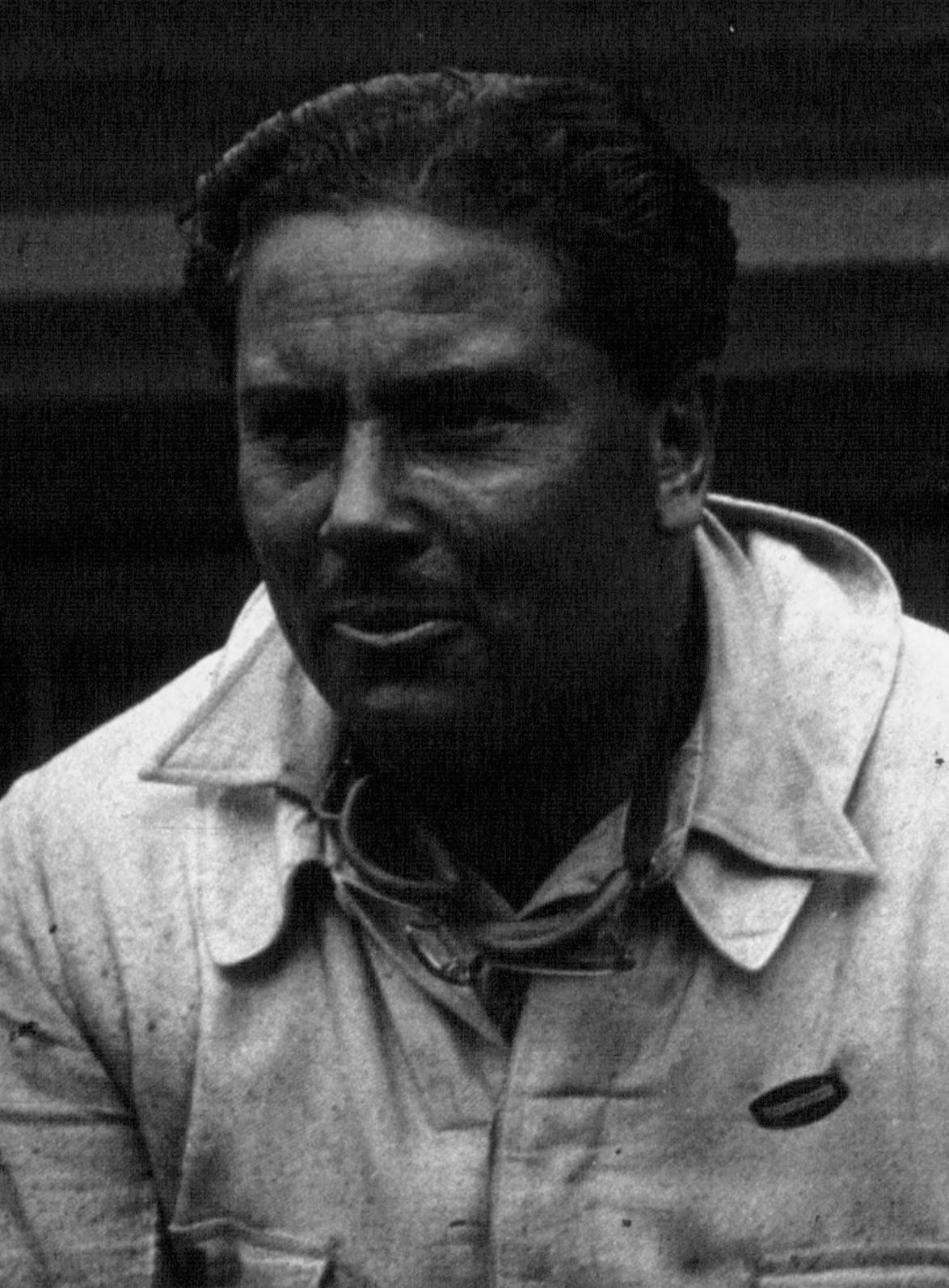
Woolf Barnato (27 September 1895 – 27 July 1948) was a British financier, racing driver, and cricketer who inherited a fortune rooted in South African diamond and gold mining and used part of it to finance Bentley Motors, becoming majority shareholder and chairman in 1925. As a driver at the 24 Hours of Le Mans, he entered the race three times and won each time, in 1928, 1929, and 1930, a record that remains unmatched. W. O. Bentley called him “the best driver we ever had and, I consider, the best British driver of his day. One who never made a mistake and always obeyed orders.” Beyond the circuit, Barnato served as an artillery officer in the First World War, played first-class cricket as a wicket-keeper for Surrey, and returned to uniform as a Wing Commander in the Royal Air Force during the Second World War.
Key facts
- Born: 27 September 1895
- Birthplace: Spencer House
- Died: 27 July 1948
- Place of death: Marylebone
- Country: United Kingdom
- Occupation: cricketer; racing automobile driver; businessperson
- Education: Trinity College; Charterhouse School
Origins and early life
Barnato was born on 27 September 1895 at Spencer House, the youngest son of Barney Barnato, a so-called Randlord who had made his fortune in South African diamond and gold mining. Through his father’s side he was also related to the Joel family of entrepreneurs, connecting him to one of the most prominent commercial dynasties of late Victorian Britain.
In 1897, when Woolf was two years old, his father died near Madeira during a sea crossing from South Africa to London. The official verdict was recorded as suicide, specifically ‘death by drowning while temporarily insane.’ Woolf was left fatherless before he could form any memory of the man, and the weight of an inherited fortune fell upon a child who had no part in building it.
He was educated at Charterhouse School and then at Trinity College, Cambridge, giving him the formation typical of a wealthy Edwardian gentleman.
First World War
On the outbreak of the First World War, Barnato was commissioned as an officer in the Royal Field Artillery of the British Army, eventually reaching the rank of captain. He saw active service in France, Egypt, and Palestine, and was awarded the 1914–15 Star medal.
Among his engagements was the Battle of Passchendaele, in which he participated from July to November 1917. That service is commemorated on the memorial at Middle Street Synagogue in Brighton, situating Barnato within the Anglo-Jewish community that gave him part of his identity.
Motor racing and the Bentley years
The choice of Brooklands was natural: the Surrey circuit was the centre of British motor sport at the time, and Barnato would accumulate 176 British Automobile Racing Club events there over the course of his career, a figure that excludes races for other clubs, hillclimbs, and speed trials.
The 1924 Le Mans victory by John Duff and Frank Clement in a Bentley persuaded Barnato to act. He agreed to finance Bentley’s business and by 1925 had become majority shareholder and chairman of the company.
Under his chairmanship Bentley won Le Mans in 1927, when Dr. J. Dudley ‘Benjy’ Benjafield and S. C. H. ‘Sammy’ Davis drove a Bentley 3 Litre to victory. Then Barnato himself began his run as a driver. In 1928 he shared a Bentley 4½ Litre with Bernard Rubin and won. In 1929 he co-drove a Bentley Speed Six with Sir Henry ‘Tim’ Birkin and won again. In 1930 he shared another Speed Six with Glen Kidston and completed the hat-trick. Three starts, three victories: no other driver in the history of the race has entered every time and won every time.
Away from Le Mans, Barnato commissioned engineer Walter Hassan to build a special car around the original engine from the Le Mans-winning Bentley known as ‘Old Number 1.’ The resulting machine was called the Barnato-Hassan. After Oliver Bertram subsequently changed the engine, the car set the Brooklands Outer Circuit lap record on 5 August 1934 at 142.60 mph.
The Blue Train affair
The outcome carried consequences beyond personal glory. The French Motor Manufacturer’s Association fined Bentley Motors approximately £160 for racing on public roads and excluded the company from the 1930 Paris Salon. Barnato argued that he had acted as a private individual rather than as Bentley’s chairman, but the authorities were not persuaded.
Cricket
Concurrent with his most celebrated racing seasons, Barnato was an active first-class cricketer, keeping wicket for Surrey County Cricket Club. During the same years he won at Le Mans in 1928, 1929, and 1930, he was also appearing for Surrey. In 1930 the Surrey team practised at his Ardenrun estate, and the touring Australian side, which included Don Bradman, visited for tea.
Second World War
Between 1940 and 1945 Barnato served in the Royal Air Force, reaching the rank of Wing Commander. His specific responsibility was the protection of aircraft factories against Luftwaffe bombing raids.
Death and legacy
Barnato died on 27 July 1948 at the London Clinic, Devonshire Place, from a thrombosis that followed an operation for cancer. He was buried at St Jude’s Church, Englefield Green, Surrey.
Two institutions chose to honour his name permanently. The Sports Car Club of America named its highest honour the Woolf Barnato Award; first presented in 1948, it is given annually to the member judged to have made the most outstanding long-term contribution to the club. The British Racing Drivers’ Club instituted the Woolf Barnato Trophy, awarded annually to the highest-placed British or Commonwealth driver in a British car at the 24 Hours of Le Mans, directly linking his name to the race he never lost.
Did you know
- Barnato’s nickname was ‘Babe,’ an ironic reference to his heavyweight boxer’s build. The contrast between the name and the physique amused those who knew him as one of Britain’s wealthiest gentleman racers. (gracesguide.co.uk)
- In each of the years Barnato won at Le Mans, 1928, 1929, and 1930, he was simultaneously playing first-class cricket as wicket-keeper for Surrey County Cricket Club. (therake.com)
- In 1930 the Surrey County Cricket Club used Barnato’s Ardenrun estate for practice. The touring Australian cricket team, whose party included Don Bradman, visited the estate for tea during the same season. (boneyabroad.com)
- Barnato’s participation in the Battle of Passchendaele during the First World War is recorded on the memorial at Middle Street Synagogue in Brighton. (shalomsussex.co.uk)
- When Barnato died at the London Clinic on 27 July 1948, his third wife, Joan Jenkinson, aged 32, whom he had married only a few months earlier, was herself a patient in the same nursing home. She was not immediately informed of his death. (motorsportmemorial.org)
Data sources
- Wikidata
- gracesguide.co.uk
- shalomsussex.co.uk
- highline-autos.com
- automotivehistory.org
- people.elmbridgehundred.org.uk
- bentleymotors.com
- scca.com
- snaplap.net
- historicracing.com
- motorsportmemorial.org
Data updated: 2026-10-28