
The Woman Who Wrote Herself a Part
On April 26, 1926, a play called “Sex” opened at Daly’s 63rd Street Theatre in Manhattan. The script was credited to Jane Mast, a pen name Mae West had used since the early 1920s. There was no real mystery about who stood behind the curtain: West had written the play, produced it, directed it, and cast herself in the leading role. Holding all four jobs at once was close to unheard of for a woman on Broadway at the time.
The story followed Margy, a prostitute working out of a house on Caidoux Street, in Montreal’s red-light district. Her world included two men who mattered to the plot: a naval officer among her regular clients, and an American millionaire. It was blunt material for a Broadway stage in 1926, and audiences knew what they were buying a ticket for.
375 Nights, One Bad Review
The New York Times called “Sex” “a crude and inept play, cheaply produced and poorly acted.” Most of the city’s critics agreed with that verdict.
Audiences did not. By February 1927, the play had run for 375 performances, and an estimated 325,000 tickets had been sold. That audience, by the production’s own tally, included members of the police department and their wives, several judges of the criminal courts, and seven staff members from the district attorney’s office. For months, the people positioned to shut “Sex” down had instead been buying seats to watch it.
February 1927: The Theatre Fills with Police
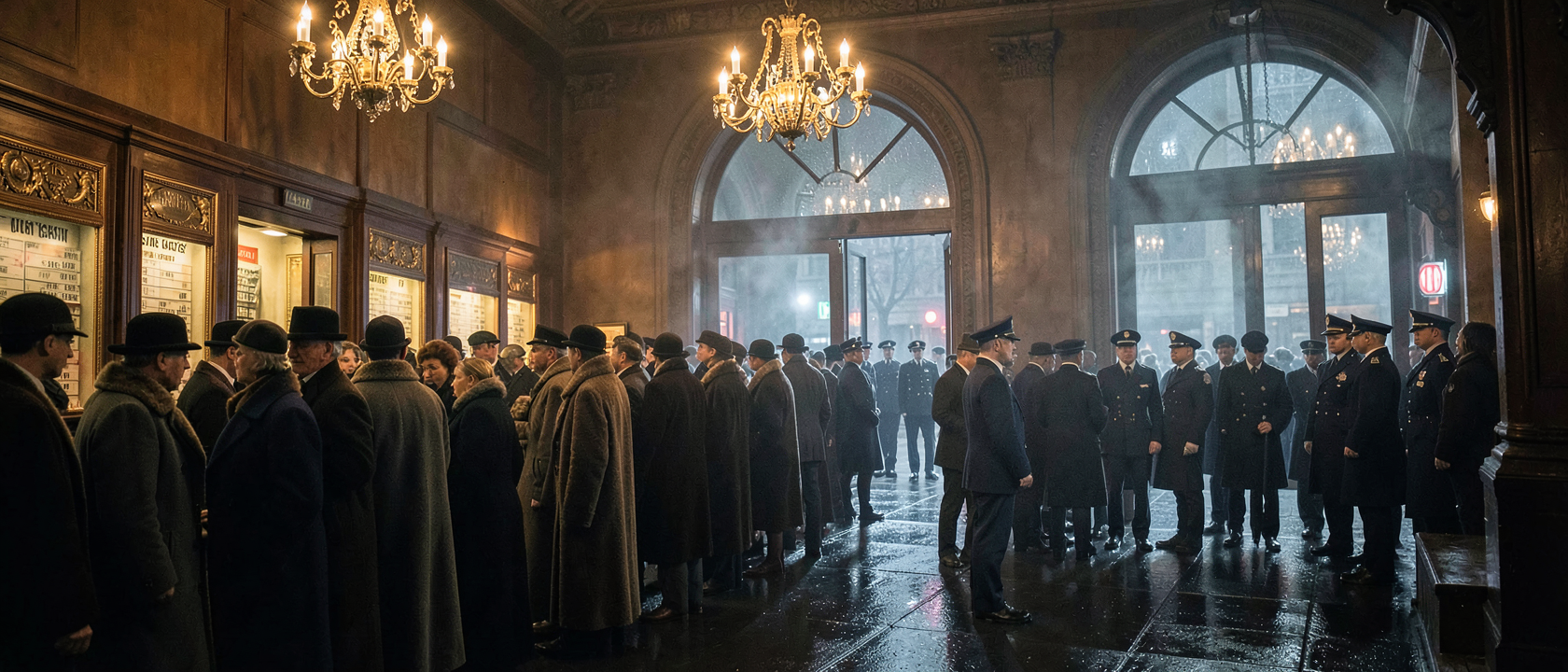
On February 9, 1927, New York’s deputy police commissioner ordered raids on three Broadway shows in a single night: “The Captive,” “Sex,” and “Virgin Man.” At Daly’s Theatre, officers from the police department’s vice squad arrested Mae West along with twenty members of her cast.
A formal complaint followed, charging that the performance had “tended to corrupt the morals of youth and others.” On April 19, 1927, the case was decided. West was fined $500 and sentenced to ten days in the workhouse, a penalty shared by only two of her co-defendants: a man named Timony and the producer, C.W. Morgenstern. The other nineteen cast members arrested that February night received suspended sentences and went free. Nothing in the surviving record explains why the court drew the line exactly where it did.
The Choice at Welfare Island
West served her sentence at the Women’s Workhouse on Welfare Island, the strip of land in the East River known today as Roosevelt Island. Of the ten days she was given, she served eight; two were remitted for good behavior. During the stay she dined with the institution’s warden, a detail that appears in several accounts. One widely cited version calls him “the governor of the island,” but the independent sources agree: it was the warden’s table, not a governor’s.
She was released on April 27, 1927. No surviving document records the day she first walked through the workhouse gate, and no quotation from West herself explains what she made of those ten days, or whether she saw them as useful publicity rather than plain punishment, as later writers have often assumed. What the record does show is that she did not fight the sentence, and that she came out of Welfare Island with her name in the papers for something far bigger than a bad review.
The Play That Didn’t Open, and the One That Did
Her next script went further. “The Drag” dealt openly with homosexuality and cross-dressing, subjects absent from mainstream American theater at the time. The Society for the Prevention of Vice warned producers that if the play reached Broadway, every production that season would face the same scrutiny. “The Drag” never opened there.
The play that did open was “Diamond Lil,” staged in 1928. It was still controversial, a story about a woman working New York’s underworld in the 1890s, but this time it became West’s first major Broadway success and the role that carried her toward Hollywood. In 1933, the same story reached movie screens as “She Done Him Wrong,” with West starring opposite Cary Grant.
She would later quip, “I believe in censorship.” By then it had cost her one play that never opened, and bought her eight days in a workhouse that helped build the rest of her career.